
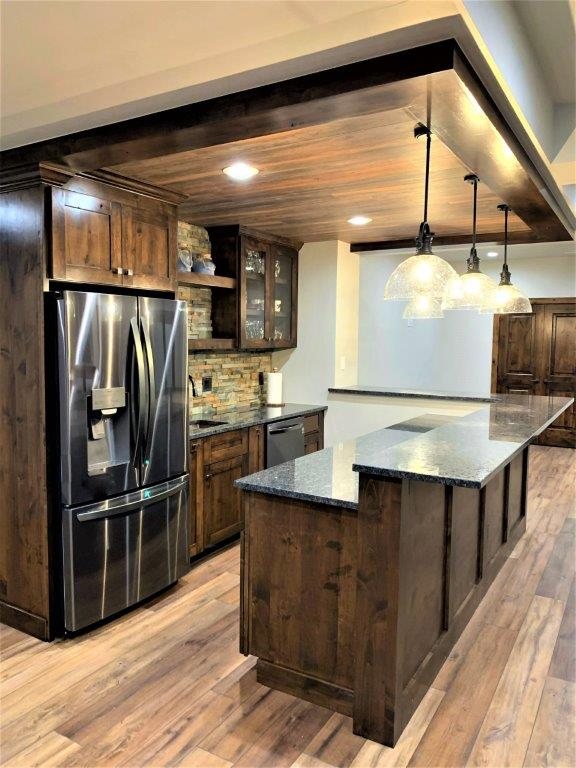
Basement Kitchenettes In Denver, Colorado Springs, And Utah
A basement kitchenette earns its footprint the first weekend you stop running upstairs for ice, coffee, or a guest’s breakfast. ElkStone has built them into thousands of finished basements across Colorado and Utah, and the projects that go smoothly all start with one decision: how much cooking capability the space actually needs. That choice drives your plumbing, your venting, and whether the city treats the room as a second dwelling unit.
Kitchenette Or Wet Bar? Settle This Before Framing
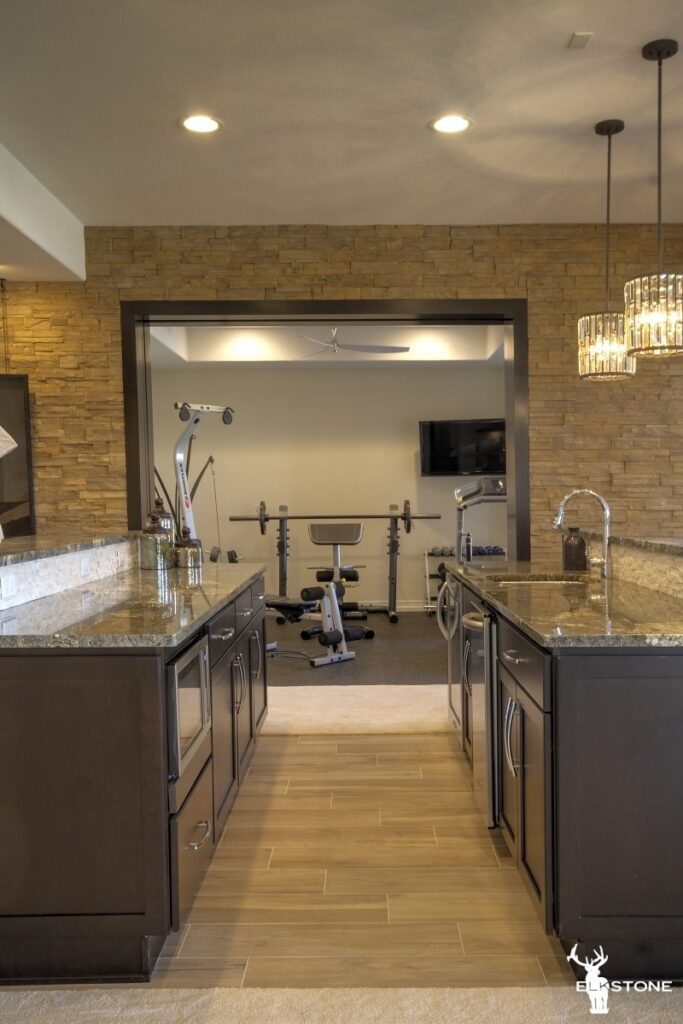
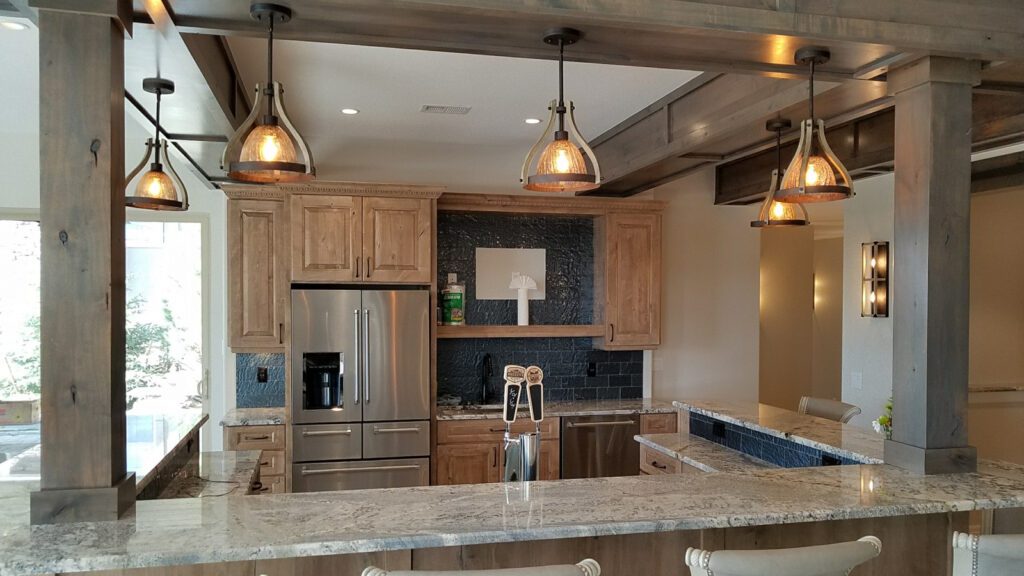
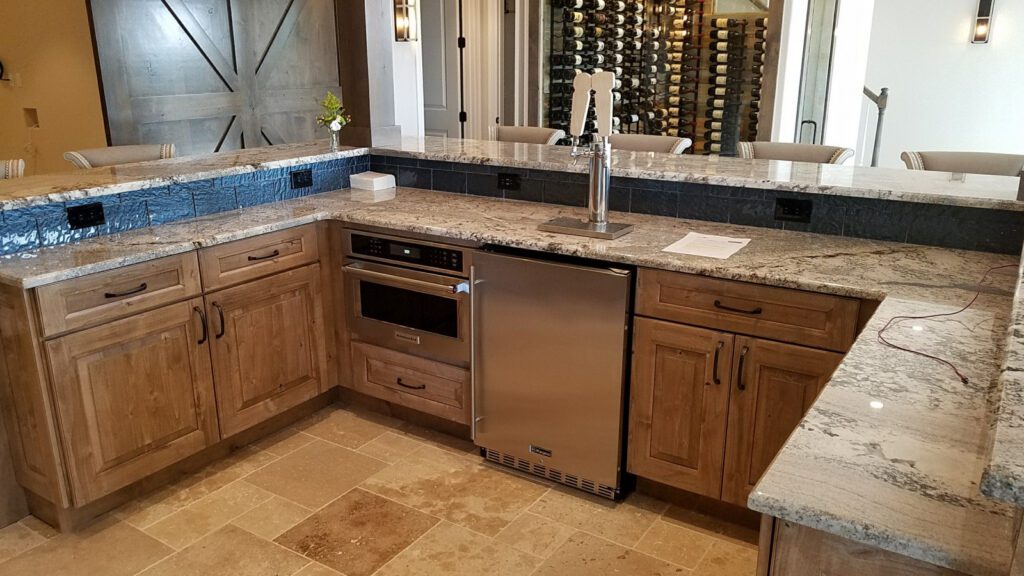
A wet bar means a sink, an under-counter refrigerator, and storage. A kitchenette adds a cooking appliance, and that appliance is what most Front Range jurisdictions read as a second kitchen. Denver requires zoning review when a project adds a second full kitchen, and Jefferson County may classify a finish with a kitchen or oversized bar as an accessory dwelling unit. If you only want a place to pour drinks and plate appetizers, a custom basement wet bar keeps approvals simple. If the long game is rental income or an in-law suite, we design to the stricter standard from day one so nothing has to be torn out later. Our guide to what is actually legal versus what is not in Colorado covers the distinction in detail.
What Fits In A Four To Six Foot Run
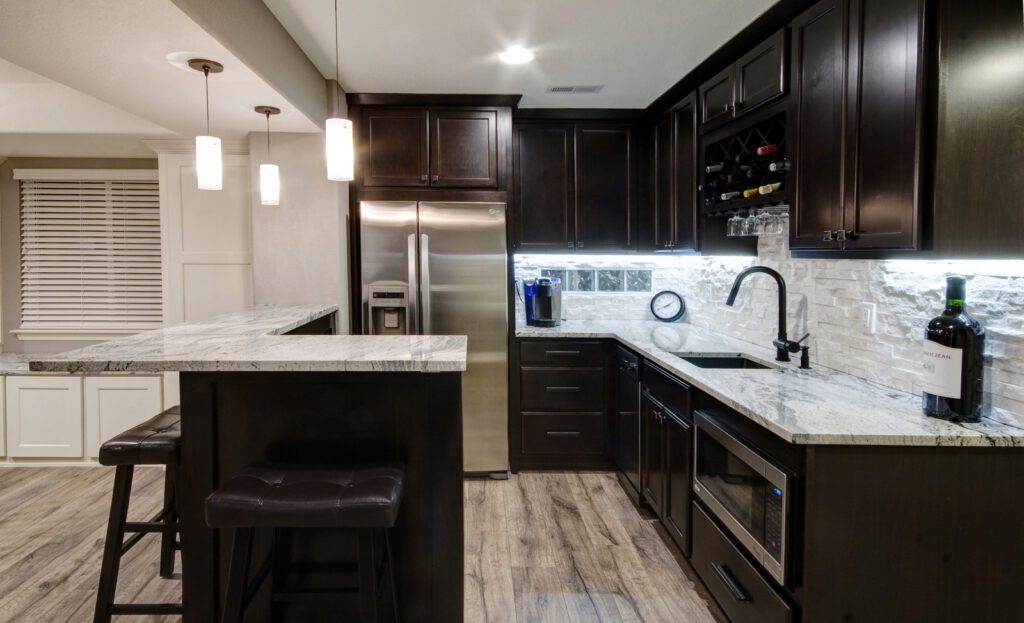
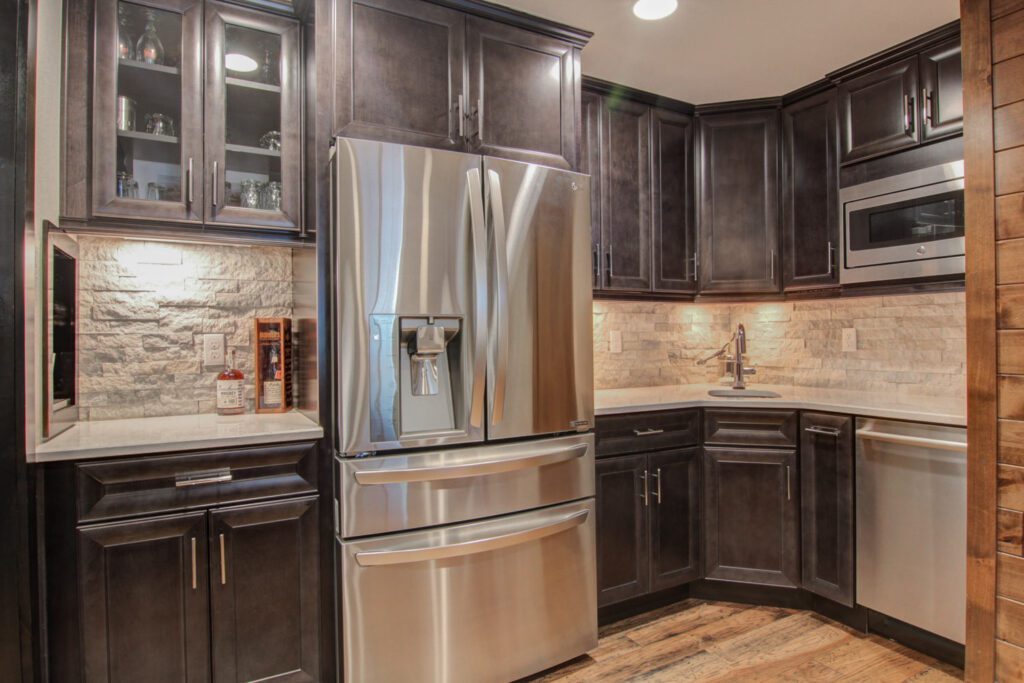
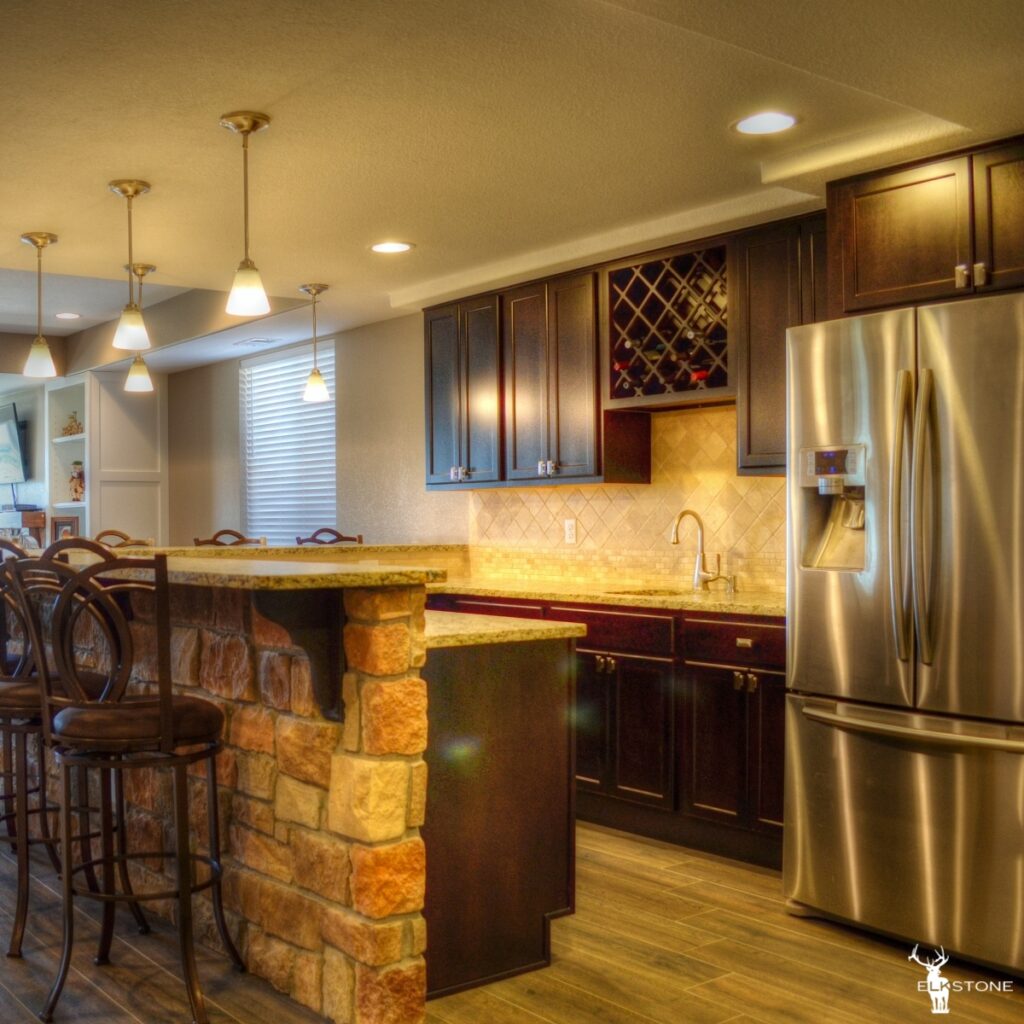
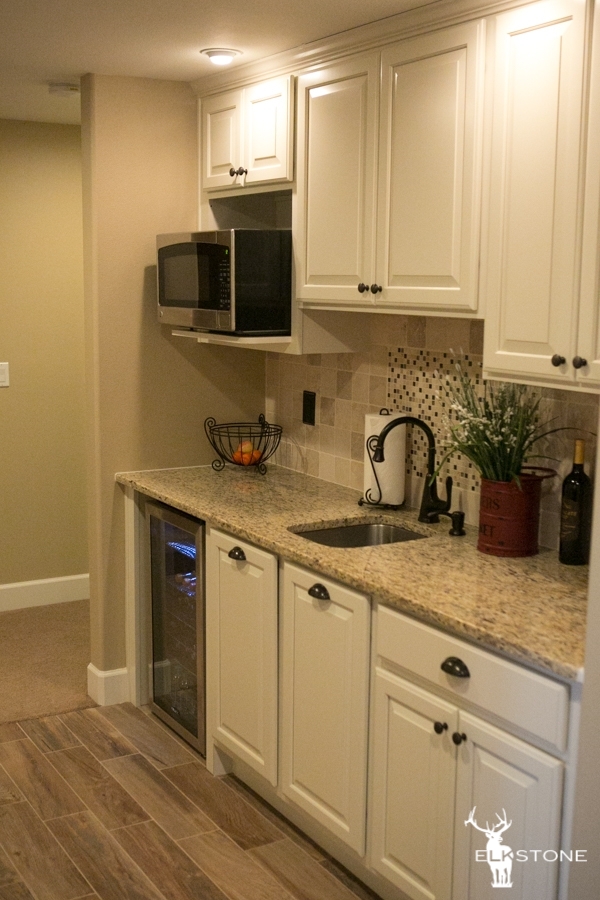
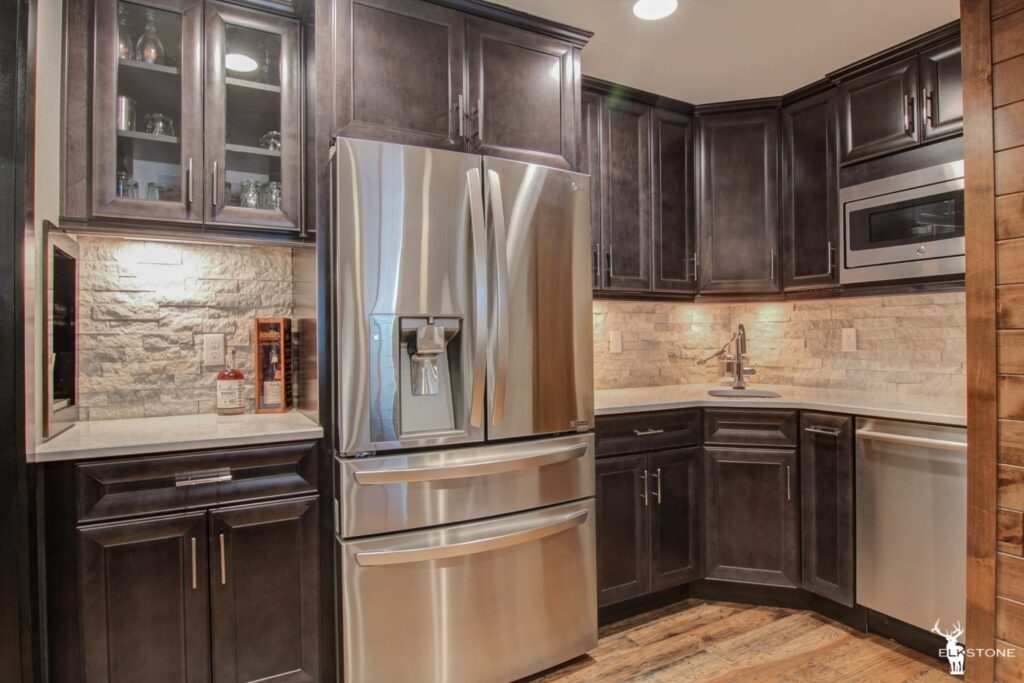
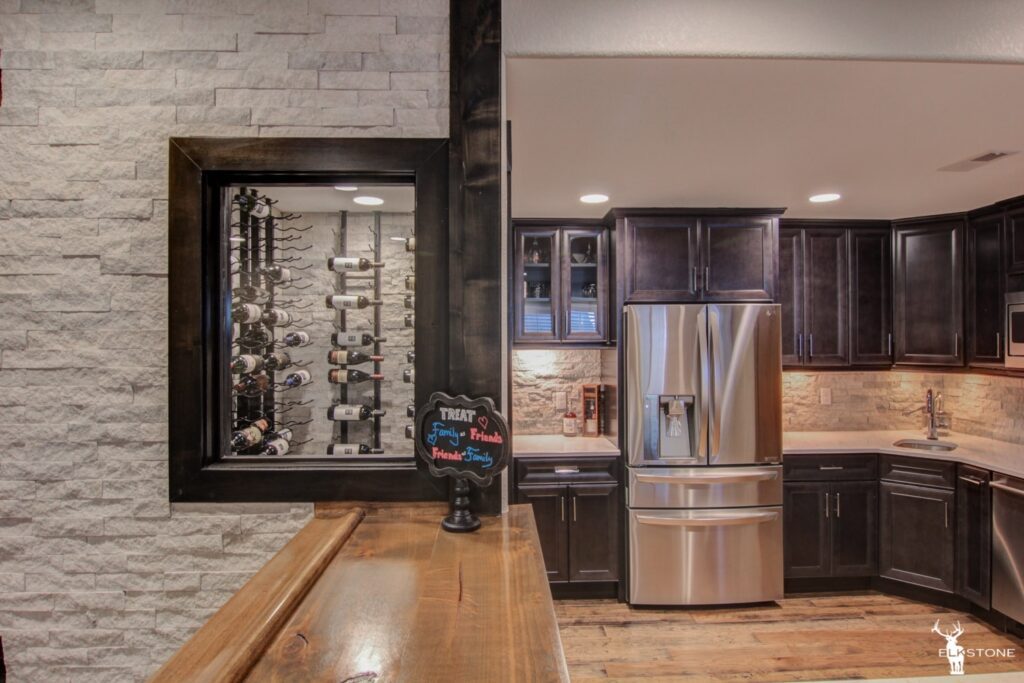
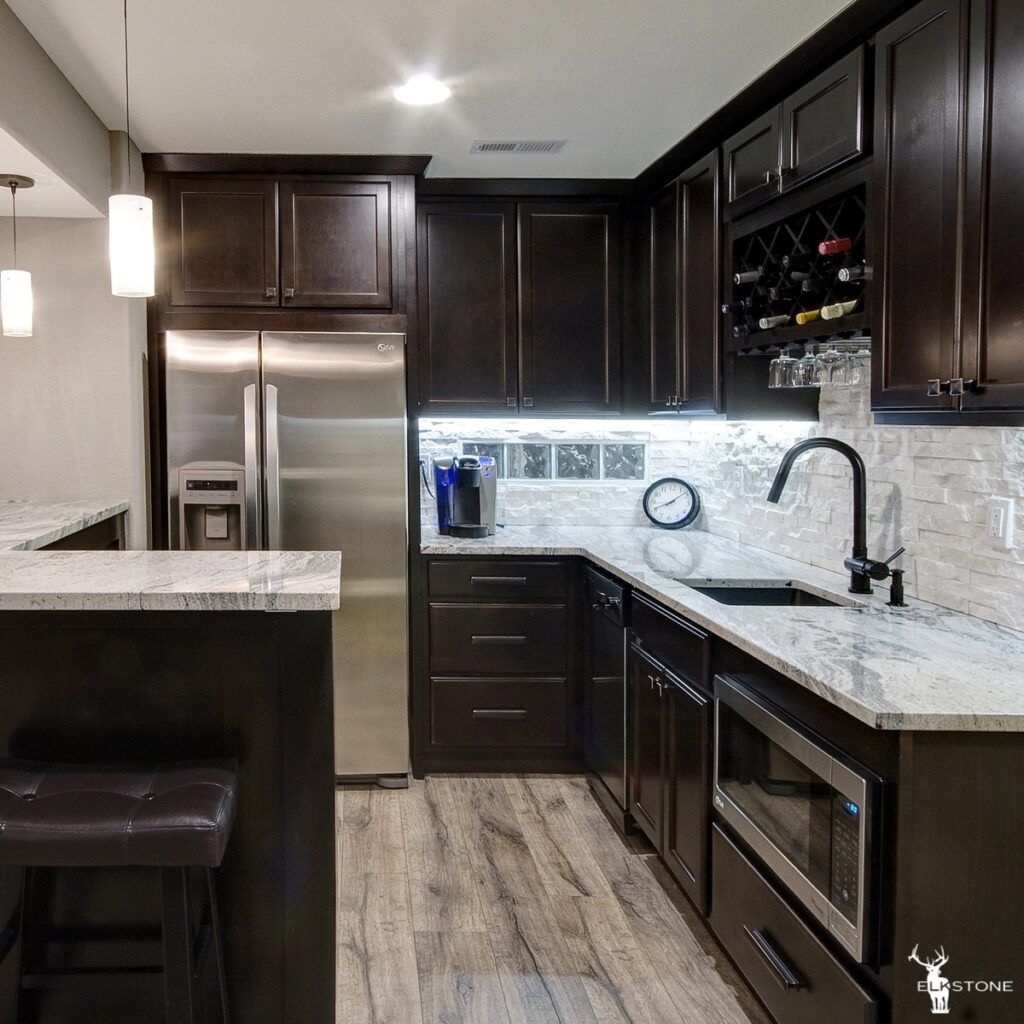
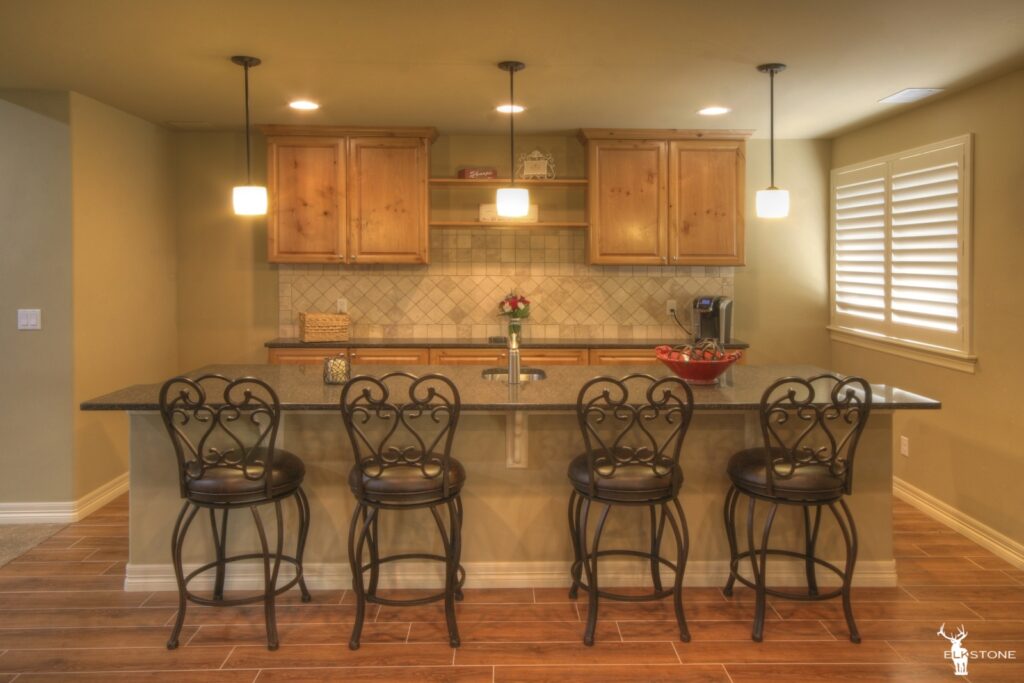
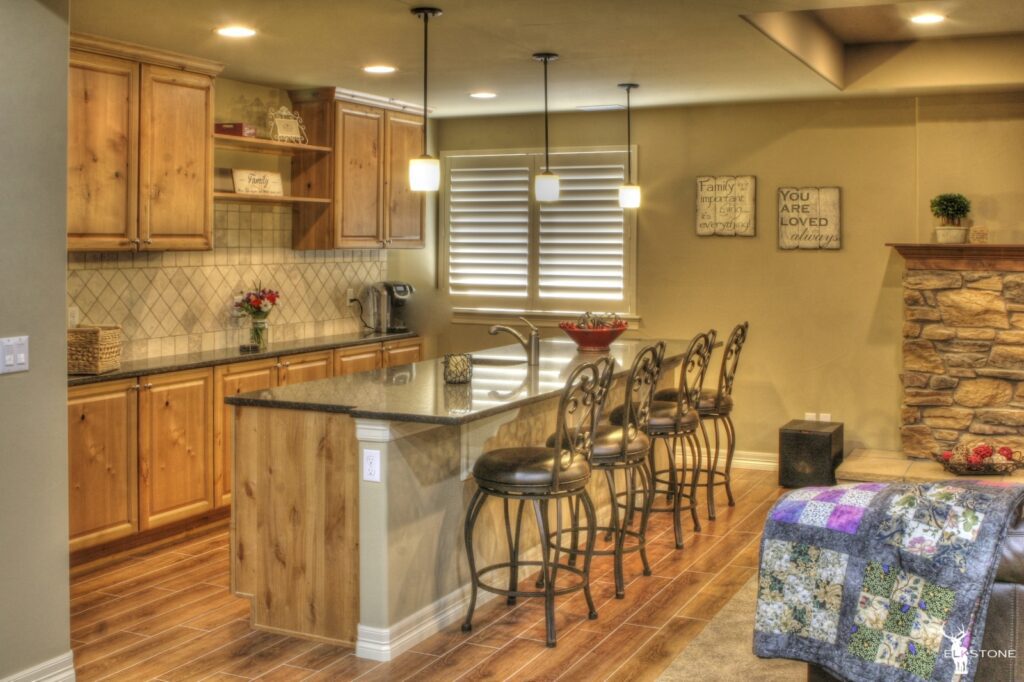
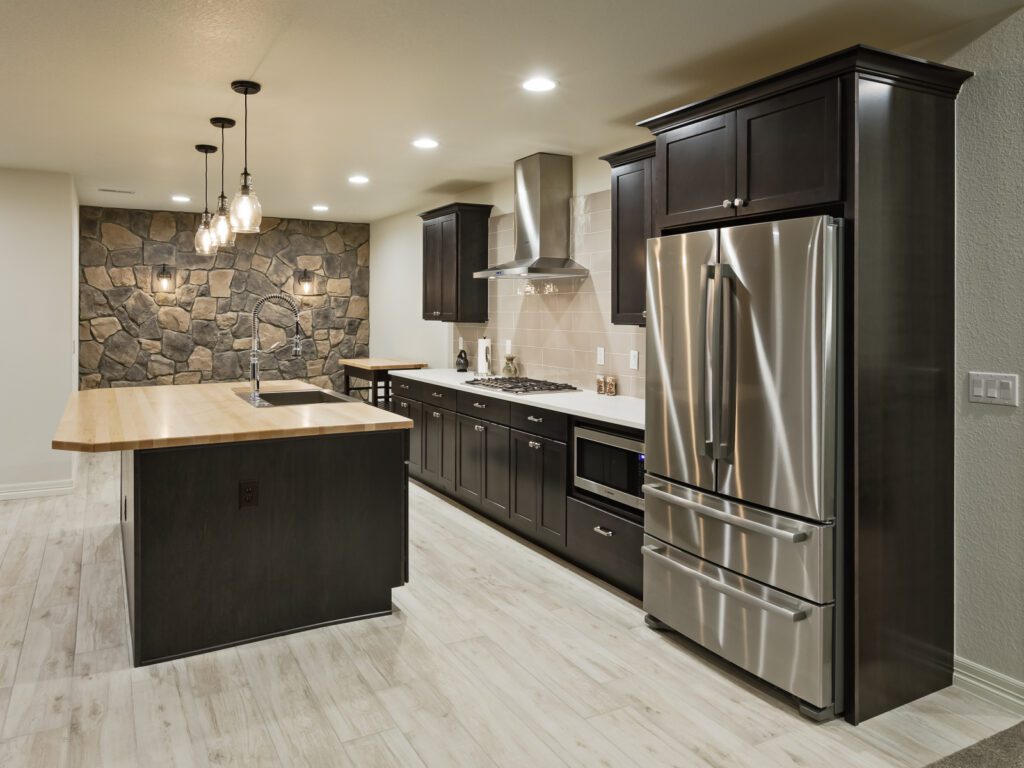
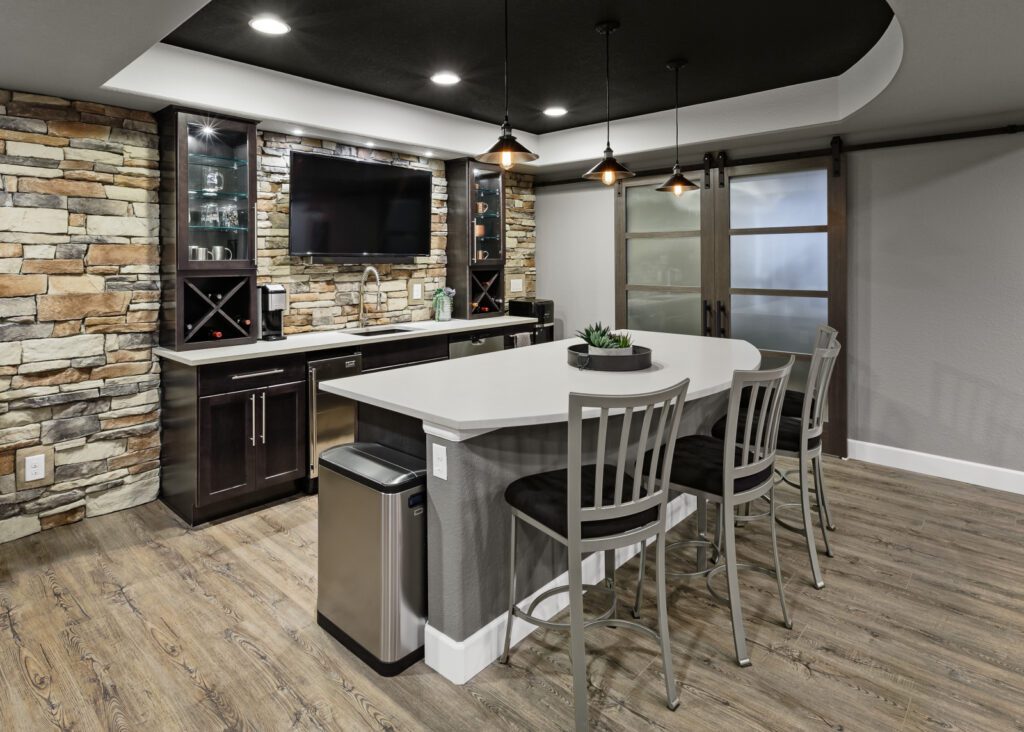
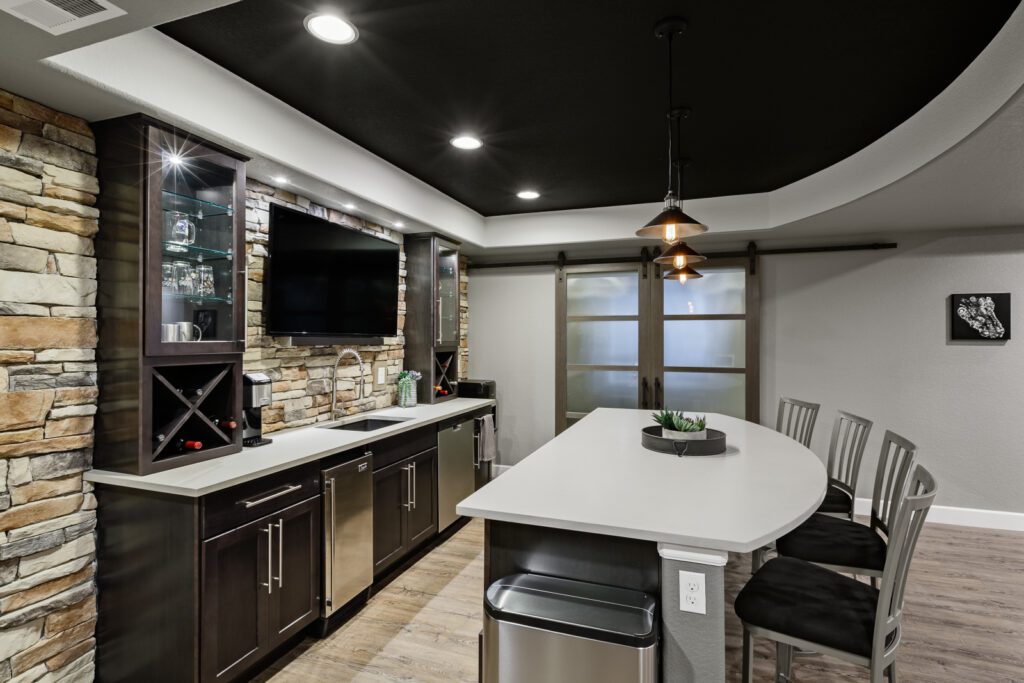
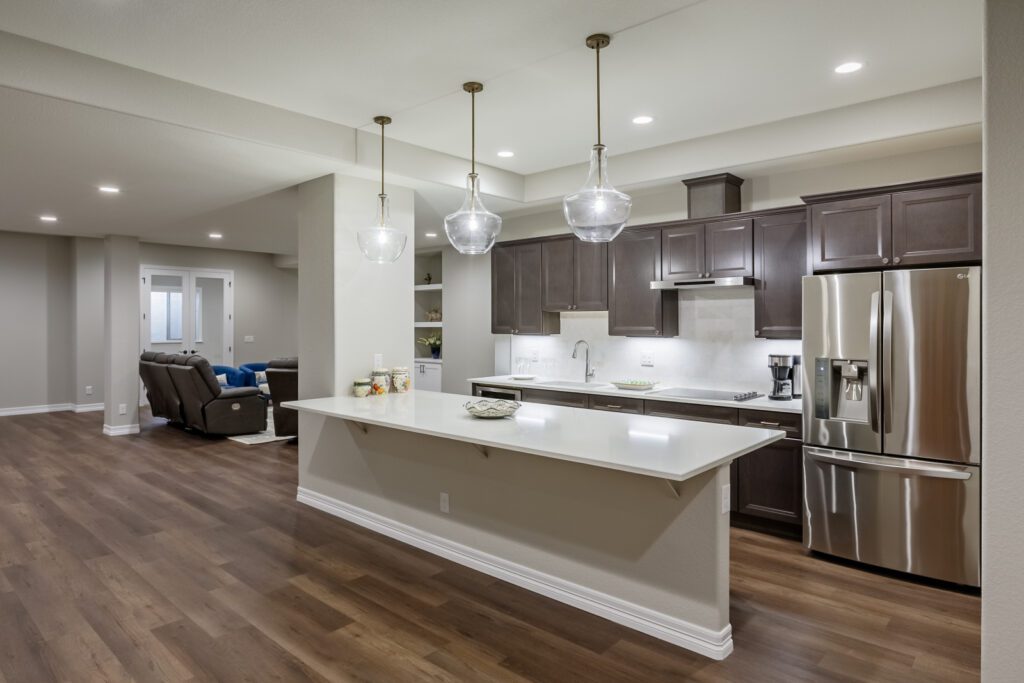
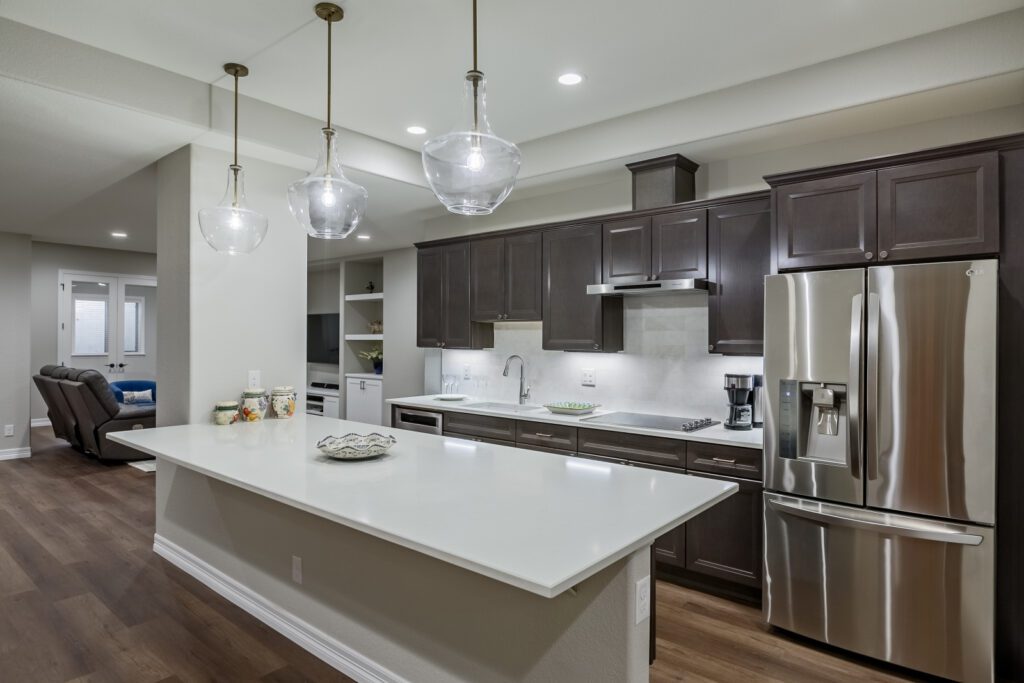
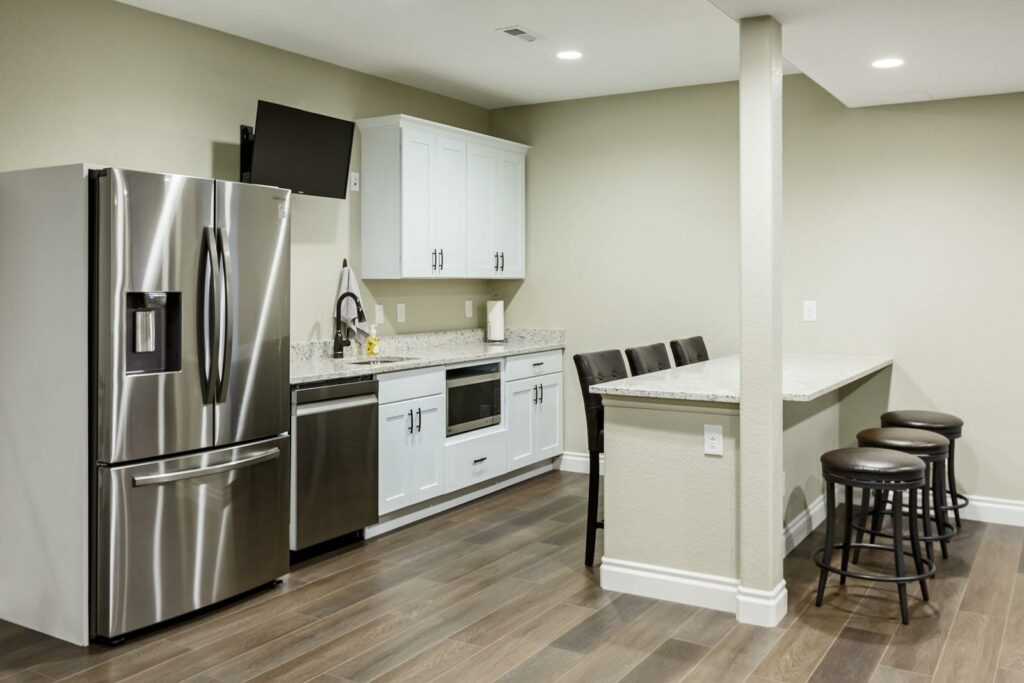
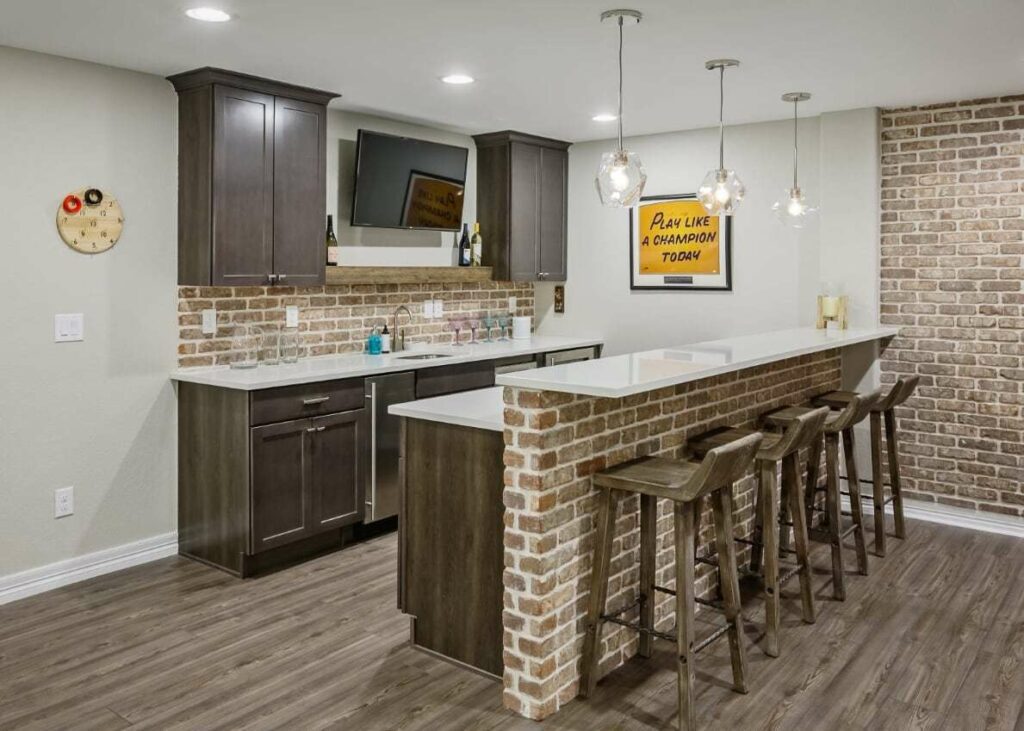
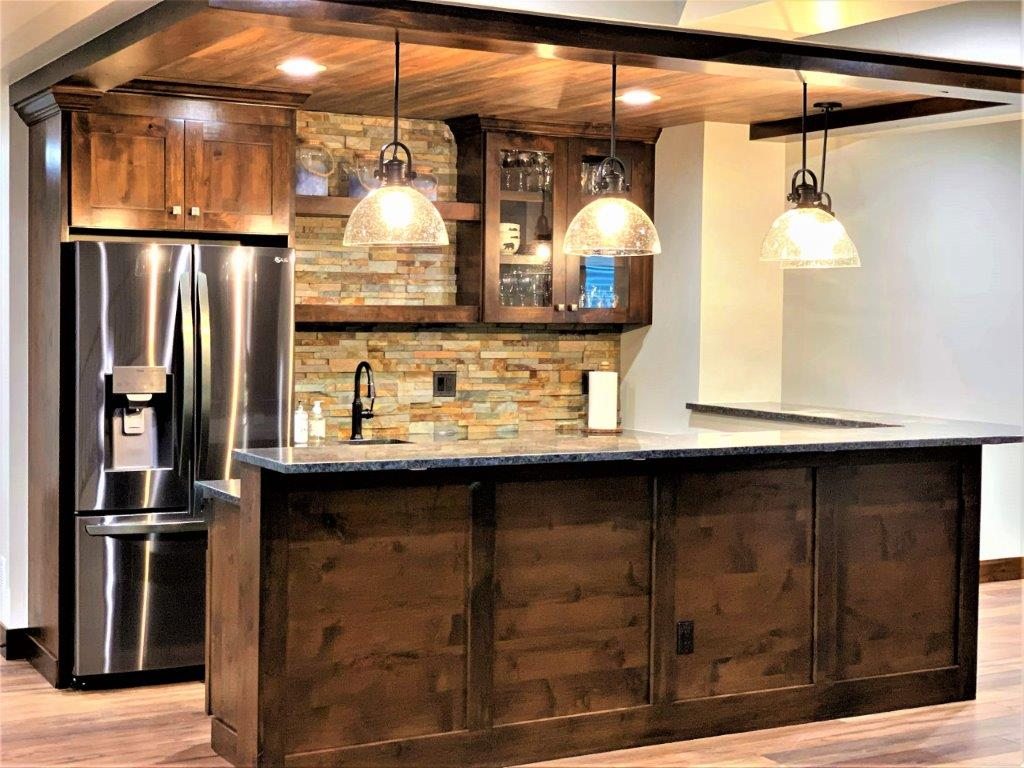
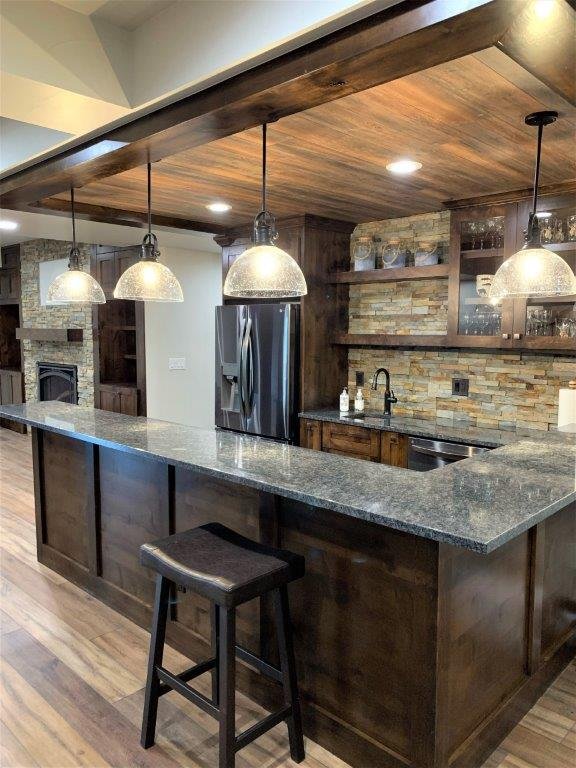
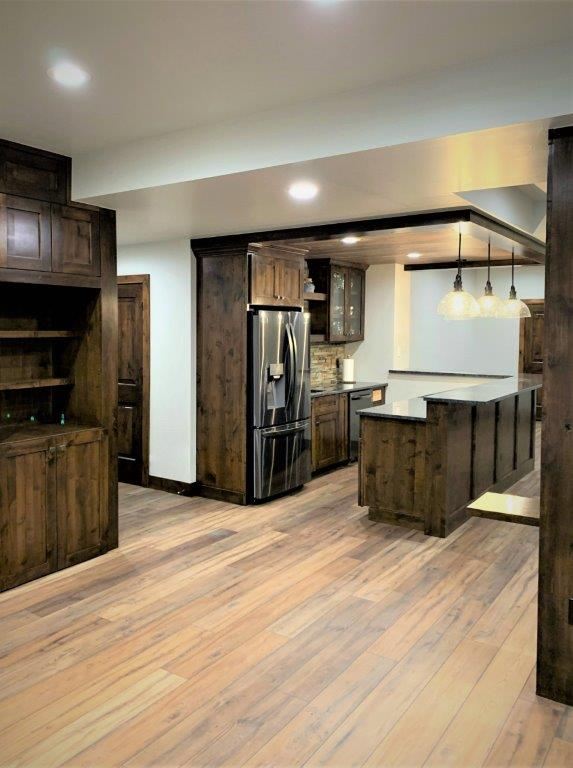
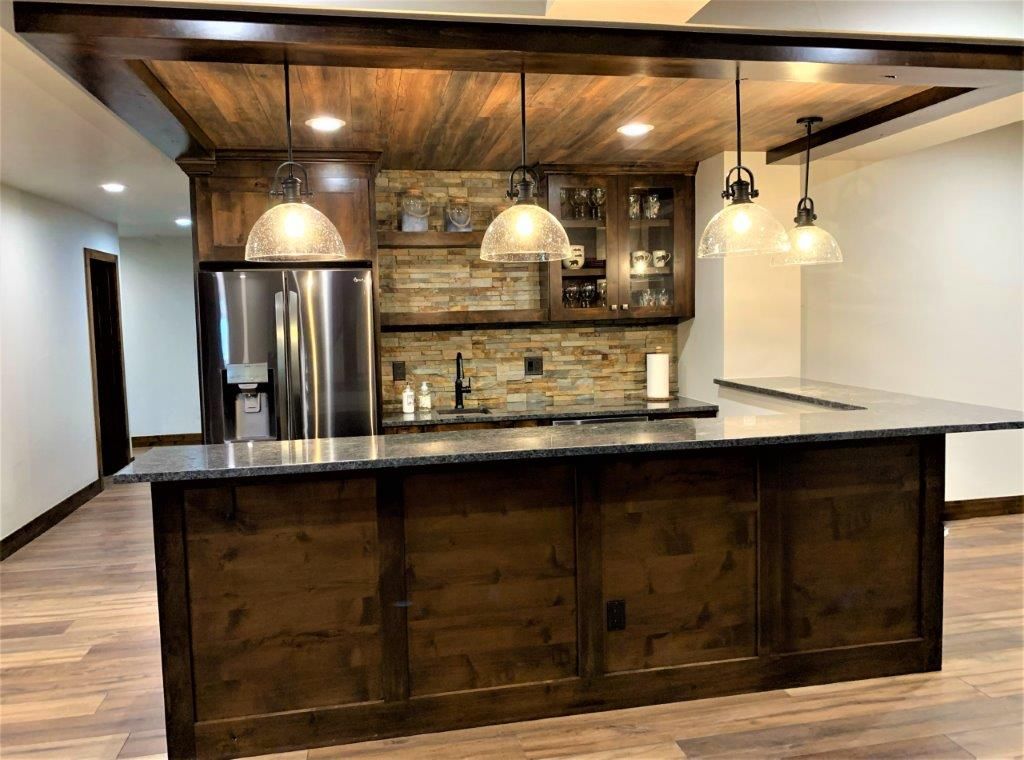
Most of our kitchenettes live in a single-wall layout, which stacks plumbing, power, and exhaust in one chase instead of three. A typical build includes:
- Under-counter refrigerator, 3.2 to 5.1 cubic feet
- Two-burner induction cooktop in place of a full range
- Microwave or air fryer combination set into a cabinet cubby
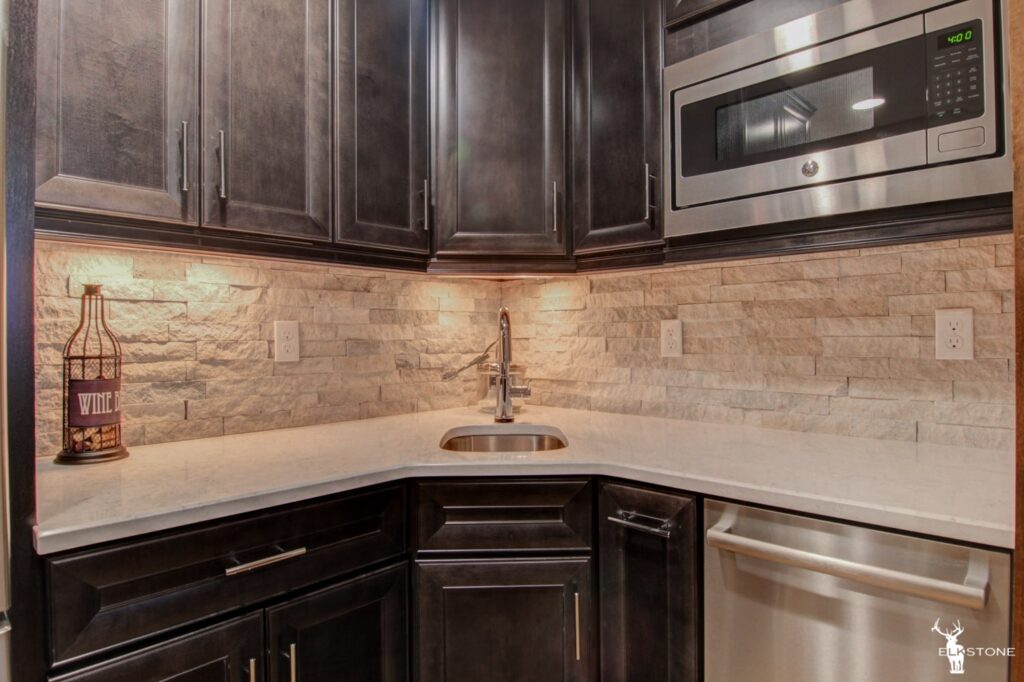
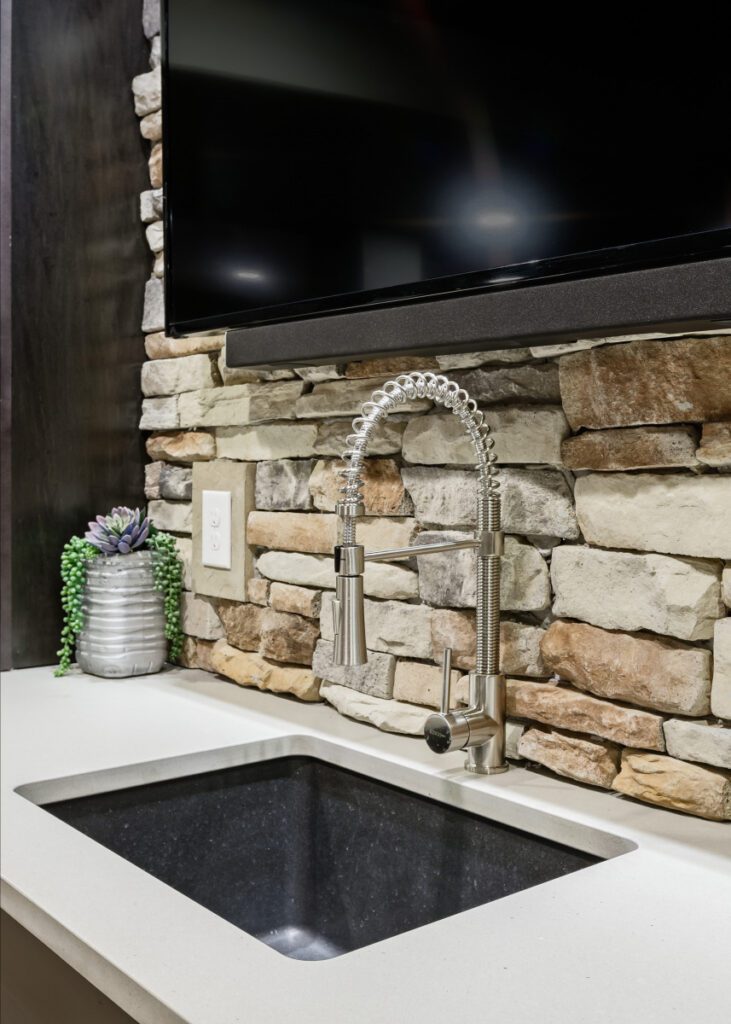
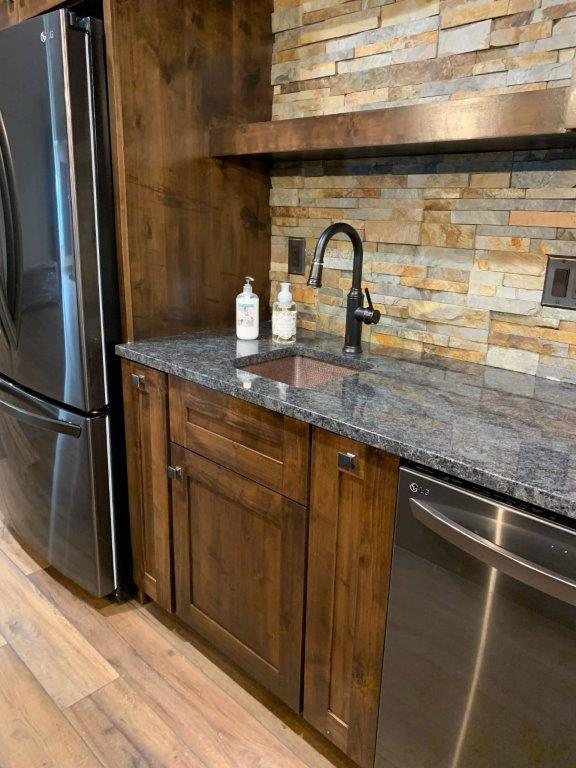
- Single-basin bar sink with an 18-inch dishwasher
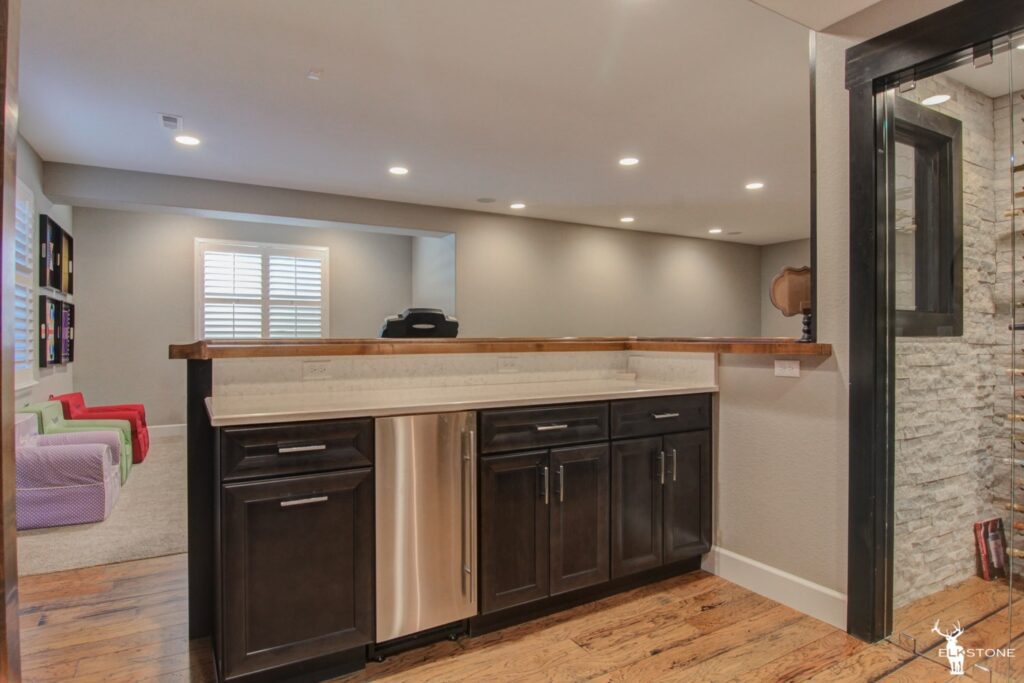
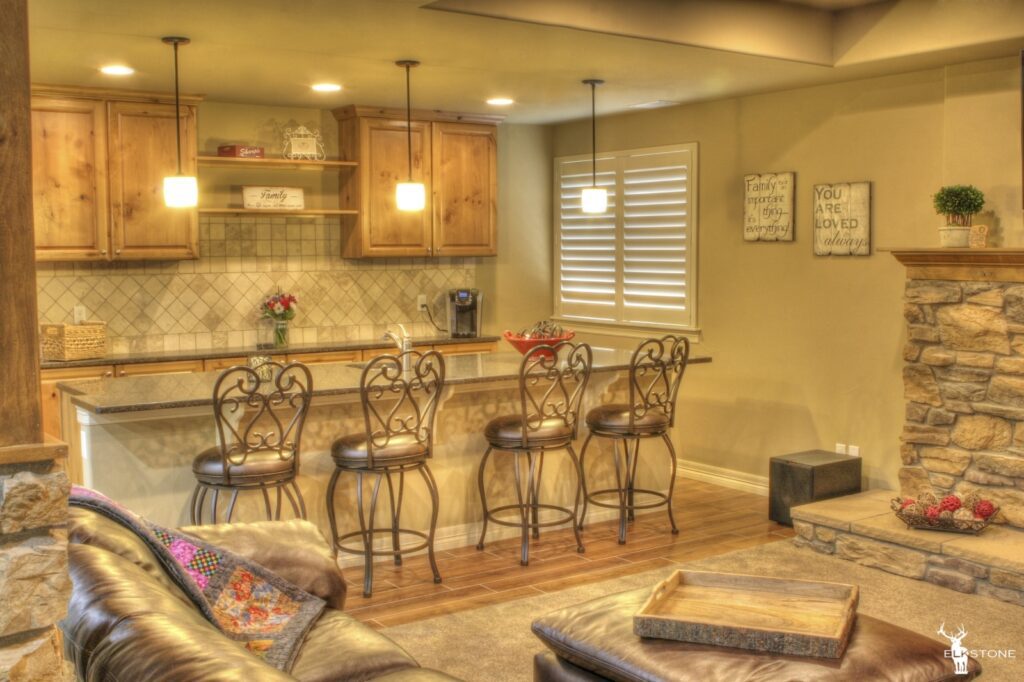
- Counter overhang deep enough for two tuck-under stools
- Under-cabinet LED strips layered with recessed cans
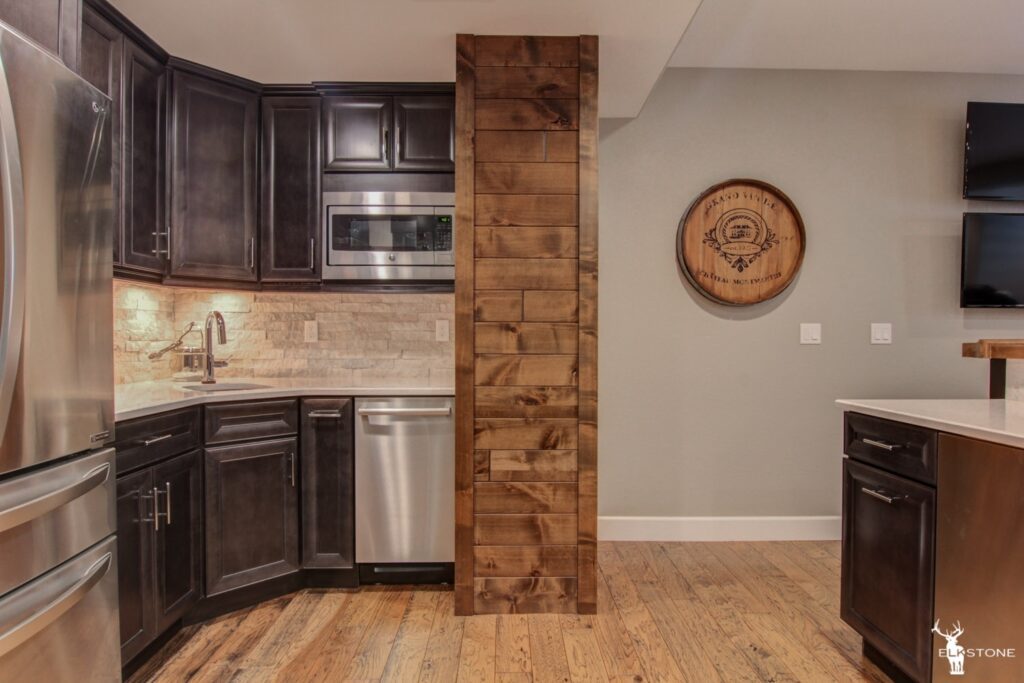
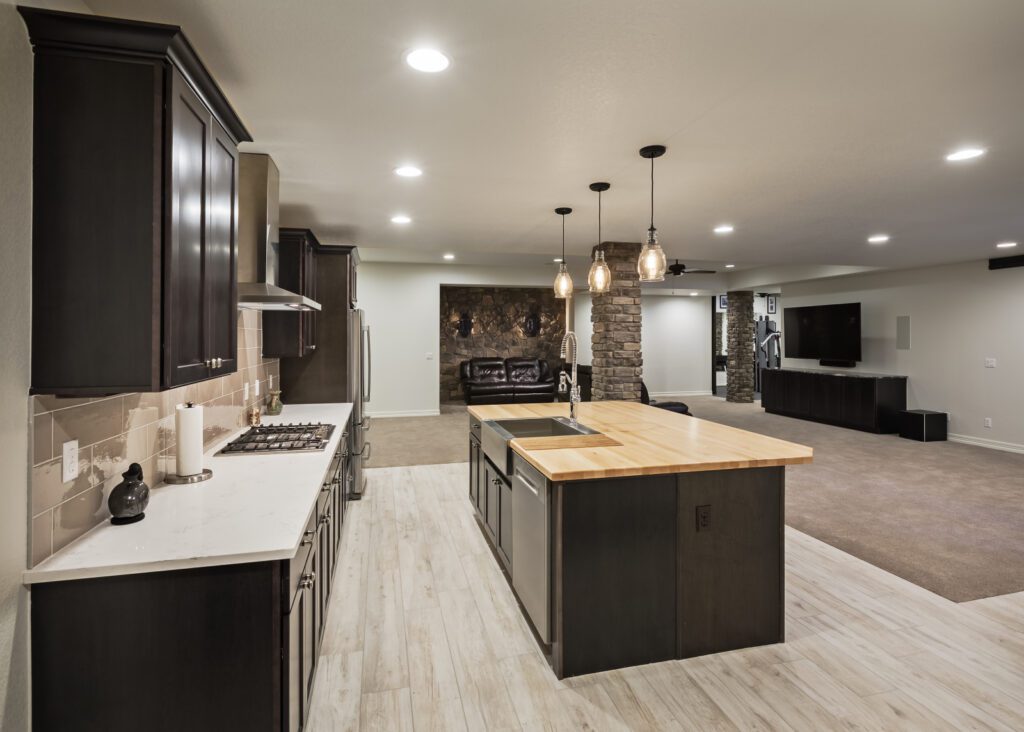
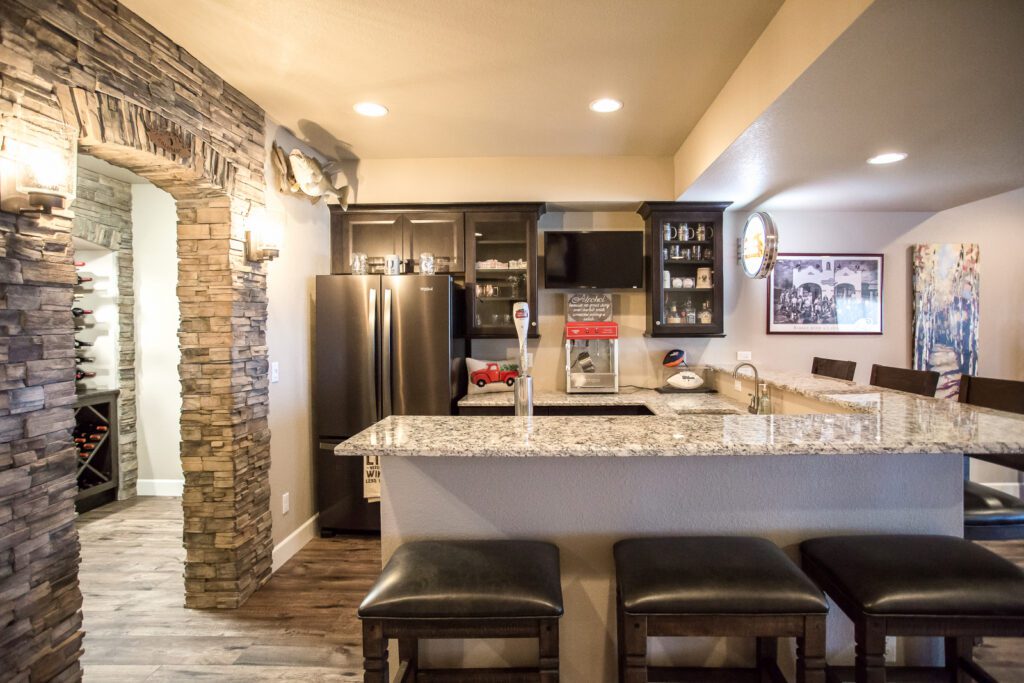
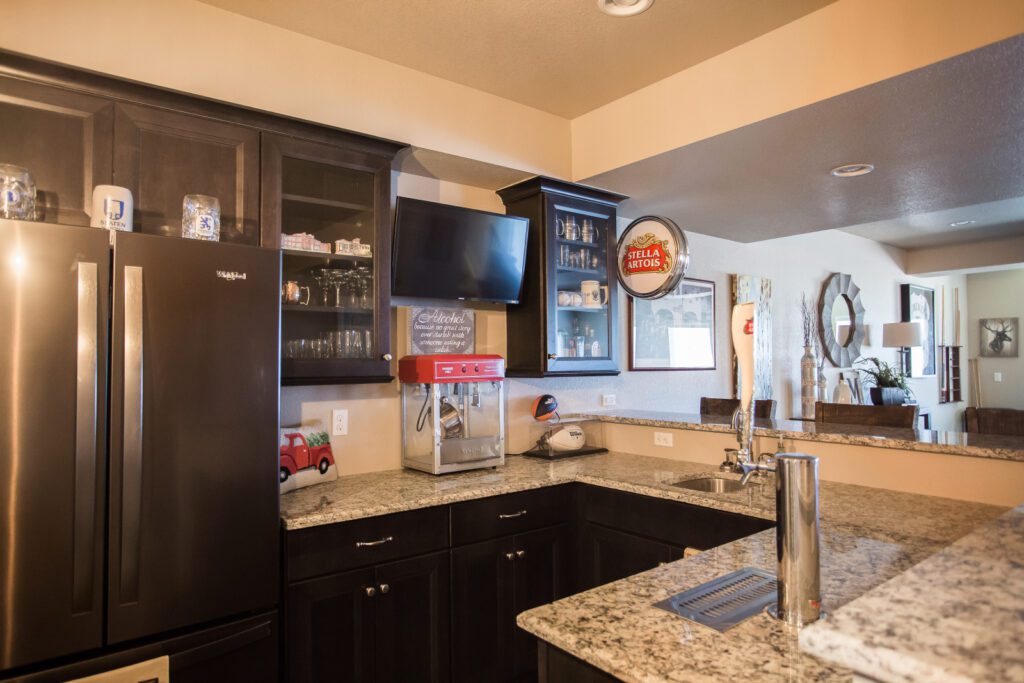
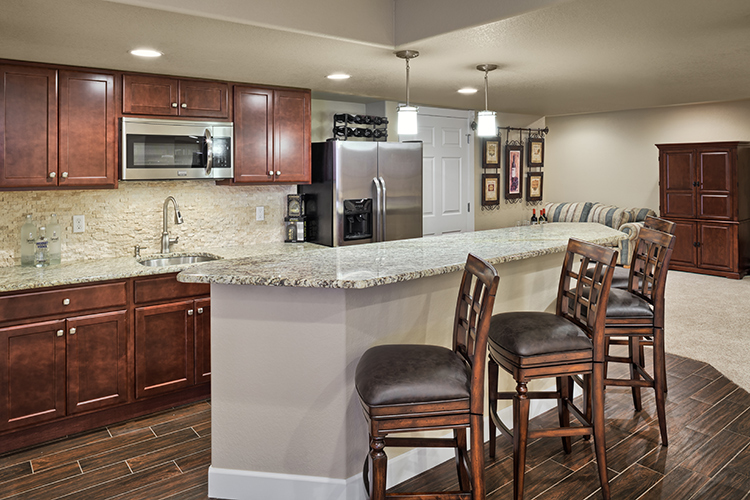
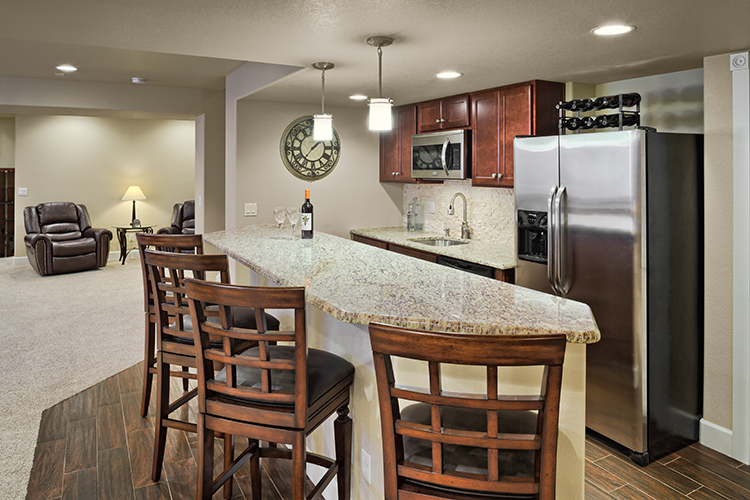
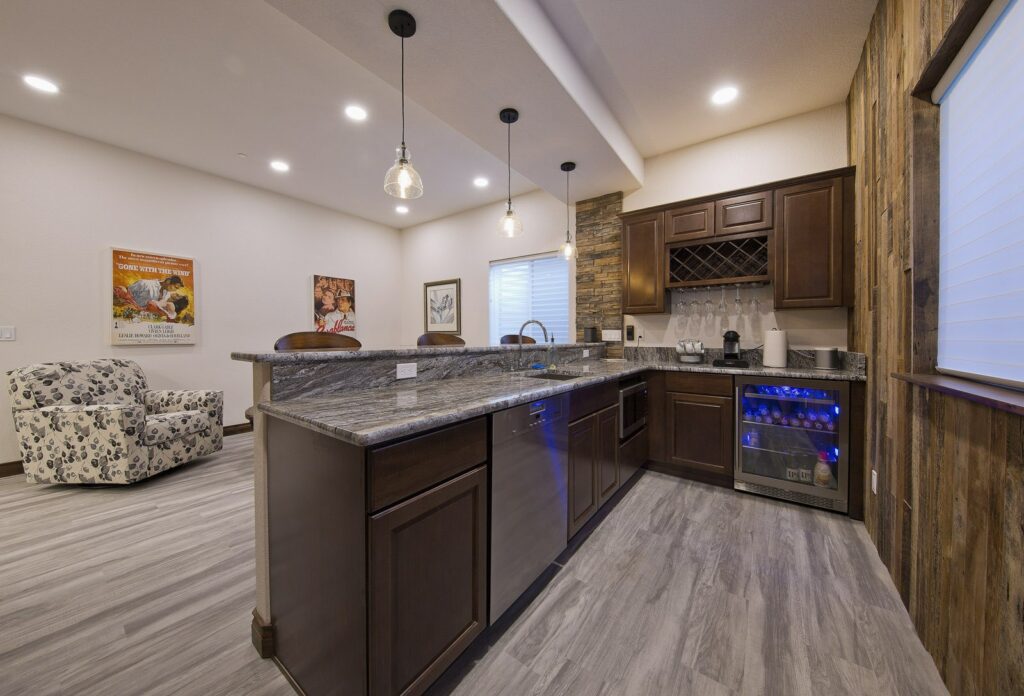
L-shaped layouts work when the kitchenette anchors a rec room. In tighter footprints, the same principles that guide small basement design apply here.
Basement Kitchenette FAQs
How Much Does A Basement Kitchenette Cost?
National installed pricing runs roughly $9,750 to $19,500 depending on appliance grade and how far the space sits from existing plumbing. Within a full finish, we typically budget $8,000 to $15,000 for bar and kitchenette scope. See our breakdown of basement finishing costs in Colorado for context.
Does A Basement Kitchenette Need A Permit?
Yes. Any sink, dedicated circuit, or exhaust run requires permitted work, and adding a cooking appliance can trigger zoning review on top of the building permit. Our Denver basement permit guide explains the sequence.
Do I Need Ventilation For A Basement Kitchenette?
Induction and microwave setups usually need only recirculating or light exhaust. Gas or a full range means a ducted run to the exterior, which is the constraint that most often reshapes a layout.
Browse finished examples in our project portfolio, then start your design consultation to price your space.