
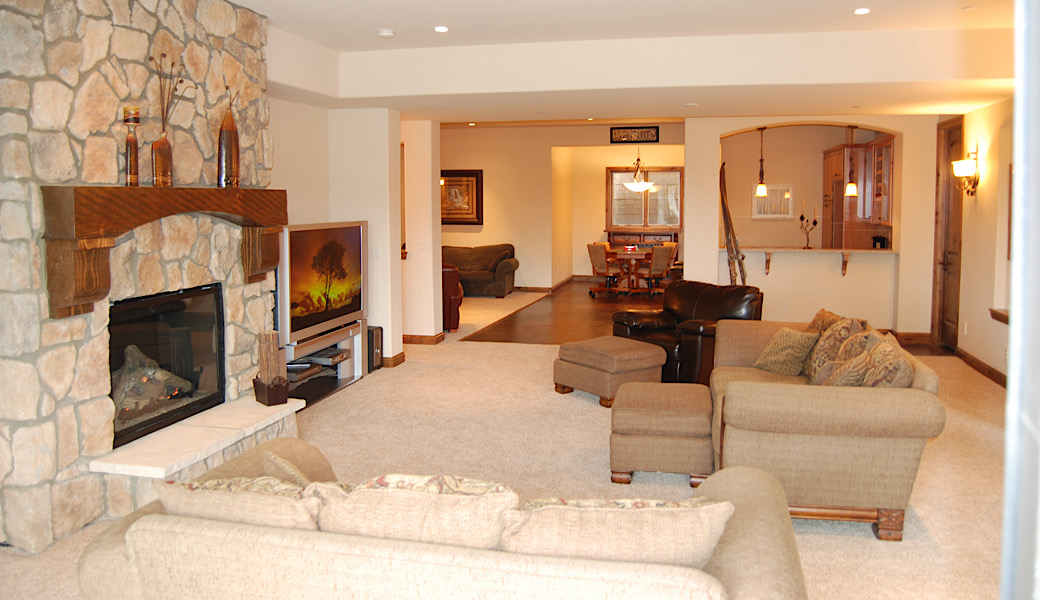
A permit-first approach to basement finishing across Colorado (not just Denver)
If you’re planning a basement remodel in Denver or anywhere in Colorado’s Front Range, the smartest first step isn’t picking paint colors—it’s confirming the permit path, inspection schedule, and code triggers that affect cost, timeline, and resale. Denver adopted new building and fire codes on June 13, 2025 (now the active baseline going into 2026), so “how we used to do it” advice can get outdated fast. This guide breaks down what typically requires permits, what plan reviewers look for, and how to keep your project moving with fewer surprises.
Why permits matter for basement finishes (comfort, safety, and future resale)
A finished basement often adds the most usable square footage for the least disruption—especially in Colorado where outdoor living seasons can be unpredictable. But basements also concentrate the “highest stakes” parts of a home: egress, fire safety, electrical loads, moisture control, and ventilation. Permits and inspections exist to ensure those pieces are built to code and documented properly.
For homeowners thinking ahead to resale, permits create a paper trail. When appraisers, buyers, and inspectors ask whether a basement bedroom is legal or whether a wet bar was installed to code, a permitted project is easier to defend—and easier to value. This is one reason basement finishing in Colorado is most successful when permits are treated as part of the design process, not an afterthought.
The big 2026 context: Denver’s code adoption + Colorado energy-code requirements
Denver adopted new building and fire codes on June 13, 2025, including the 2024 International Residential Code (IRC) and continuing with the 2021 International Energy Conservation Code (IECC) framework (with local amendments). That’s the code environment projects are navigating in 2026.
Statewide, Colorado’s energy-code rules push jurisdictions toward the 2021 IECC plus “electric-ready/solar-ready” provisions when they adopt or update building codes (with an additional shift required after July 1, 2026 for a lower-energy/carbon model). The practical takeaway: insulation, air sealing, ventilation, and equipment choices matter—especially if you’re adding conditioned space in a basement.
Step-by-step: How to plan a permitted basement finish in Denver (and how it translates across Colorado)
1) Define the scope in “permit language”
Permit offices care less about “man cave vs. hangout space” and more about what’s being built: new walls, new bedrooms, new bathrooms, new plumbing fixtures, electrical circuits, HVAC changes, or a new exterior opening. The more your basement project touches structure, life-safety, plumbing, mechanical, or electrical systems, the more likely permits (and multiple inspections) are required. If framing is part of your scope, understanding how basement framing is reviewed in Denver can help you avoid plan-review comments and field corrections later.
2) Decide: homeowner-permit path or contractor-permit path
Denver allows eligible homeowners to apply for certain permits themselves, but there are important restrictions (property type matters), and trade work (electrical/plumbing/mechanical) may require either licensing or a homeowner exam.
Across Colorado, rules vary by city/county. Some jurisdictions are friendlier to homeowner applications than others, and many have different submittal templates. If your goal is speed and fewer re-submittals, a basement-focused contractor who runs permits daily can be a major advantage.
3) Plan for plan review (drawings and documentation)
Denver treats basement finishes under its residential interior remodel workflow and expects you to review requirements before applying. Even when a basement looks “simple,” plan reviewers often want clear floor plans, room uses, dimensions, smoke/CO alarm locations, and details that show safe egress where bedrooms are involved. Homeowners often benefit from reviewing a structured basement remodel checklist before submitting drawings.
4) Budget time for inspections
Basement finishing typically involves at least a rough-in stage and a final stage, with insulation/energy checks often in between depending on scope and jurisdiction. A clean inspection path protects your schedule—especially when trades overlap.
Tip: Treat inspections like “project milestones” in your calendar. If you’re finishing a family room, adding a basement bathroom, or building a kitchenette/wet bar area, inspection sequencing becomes the difference between a smooth build and a stop-start project.
5) Verify “code-trigger” features before design is finalized
Common triggers that can change your plan:
• Bedrooms: egress requirements and room dimensions/clearances often become focal points.
• Bathrooms: plumbing venting, drains, and mechanical ventilation.
• Wet bars/kitchenettes: plumbing + electrical + GFCI/AFCI requirements and clearances.
• Fireplaces: fuel type, venting, combustion air, and clearances drive both design and permit scope.
• HVAC changes: new registers/returns and ventilation can require mechanical permits and documentation.
Did you know?
- Denver’s active code baseline changed in 2025.
- Denver adopted 2024 I-codes (including the 2024 IRC) on June 13, 2025, which is the backdrop for 2026 projects.
- Homeowner permits can be restricted by property type.
- In Denver, homeowner-permit eligibility comes with limitations (and trade work can require exams or licensing).
- Energy requirements can affect basement comfort.
- Insulation, air sealing, and ventilation aren’t just “nice-to-haves”—Colorado’s energy-code direction pushes jurisdictions toward stronger standards.
Quick comparison: common basement upgrades and typical permit considerations
| Basement upgrade | Why it can trigger permits | Plan for |
| Finish a family room | New walls, electrical outlets/lighting, insulation | Rough + insulation + final inspections (jurisdiction-dependent) |
| Add a basement bathroom | New plumbing drains/vents, water lines, electrical and ventilation | Plumbing and electrical rough-in inspections before drywall |
| Build a wet bar / kitchenette | Plumbing + GFCI/AFCI electrical requirements and clearances | Fixture placement, dedicated circuits, and inspection timing |
| Add a bedroom | Life-safety: egress and related code requirements | Window/exit planning early (before framing is finalized) |
| Install a fireplace | Fuel gas / venting / clearance and mechanical considerations | Product specs + vent route planned before finishes |
Note: Permit requirements vary by city/county across Colorado. Denver-specific permitting guidance is published by Denver Community Planning & Development.
What typically slows down basement permits (and how to avoid it)
Missing clarity on room use
A “flex room” can be interpreted multiple ways. If a space could function as a bedroom, reviewers may focus on egress and safety items. Label rooms accurately and design intentionally—especially in Denver where interior remodel guidance is specific about reviewing requirements before applying.
Trade work not coordinated (electrical/plumbing/mechanical)
Basement bathrooms, wet bars, and kitchenettes add multiple trade scopes. If your permit path involves homeowner applications in Denver, confirm trade-permit rules early—Denver’s homeowner permit process outlines exam/licensing expectations for trade work.
Energy and comfort details treated as “later” decisions
In Colorado, basement comfort hinges on insulation strategy, air sealing, and ventilation. Because energy-code requirements are evolving statewide, it’s smart to lock your approach early rather than redesign after plan review or inspection feedback.
Local angle: Denver rules—and how they compare across Colorado
Denver: Expect a structured plan review process for basement finishes under residential interior remodel guidance, and pay close attention to homeowner-permit eligibility if you’re considering DIY management.
Front Range cities and counties (statewide Colorado note): Many areas (Jeffco, Arapahoe, Adams, Douglas, Larimer, Weld, El Paso, and others) have their own permit portals, fee schedules, and inspection workflows. Even when the underlying codes are similar, the submittal checklist and review timing can differ.
Best practice anywhere in Colorado: If your basement plan includes a bathroom, wet bar, kitchenette, fireplace, or any bedroom potential, treat permitting and inspections as part of the design—not an afterthought. That’s how you protect your timeline, your comfort, and your home’s long-term value.
Planning your layout next?
Once the permit scope is clear, design becomes the fun part—family rooms, theaters, rec rooms, gyms, wet bars, and more. Browse inspiration and functional layouts that work well in Colorado basements.
Fast timeline option for Colorado homeowners
If your priority is a streamlined process and a predictable finish, ElkStone’s Express option is designed to keep decisions clear and momentum high—especially helpful when you want to align trades and inspections efficiently.
See Express Basement Finishing
Considering a custom basement?
For basements that include a bathroom, wet bar, home theater, specialty room, or multi-zone layout, a custom plan helps you align code requirements with the way you actually live in the space.
Learn about Custom Basement Finishing
Want a permit-smart basement plan that fits Colorado life?
ElkStone Basements specializes exclusively in basement finishing and remodeling across Colorado’s Front Range (and also in Utah). If you’re planning for 2026 and want a clean scope, clear timeline, and a basement design that holds up to inspections, we can help you map the next steps.
Request a Free Consultation View Basement Portfolio
FAQ: Denver basement permits and Colorado basement finishing
Many basement finishing projects do require permits in Denver, especially when you’re adding walls, electrical work, plumbing, HVAC changes, or converting space to bedrooms/bathrooms. Denver provides a specific “Residential Interior Remodel” pathway that includes basement finishes.
Sometimes, yes—if you meet Denver’s homeowner-permit eligibility rules (including property type and owner-occupancy requirements). Trade work may also require licensing or a homeowner’s exam. Always verify your situation before relying on a DIY permit plan.
Denver adopted new building and fire codes on June 13, 2025, including the 2024 IRC, which forms the baseline for many residential projects (with local amendments).
Yes for the planning logic—no for the exact paperwork. Across Colorado, each city/county can have different submittal requirements and review timelines. But the same “permit triggers” (bedrooms, bathrooms, wet bars/kitchenettes, fireplaces, electrical/HVAC changes) apply almost everywhere, and energy-code direction is set by statewide requirements that influence local adoptions.
Before finalizing the layout. The best time is when you’re deciding whether the basement will include a bathroom, wet bar/kitchenette, fireplace, or potential bedroom. Those choices can affect drawings, engineering needs, trade coordination, and inspection sequencing.
Ready to transform your space with a beautiful, functional basement? ElkStone Basements serves homeowners throughout Colorado and Utah with expert design and build services tailored to your needs. Don’t wait to unlock the potential in your home — get started today! Visit to schedule your consultation and take the first step toward your dream basement.
Glossary (helpful permit & code terms)
IRC (International Residential Code)
A model code that governs many aspects of one- and two-family home construction, including safety and structural requirements.
IECC (International Energy Conservation Code)
A model energy code that addresses insulation, air sealing, systems efficiency, and other measures aimed at reducing energy use.
Plan Review
A process where the jurisdiction reviews your drawings and documents before issuing a permit.
Trade Permits
Separate permits often required for electrical, plumbing, and mechanical/HVAC work, depending on scope and local rules.
Egress
A safe way to exit a room or building (often a focus for basement bedrooms).

Recent Comments