
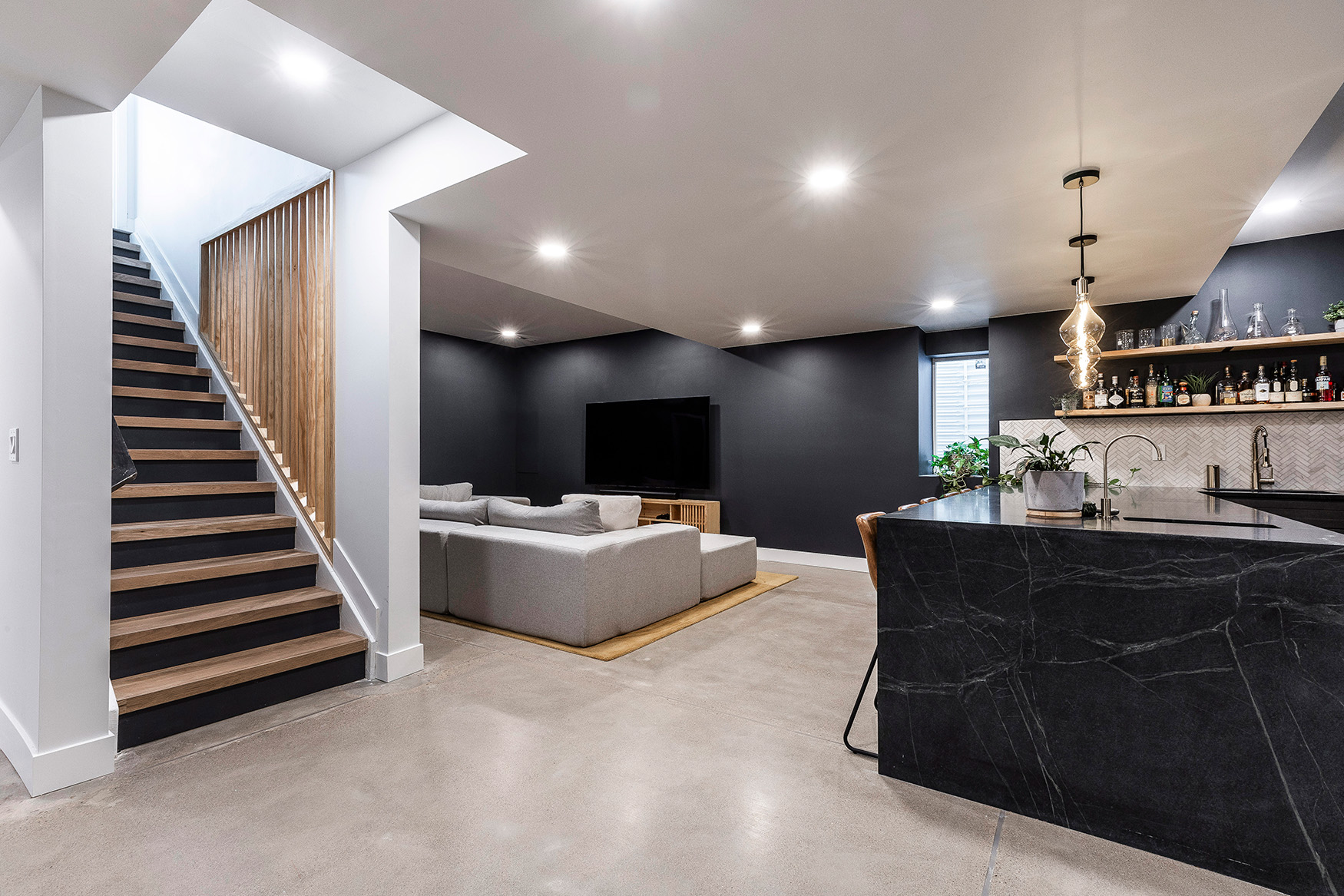
If you’re planning to finish your basement, there’s one step that should happen before the drywall goes up: testing for radon.
Radon is an invisible, odorless, radioactive gas that occurs naturally when uranium in soil and rock breaks down. It seeps up through the ground and can enter your home through foundation cracks, construction joints, gaps around pipes, and sump pits. Because it has no smell, color, or taste, the only way to know if it’s in your home is to test for it.
Here’s why it matters, especially in Colorado, and what to do about it.
Why Radon Deserves Your Attention
Radon is the second-leading cause of lung cancer in the United States, behind only smoking. It’s estimated to contribute to thousands of preventable lung cancer deaths every year. Smokers exposed to elevated radon levels face an especially high risk, but nonsmokers are affected too.
The tricky part is that radon can show up in any home — old or new, drafty or well-sealed, with or without a basement. Local geology plays a role, and Colorado’s soils are known to produce higher-than-average radon levels in many areas. That means testing isn’t optional if you’re planning to spend more time living in a below-grade space, which is exactly what a finished basement invites.
Why This Matters More When You Finish a Basement
An unfinished basement that’s rarely used gets a pass from a lot of homeowners. But once it becomes a bedroom, home office, or family room, you and your family are spending real time breathing whatever air collects down there. Converting an unfinished area into living space is one of the specific situations where testing beforehand is strongly recommended, since renovations can change how radon moves through and accumulates in a home.
The good news: if you test before you build, radon-resistant techniques can be built into the renovation at a fraction of the cost of retrofitting later.
How Testing Works
Testing is simple and inexpensive. There are two main approaches:
- Short-term tests (2–90 days) give you a quick read using a charcoal canister, alpha track detector, or continuous monitor.
- Long-term tests (90+ days) give a more accurate picture of your year-round average, since radon levels naturally fluctuate with weather and seasons.
The standard approach: start with a short-term test. If your result comes back at 4 picocuries per liter (pCi/L) or higher, follow up with either a long-term test or a second short-term test before deciding whether to fix your home.
For the most reliable results, place the test kit on the lowest lived-in level of the home, in a room you use regularly — never in a kitchen or bathroom — and away from drafts, exterior walls, and excess humidity.
What the Numbers Mean
- The average indoor radon level in U.S. homes is about 1.3 pCi/L.
- Outdoor air averages around 0.4 pCi/L.
- The EPA’s action level is 4 pCi/L — at or above this, fixing your home is recommended.
- Even levels below 4 pCi/L carry some risk, and reducing them further is often worthwhile.
There’s no scientifically established “safe” level of radon — but the risk scales with exposure, so lower is always better.
If You Have a Problem, It’s Fixable
Radon mitigation is one of the more straightforward home fixes out there. The most common solution is a soil suction system: a vent pipe and fan that pulls radon from beneath the foundation and safely routes it outside before it ever enters your living space. Sealing foundation cracks and openings improves the system’s effectiveness.
Costs are generally in line with other common home repairs, and a passive radon-resistant system installed during construction is far less expensive than adding one after the fact. After any fix, retesting confirms the system is working — and it’s smart to retest every couple of years afterward.
Building It In From the Start
If you’re finishing a basement with ElkStone, we build with radon in mind. Testing before the project begins tells us whether radon-resistant features should be part of the plan — and if levels come back elevated, we can help you understand your options before you ever pick out flooring.
Questions about radon in your home? Give us a call at 303-656-9006, or reach out through our website — we’re happy to walk you through testing and next steps.
Source note: Radon health and testing information referenced from the U.S. EPA’s “A Citizen’s Guide to Radon” (EPA 402/K-12/002).


Recent Comments