
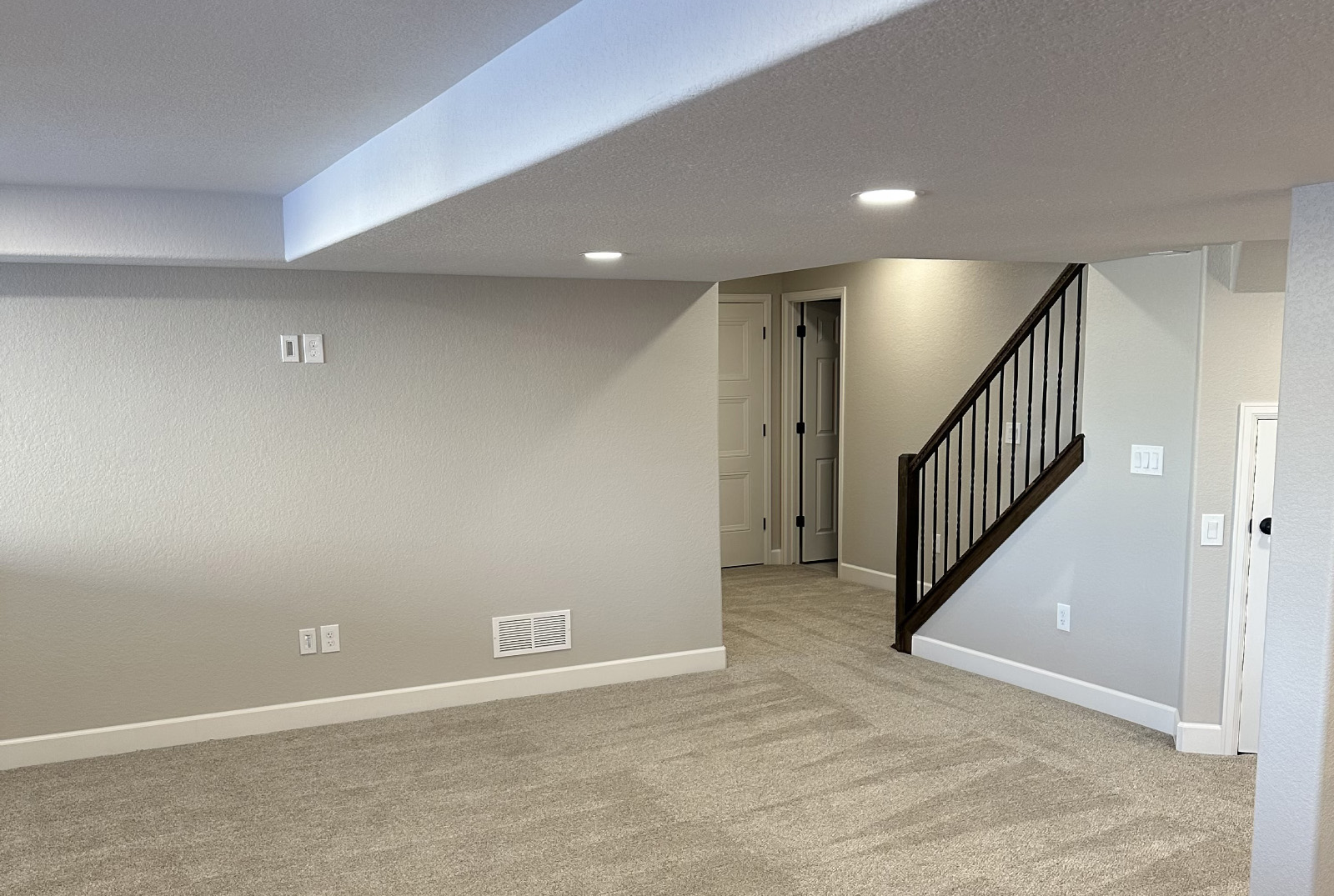
A comfortable basement starts with airflow—not just drywall.
Colorado winters have a way of exposing basement weak spots: chilly floors, dry throats upstairs, musty smells downstairs, and that “why is this room always colder?” feeling. If you’re planning a basement finish along the Front Range, basement HVAC design matters as much as layout and finishes—because the wrong air plan can trap humidity, worsen odors, and make new rooms feel uncomfortable year-round. ElkStone Basements helps homeowners turn basements into healthy, livable spaces with climate-smart planning that supports comfort, indoor air quality, and long-term durability.
Why basement HVAC design is different (especially in Colorado)
Basements don’t behave like the rest of your home. They sit against cool soil, often have limited windows, and can pull in soil gases through tiny cracks. Along Colorado’s Front Range, winter conditions create big temperature swings, and those swings can drive condensation in the wrong assemblies or create “microclimates” room to room.
A solid HVAC plan for a finished basement should address four priorities:
1) Even temperatures: No freezing corners, no overheated media room, no “cold bath” shock in the morning.
2) Fresh air & odor control: Finished basements need reliable ventilation—not just air recirculation.
3) Moisture management: Basements can be dry in winter and humid in shoulder seasons—both can cause issues if the space isn’t balanced.
4) Health-focused air quality (radon-aware): Colorado has widespread elevated radon risk, and testing is especially important if you’ll spend more time downstairs.
Radon + basements + remodel timing
If your February 2026 plan is to add a family room, gym, wet bar, theater, or basement bedroom, your family will likely spend more hours on the lowest level—exactly where radon is most likely to accumulate. Colorado’s health department has reported that approximately half of Colorado homes may test above the EPA action level (4.0 pCi/L).
The EPA also notes buyers often request a new radon test if the last one isn’t recent (for example, within two years) or if you’ve renovated since testing.
“Did you know?” facts that change how you should plan a basement finish
Radon testing is easiest in winter.
Colorado’s guidance highlights that it’s always a good time to test if you can maintain closed-building conditions—many homeowners find winter easiest for that.
Ventilation standards keep tightening as filtration expectations rise.
ASHRAE’s residential ventilation standard has newer editions, and highlights updates that include higher filtration (such as MERV 11 in the 2025 edition) and expanded IAQ guidance.
Basement air can be “clean” but still uncomfortable.
Comfort problems often come from airflow balance and surface temperatures (floors/walls), not just thermostat settings.
Basement HVAC options: what works best for your layout
The “right” solution depends on your square footage, ceiling height, room count, and how you’ll use the space (theater rooms and gyms load the air differently than storage or a guest bedroom). Here’s a practical comparison homeowners can use during planning.
| Approach | Best for | Pros | Watch-outs |
| Extend existing forced-air (add supplies/returns) | Open rec rooms, family rooms, basic finishes | Lower equipment cost; integrated filtration | Can unbalance airflow upstairs; may need damper/zone strategy |
| Add zoning (dampers + controls) | Basements with bedrooms + multiple enclosed rooms | Better temp control room-to-room | More complexity; must be designed to protect equipment/airflow |
| Ductless mini-split (single or multi-zone) | Theater rooms, home gyms, “always colder” basements | Highly efficient; strong comfort control; can reduce reliance on upstairs system | Still needs a ventilation plan; indoor unit placement matters |
| Dedicated ventilation (bath fan strategy, ERV/HRV where appropriate) | Any finished basement with bathrooms, kitchenette/wet bar, high occupancy | Fresh-air consistency; better odor/humidity control | Must be balanced and commissioned so it doesn’t depressurize the basement |
If your plan includes a theater room, home gym, basement bathroom, or wet bar, it’s worth planning HVAC early—those spaces change heat, moisture, and ventilation needs.
A practical HVAC checklist before you finish your basement
1) Define “how the basement will be used” (not just the floor plan)
A quiet office, a teen hangout, and a home gym have very different airflow needs. Write down: how many people, how many hours/day, and whether doors will be closed (bedrooms, theater rooms, storage).
2) Confirm your baseline: moisture history + radon test plan
If you’ve seen damp corners, efflorescence, or musty smells, solve that first—HVAC can’t “fix” bulk water intrusion. For radon: test on the lowest livable level, and follow Colorado’s placement rules (avoid bathrooms, closets, crawl spaces).
3) Plan supply AND return air (to prevent “stuffy room syndrome”)
Supplying air without an effective return path can pressurize rooms, slam doors, and reduce real airflow. Enclosed rooms often need dedicated return(s) or carefully designed transfer pathways—especially for basement bedrooms and theater rooms.
4) Don’t guess on ventilation—make it intentional
Modern residential ventilation guidance increasingly emphasizes minimum ventilation, local exhaust, and filtration improvements. ASHRAE’s residential IAQ standard (62.2) is a key reference many pros use when designing ventilation strategies.
5) Protect comfort with “basement-specific” insulation thinking
The fastest way to create a cold basement is leaving large concrete surfaces under-insulated or using assemblies that allow interior air to reach cold surfaces. A good remodel team coordinates insulation and HVAC so supply air isn’t being used to “fight” cold walls all winter.
If you want a streamlined, budget-aware path, ElkStone’s Express Basement Finishing options can be a smart fit—especially when you still want future-proof choices (like planning chases, returns, and equipment access) without turning the process into a months-long ordeal.
Local angle: Front Range realities that affect basement comfort
Along Colorado’s Front Range (Denver, Boulder-area communities, and down through Colorado Springs), homes often face a mix of winter dryness and shoulder-season moisture swings. That combination makes basements tricky:
Stack effect can steal your warm air.
Warm air rises and exits at the top of the house, pulling replacement air from lower levels. If your basement is leaky or under-ventilated, it can feel colder and draftier.
Basements need “quiet” comfort strategies.
A theater room or guest suite should be comfortable without loud airflow. Planning duct sizes, diffuser locations, and return pathways early helps avoid noisy fixes later.
Radon awareness matters more when basements become bedrooms.
Colorado recommends testing and provides detailed guidance on where and how to test; it’s especially relevant when you’re converting an unfinished basement into living space.
If you’re finishing outside Colorado (ElkStone also serves Utah), explore basement finishing in Utah for region-specific planning and service availability.
Want a basement that feels like the rest of your home?
ElkStone Basements specializes exclusively in basement finishing and remodeling—so details like airflow balance, ventilation, comfort zoning, and buildability are part of the plan from day one.
Schedule a Basement Consultation | View Finished Basement Ideas
FAQ: Basement HVAC design for Colorado homes
Not always. Some basements do great with properly designed supplies/returns and airflow balancing. Separate systems (like a mini-split) can make sense for rooms with unique loads (gyms, theater rooms) or when your existing system can’t support the added space comfortably.
Basements often have colder surface temperatures (concrete walls/floors), and airflow may be limited—especially behind closed doors. Improving insulation strategy, adding return pathways, and adjusting supply placement usually fixes the “cold corners” problem better than simply blasting more heat.
Ideally, test before you finish so you can plan mitigation cleanly if needed. The EPA notes retesting is wise when renovations occur or when the basement becomes occupied, and a “recent” test is often considered within about two years. Colorado also recommends testing in the lowest habitable level and following correct placement rules.
They can. Bathrooms need dependable exhaust to control humidity and odors, and wet bars/kitchenettes benefit from local exhaust depending on appliances and usage. The key is coordinating exhaust with make-up air so the basement doesn’t end up under constant negative pressure.
Many homeowners aim higher than basic “dust” filtration. ASHRAE’s newer residential ventilation standard materials highlight higher filtration expectations (such as MERV 11 in the 2025 edition). Your HVAC pro can confirm what your system can handle without hurting airflow.
Glossary (helpful basement HVAC terms)
Return air: The pathway that brings air back to the HVAC system to be filtered, conditioned, and recirculated. Without adequate return pathways, basement rooms can feel stuffy or uneven.
Supply air: Conditioned air is delivered into a room through vents/diffusers. Good supply placement prevents cold corners and drafts.
ERV/HRV: Mechanical ventilation systems that exchange indoor/outdoor air while recovering energy. They can support consistent fresh air in tight homes.
MERV rating: A filter performance scale (Minimum Efficiency Reporting Value). Higher numbers capture smaller particles, but must be matched to your system’s airflow capability.
Ready to plan a healthier, more comfortable basement? Reach out to ElkStone Basements to discuss layout, ventilation, and comfort strategy, then build with confidence.


Recent Comments