
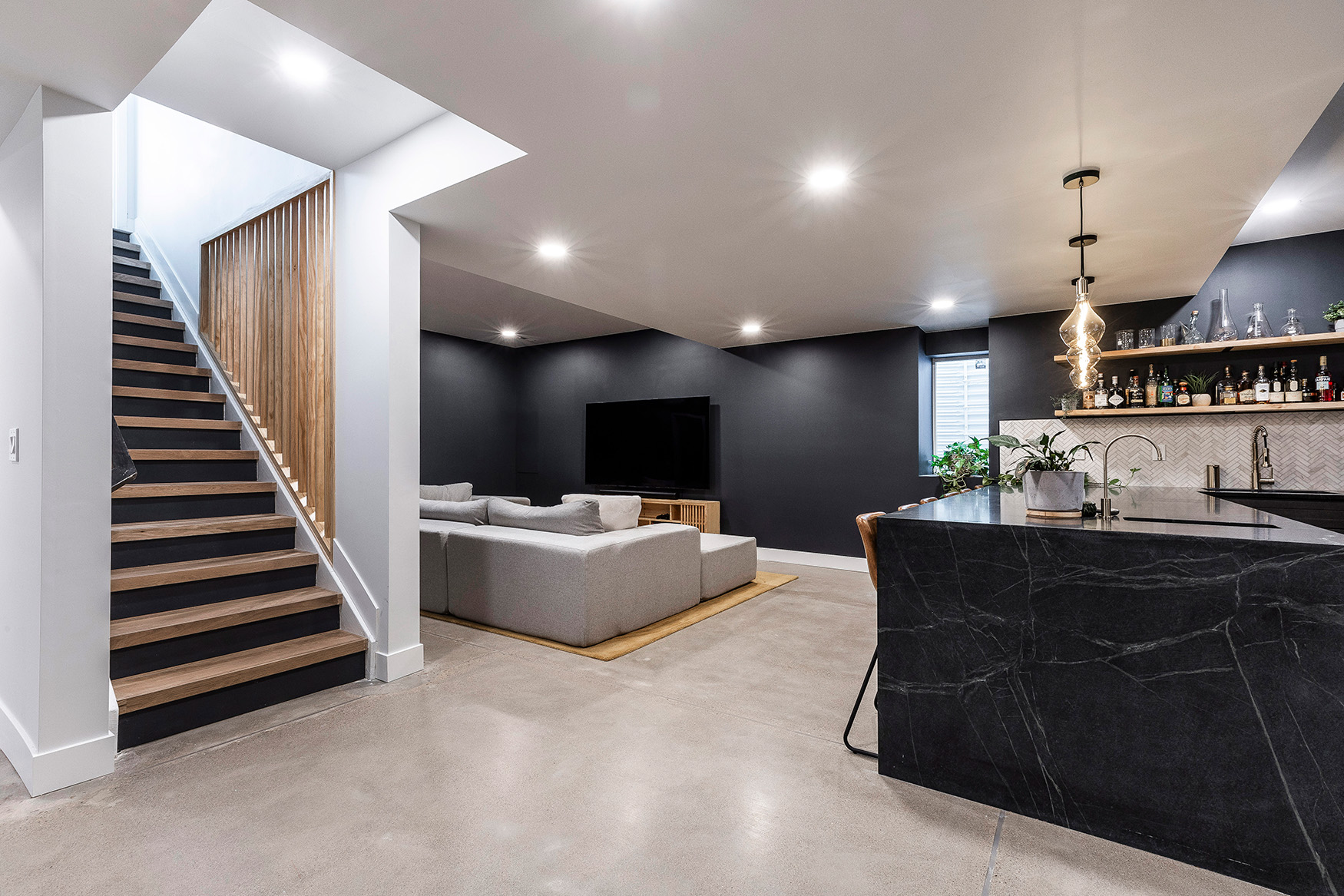
If you’re finishing a basement along Colorado’s Front Range, your ceiling choice isn’t just a style decision—it affects finished ceiling height, sound control, future access to plumbing/ductwork, and even how “builder-grade” or “custom” the space feels when it’s time to sell. The best ceiling is the one that respects your headroom constraints first, then balances access and performance based on how the room will actually be used.
Start with headroom: the decision that drives everything else
Most basement ceiling regrets come from ignoring the math. Before you choose drywall, a drop ceiling, or an open-painted look, confirm:
Checklist to measure first
- Bottom of joists to slab (raw height)
- Lowest obstruction (duct trunks, beam pockets, plumbing, gas lines)
- Planned floor build-up (LVP + underlayment, carpet pad, tile, etc.)
- Ceiling build-down by option (½” drywall vs 2”–6” for typical drop ceiling)
Code allowances vary by jurisdiction and which code edition your local building department uses, but a common baseline is 7′ minimum finished ceiling height for habitable spaces, with allowances for obstructions to be lower in some conditions. Always confirm locally during permitting.
Main basement ceiling options (and where each one wins)
1) Drywall ceiling (finished “upstairs” look)
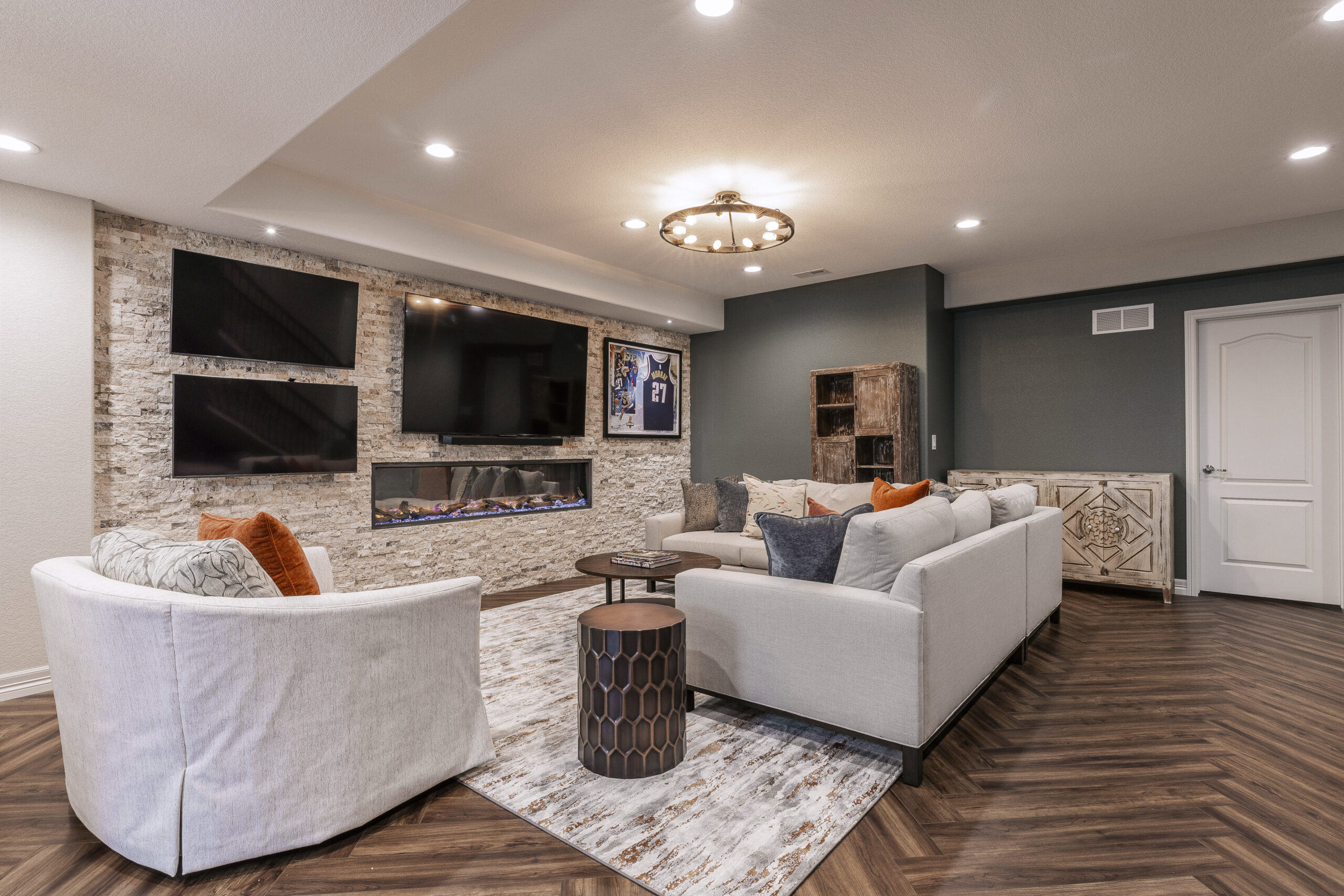
Drywall is the go-to for a seamless finish, strong resale appeal, and excellent air-sealing potential when detailed correctly. It’s also the easiest path to a clean, intentional lighting plan (recessed, surface-mount, coves—depending on clearance).
Best for:
• Family rooms, theaters, bedrooms, offices
• Projects where resale polish matters
• Basements where ductwork/plumbing are already well-planned
Trade-offs:
• Limited access later (requires access panels or strategic soffits)
• Beam/duct conflicts often require soffits that can “chop up” the ceiling plane
2) Drop ceiling (suspended grid with tiles)
A suspended ceiling is the access champion. If your basement has a lot of valves, cleanouts, duct dampers, or you want future flexibility, tiles you can lift are a practical advantage—especially in older homes or complex renovations.
Best for:
• Utility-heavy basements
• Future-proofing and remodel flexibility
• Budget-controlled finishes where access is a priority
Trade-offs:
• Typically costs you more headroom than drywall
• Some buyers see it as more “commercial” unless you use upgraded tiles and tight detailing
3) Open ceiling (painted black/white/gray; ducts exposed)
If headroom is tight, an open ceiling can preserve critical inches and make beams/ducts look intentional rather than “boxed in.” It can be a strong fit for gyms, rec rooms, and modern lounge spaces—especially when paired with thoughtful lighting.
Best for:
• Low-ceiling basements where every inch matters
• Home gyms, game rooms, casual hangout spaces
• Designs that embrace an industrial/modern style
Trade-offs:
• More echo unless you add acoustic treatments
• Exposed mechanicals must be neat (and planned), or it reads as unfinished
4) Specialty panels (direct-mount tiles, plank systems, removable panels)
These hybrid systems aim for a more residential look than a classic grid while retaining some access. They’re useful when you want serviceability without a full commercial ceiling aesthetic.
Best for:
• Medium headroom constraints
• Basements with scattered access needs (not constant)
Trade-offs:
• Product-specific limitations (lighting types, panel removability, edge details)
• Can cost more than basic drywall or standard grid
Performance priorities that matter in finished basements
Sound control (especially for theaters and bedrooms)
For a quieter basement, think “layers + decoupling + sealing.” Drywall ceilings can be upgraded with insulation in the joist bays, resilient channels/sound clips (when appropriate), and careful air sealing at penetrations. Open ceilings tend to be louder unless you add acoustic baffles/panels or soft finishes in the room (rugs, upholstered seating, curtains).
Explore theater room design options (lighting and acoustics planning become much easier when the ceiling strategy is set early)
Access to shutoffs, cleanouts, and future changes
If you’ve ever had to open a ceiling to fix a leak, you already understand the value of access. Suspended ceilings make this simple. With drywall, a smart plan is to place removable access panels where they’re truly needed and to use intentional soffits to conceal ductwork while still keeping serviceable areas reachable.
Energy and comfort: seal and insulate the right places
Colorado basements often feel cold because of air leakage at rim joists and inconsistent insulation. Your ceiling choice doesn’t replace the need to address the basement envelope, but a well-detailed ceiling can help reduce drafts by limiting air pathways and providing a continuous finished surface. Local jurisdictions may publish minimum R-value requirements for residential elements; for example, some Front Range municipalities provide guidance tables for insulation values as part of plan review.
Colorado-specific safety item: radon planning
Colorado is a high-radon state, and finishing work can change how air moves through the home. It’s smart to test (or retest) before finishes go up, and if mitigation is needed, do it before walls and ceilings are closed so routing and sealing are cleaner. CDPHE recommends mitigation when radon levels are at or above 4 pCi/L.
Browse ElkStone Basements resources for planning checklists that help keep finishing decisions aligned with inspections and long-term performance.
A step-by-step way to pick your ceiling (built for “no-regrets” decisions)
Step 1: Identify your “lowest point” and protect your required clearances
Find the lowest duct/beam/pipe run and map it across the room. If you’re near the minimum finished-height threshold, avoid any ceiling option that builds down too far. This is where an open ceiling or selective soffits can save a project.
Step 2: Match ceiling type to room function (not trends)
A theater room benefits from a tighter, more sealed ceiling plane for sound and lighting control. A gym may benefit more from headroom and easy access. A wet bar area may need access near plumbing lines—so a hybrid approach can make sense.
Step 3: Decide where access is non-negotiable
Mark shutoff valves, cleanouts, junction boxes (as applicable), and any mechanical components you may need to service. If there are many, a drop ceiling or removable panel system is usually the least painful long-term. If there are only a few, drywall with targeted access panels can keep a cleaner look.
Step 4: Lock the lighting plan before the ceiling goes in
Recessed lights, surface fixtures, LED channels, and sconces all place different demands on framing, wiring routes, and clearances. For open ceilings, plan for track lighting or surface-mount solutions that look intentional. For drop ceilings, confirm fixture compatibility with your grid/panels.
Step 5: Choose the ceiling that helps resale (without overbuilding)
In many Colorado homes, a finished basement sells best when it feels like “real living space.” Drywall often helps achieve that. If you need access, upgraded panel systems can bridge the gap. If headroom is the limiting factor, an open ceiling done neatly can still feel premium—especially when paired with the right finishes in the room.
See finished basement portfolio inspiration
Quick comparison table: ceiling options at a glance
| Option | Headroom impact | Access | Acoustics potential | Resale feel |
| Drywall | Best (minimal build-down) | Limited (add access panels) | Excellent with insulation + sealing | Most “upstairs-like” |
| Drop ceiling (grid) | Moderate to high build-down | Best | Good with acoustic tiles | Depends on tile quality |
| Open painted | Best when obstructions are low | Excellent (everything visible) | Lower unless treated | Modern/industrial (when neat) |
| Removable panel systems | Varies by product | Good | Good | Often more “residential” than grid |
Local angle: what Colorado homeowners should factor in early
Colorado basements often involve a mix of structural beams, trunk ducts, and radon considerations. The best ceiling plans are set during design, not after framing—because ceiling choice affects soffit locations, lighting runs, and where mechanicals can be “organized” for a cleaner finished look.
If you’re planning a permitted finish, also expect inspections that care about life safety items (like alarms), and the practical reality that finishing can expose radon issues if testing wasn’t done ahead of time.
Basement finishing in Colorado
Custom basement finishing options
Ready to choose the right ceiling layout for your basement?
ElkStone Basements specializes exclusively in basement remodeling and finishing, which means ceiling strategy, soffit planning, and long-term serviceability are built into the process—before materials are ordered.
Request a Free Basement Consultation
Prefer a faster timeline? Ask about Express options during your consult. Explore Express Basement Finishing
FAQ: Basement ceiling options (Colorado)
Drywall typically has the least build-down. If your lowest obstructions are already close to minimum finished height, an open painted ceiling can preserve even more perceived height because you avoid soffits and dropped planes in some areas.
Not automatically. Standard office-style tiles can feel dated, but higher-end tiles or removable panel systems can look clean and intentional. If your basement has a lot of plumbing or mechanical access needs, buyers may appreciate the practicality.
A drywall ceiling usually performs best because it supports sound isolation upgrades and precise lighting control. Pair it with insulation in joist cavities and a plan for sealing around penetrations to reduce sound transfer.
Yes—finishing changes airflow, and it’s easier to route and seal mitigation components before ceilings are closed. CDPHE recommends mitigation when test results are at or above 4 pCi/L.
Often, yes. Many high-performing layouts use drywall in primary living areas, then a drop ceiling or removable panels near mechanical rooms, wet bar plumbing, or other service zones to keep future access simple.
Glossary (quick definitions)
Access panel: A removable door or cover installed in a drywall ceiling or soffit to reach valves, junctions, or other service items.
Soffit: A boxed-down area used to hide ducts, beams, pipes, or wiring while keeping the rest of the ceiling higher.
Suspended (drop) ceiling: A ceiling hung below the floor framing using a grid and removable tiles/panels.
Rim joist (band joist): The perimeter framing area where floor joists meet the exterior wall; a common source of air leakage and comfort problems if not sealed/insulated.
pCi/L: “Picocuries per liter,” the common unit used to report indoor radon levels.
Looking for a basement plan that balances headroom, access, and a finished look? Start here: Get started with ElkStone Basements.
Recent Comments