
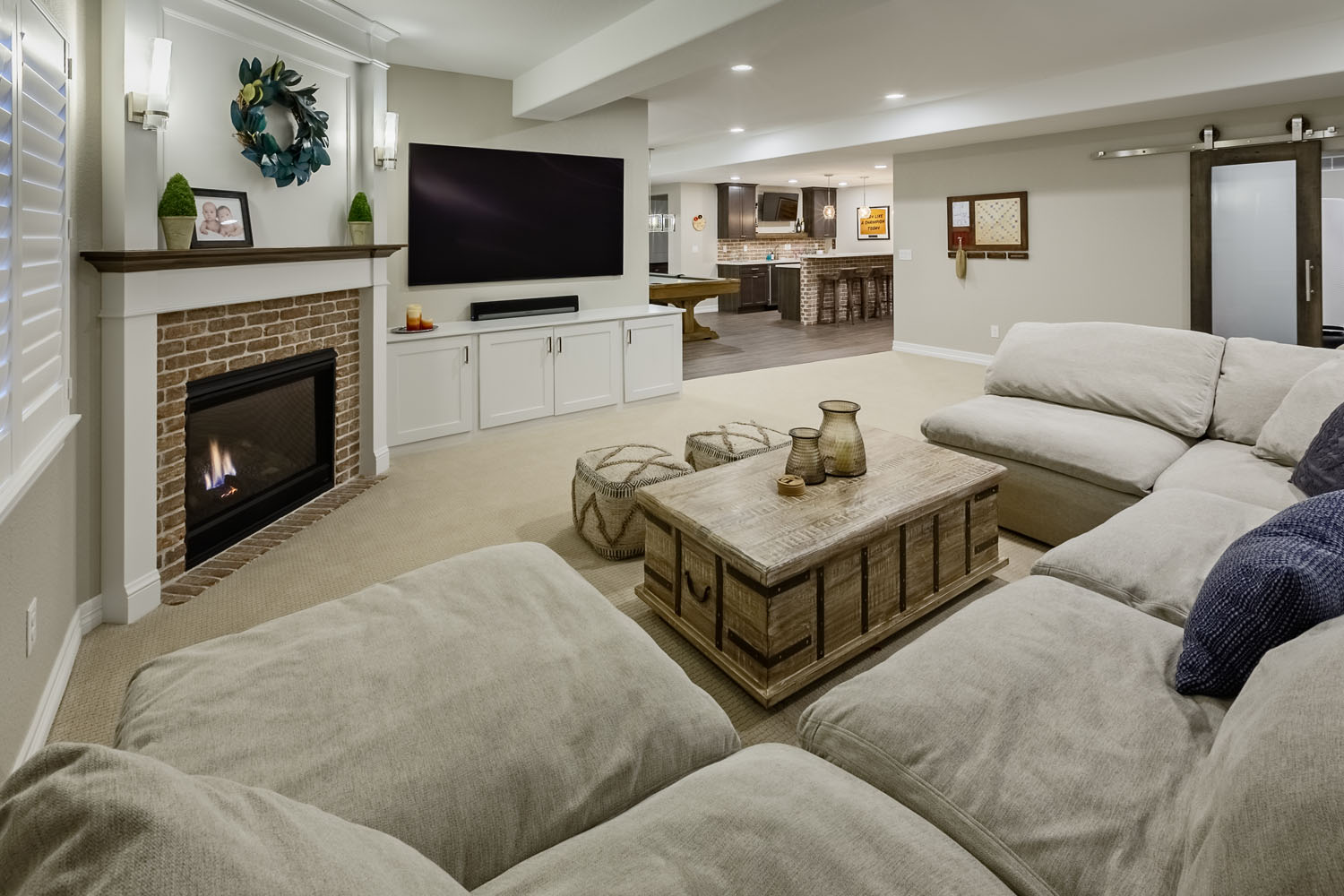
For many Front Range homes, the basement staircase is the “fixed point” that determines what’s possible: ceiling heights, room sizes, furniture access, and even how bright and welcoming the lower level feels. If you’re planning a remodel, a thoughtful basement stairs design can help you protect headroom, reduce future rework, and make the finished basement feel like a true extension of the main floor.
What “good” basement stair design actually means
Homeowners often focus on finishes—rail style, carpet runner, statement lighting—then discover late in the project that the stair geometry, landing, or headroom creates limitations. A better approach is to lock in performance first:
Performance priorities (the “no-regrets” list)
Headroom: avoid tight soffits and awkward beams that force you to duck.
Comfortable step rhythm: consistent risers/treads reduce trips and fatigue.
Clear width: easier furniture moves, safer daily use, and a more open feel.
Lighting and sightlines: basements feel larger when the stair is bright and visually connected.
Future flexibility: plan for how the basement may be used later (guest suite, theater, gym, wet bar, aging-in-place considerations).
Code basics that shape your options (and your layout)
Most Colorado jurisdictions base stair rules on the International Residential Code (IRC), sometimes with local amendments. Your design and construction team should confirm the exact requirements with your city/county, but these common IRC benchmarks strongly influence basement stair layouts:
Common residential stair benchmarks (IRC-aligned)
| Element | Typical minimum/maximum | Why it matters in a basement |
| Riser height | Max ~7 3/4″ | Steeper stairs steal comfort; small changes affect headroom and landing locations. |
| Tread depth | Min ~10″ (11″ if no nosing) | Shallow treads feel sketchy, especially for kids, guests, and carrying laundry. |
| Uniformity | Max variation ~3/8″ | One “odd” step is a common trip point—finish materials can accidentally create it. |
| Headroom | Min ~6’8″ | Basement beams/ducts often collide with stairs; plan early to prevent a cramped feel. |
| Width | Often ~36″ clear (with reductions allowed at handrails) | A wider stair improves furniture access and makes the basement feel more “main-level.” |
| Handrail height | ~34″–38″ | Handrails are a daily-use safety feature; placement affects finished wall thickness and trim details. |
Note: Always confirm with your local permitting office and your contractor—especially if you’re altering structure, moving a stair, or changing beam/duct layouts.
Step-by-step: plan your basement around the stairs (practical, builder-friendly)
1) Identify the “headroom killers” before design gets too far
In Colorado basements, the tight spots are often under main-floor beams, dropped HVAC trunks, and plumbing runs. Before you choose finishes, map these conflicts and decide what’s movable. Sometimes a small mechanical re-route prevents a permanent soffit that makes the stairs feel like a tunnel.
2) Decide what the stair should “arrive” into
The landing should open into a space that feels intentional—commonly a family room, rec room, or a wide hall with good lighting. If you’re adding a theater room or a rec room, plan the stair so it doesn’t dump you directly into a screen wall or the middle of a seating layout.
3) Treat stair width like a “future flexibility” upgrade
If you’re between two layouts, favor the one that improves the feel of the stair (wider, brighter, less boxed-in). Wider stairs and better landings can make future changes easier—like converting the basement into a guest suite with a bathroom, or adding built-ins later.
4) Don’t let finishes create a tripping hazard
Basement remodels often add flooring layers (LVP underlayment, carpet pad, tile backer) that subtly change final riser heights—especially at the bottom step. Your remodel plan should account for finished floor thicknesses so risers remain consistent after everything is installed.
5) Make lighting part of the stair design, not an afterthought
A bright stair makes the basement feel safer and more valuable. Consider a layered approach: overhead lighting, wall sconces, or step lighting, plus a light finish on surrounding walls. If you’re planning a wet bar or kitchenette, coordinate stair lighting so you don’t end up with “dark zones” where people carry drinks or food.
Did you know?
Small differences cause big stumbles: Even slight riser inconsistencies are a common reason people trip on “perfectly normal” stairs.
Headroom is a layout decision: Many headroom issues aren’t solved by prettier trim—they’re solved by planning beams/ducts early.
Stairs influence resale feel: A finished basement that feels easy to access (not steep, not dark) often reads as more “livable square footage.”
Colorado-specific planning notes (Front Range realities)
Along Colorado’s Front Range, basement stair design often intersects with a few predictable constraints:
HVAC trunks and returns: Production homes may run large ducts near the stair. A smart reroute can protect headroom and make the stair feel less enclosed.
Low or “just okay” ceiling heights: If your basement headroom is tight, the stair opening and landing placement become even more important for comfort.
Multi-use basements: Colorado homeowners often want a basement that can shift over time—gym now, guest space later. Planning the stair as a clean “spine” makes future walls and doors easier to place.
If you’re exploring options for a full build-out, custom basement finishing is often the best route when you need to protect headroom, integrate specialty spaces, or plan for future reconfiguration. If speed and budgeting are top priorities, ElkStone’s Express Basement Finishing can be a strong starting point to get the structure and flow right—then add specialty features over time.
Want a stair plan that protects headroom and keeps your layout flexible?
ElkStone Basements specializes exclusively in basement renovations across Colorado’s Front Range (and Utah). If your project is getting close to execution, we can help you pressure-test stair location, landing flow, soffit strategy, and room layout—before you lock in decisions that are expensive to undo.
Get a Free Basement Consultation | View Basement Ideas & Layouts
FAQ: Basement stairs design
Sometimes—but it’s a structural decision, not a décor decision. Moving stairs can dramatically improve layout and headroom, but it can also affect joists, beams, HVAC, and permitting scope. A remodel plan is strongest when you evaluate stair options early, alongside mechanical and framing realities.
A dark, narrow stair that feels like a back hallway—especially after spending to create a high-end basement. Lighting, openness, and landing flow are often more important than an expensive railing.
If the obstruction is a beam or a large duct, finishes won’t create real clearance. The best solutions are usually layout changes (shift the stair/landing) or mechanical planning (reroute/resize where feasible) before final framing.
In most code frameworks, handrails are required when there are multiple risers (commonly four or more). Beyond code, a graspable, continuous handrail is one of the most valuable safety upgrades you can build into a basement remodel.
Plan for clean circulation: keep the stair arrival open, avoid boxing the bottom landing with tight doors, and coordinate plumbing/mechanical chases so future additions don’t steal stair width or headroom. If a bathroom is likely, it can be smart to reserve a plumbing-friendly zone nearby. For inspiration, see ElkStone’s basement bathrooms and wet bars.
Glossary (quick clarity for planning)
Riser: The vertical height between one tread and the next. Consistency matters as much as the number itself.
Tread: The horizontal part you step on. Deeper treads usually feel safer and more comfortable.
Nosing: The edge projection of a tread over the riser below. It affects footing, comfort, and code compliance.
Landing: A level platform at the top/bottom (and sometimes mid-flight) that improves safety and helps with door clearance and circulation.
Headroom: Clear vertical space above the stair walking line. In basements, beams and ducts often challenge this.
Soffit: A boxed-in area (often drywall) used to conceal ducts, pipes, or beams. Soffits can protect function—but they need careful design to avoid making stairs feel tight.

Recent Comments