
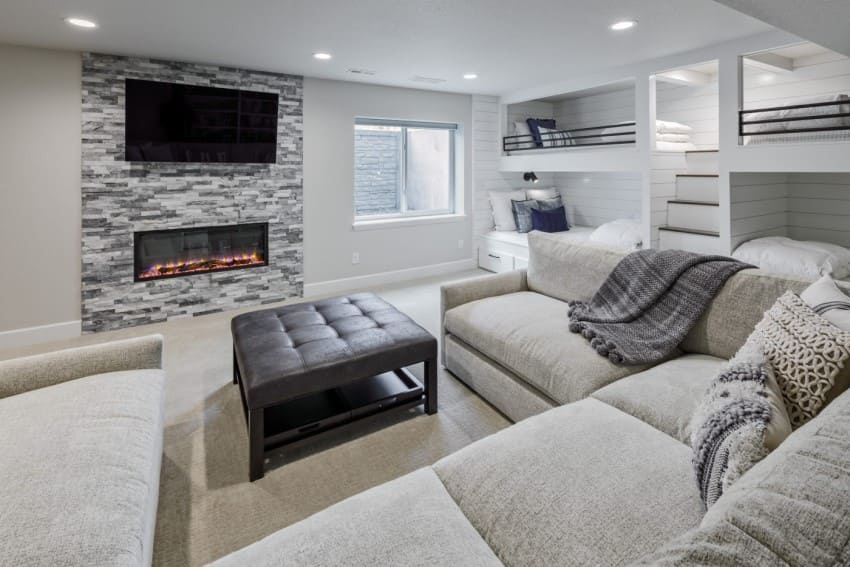
A healthier basement starts with air movement, moisture control, and the right plan for your home
Along Colorado’s Front Range, winter can reveal the same basement “truths” every year: damp corners, musty odors, condensation on ducts, and comfort problems that show up when you start spending more time indoors. If you’re planning a basement remodel, humidity control and ventilation aren’t “extras”—they’re the difference between a basement that feels clean and comfortable and one that quietly grows mold behind finished walls. The good news: with the right combination of dehumidification, smart ventilation, and building-science details, you can finish your basement with confidence.
A finished basement is a semi-underground environment. Even in Colorado’s dry climate, below-grade spaces can hold moisture because of cooler concrete surfaces, groundwater conditions, and the “stack effect” pulling air through the home. That’s why a basement plan should focus on three goals:
1) Keep humidity in a mold-resistant range
EPA guidance commonly cited for mold prevention is to keep indoor relative humidity below 60% and ideally between 30%–50% when possible.
2) Control how fresh air enters (and exits) the basement
Ventilation can help, but in basements it must be intentional—random “air leaks” can bring in soil gases and moisture where you least want them.
3) Reduce radon risk as you tighten up the space
Finishing work often makes a basement more airtight—great for comfort, but it can change pressure dynamics. If you’re finishing a basement in Colorado, plan for radon testing and a mitigation path if needed.
Dehumidifier vs. Ventilation: What’s the difference?
Dehumidification removes water vapor from the air. It’s your primary tool when moisture is already inside the basement (from occupants, showers, laundry, concrete, minor seepage, or humid outdoor air in summer).
Ventilation exchanges indoor air with outdoor air (or redistributes air through your home’s HVAC system). Ventilation can reduce odors and pollutants, but it can also add humidity during Colorado’s monsoon season or during shoulder seasons when outdoor dew points climb.
A strong basement plan often uses both—plus solid moisture management details (drainage, air sealing, vapor control, and properly insulated assemblies).
Basement dehumidifier & ventilation options
| Option | Best for | Pros | Watch-outs (Colorado basements) |
| Standalone portable dehumidifier | Smaller finished areas; quick improvement | Lower upfront cost; easy to add | Needs proper sizing and continuous drain setup; can be noisy; may not distribute evenly |
| Whole-home / ducted dehumidifier | Larger basements; consistent RH control | More even drying; integrates with ductwork; better long-term comfort | Needs professional design (ducting, airflow, condensate routing); higher upfront investment |
| Bath fan / spot exhaust (basement bathroom) | Moisture bursts from showers | Directly removes steam at the source | Must vent outdoors (not to attic/soffit); can depressurize basement if overused |
| HRV/ERV (balanced ventilation) | Fresh air with control; tighter homes | Predictable air exchange; helps manage pollutants | Still may need dehumidification in humid periods; requires commissioning/balancing |
| “Just open windows” | Short-term odor relief | Free; immediate air exchange | Can raise indoor RH during summer storms; inconsistent; not a strategy for behind-wall protection |
Tip: Aim to keep your finished basement’s relative humidity below 60% (ideally 30%–50%) to reduce mold risk. A $10–$50 hygrometer is an easy first step.
Step-by-step: how to choose the right setup for your finished basement
1) Measure first (don’t guess)
Put a hygrometer in the basement for at least a week. Check readings morning/evening. If you see frequent spikes above 55–60% RH, plan on dedicated dehumidification. EPA’s mold guidance emphasizes keeping indoor humidity below 60% (ideally 30%–50%).
2) Fix bulk water and drainage before you finish
If water can get in, humidity control becomes an expensive game of catch-up. Make sure gutters and downspouts route water away from the foundation, and that grading slopes away from the house. EPA moisture guidance highlights drainage, gutters, and fast drying after wetting events as key mold prevention steps.
3) Decide how you’ll control humidity year-round
If your basement includes a bathroom, wet bar, kitchenette, or high occupancy (kids + movie nights): plan for stronger moisture removal and better air distribution.
If you want “set it and forget it” performance, a ducted/whole-home approach is often more consistent than a single portable unit in one corner.
Always plan condensate drainage: a direct drain line or pump keeps the system running without constant bucket emptying.
4) Add ventilation where it helps (not where it hurts)
Ventilation is excellent for controlling odors and indoor pollutants, but it won’t automatically solve humidity, especially when outdoor air is humid. Use spot exhaust where moisture is created (bathrooms), and consider balanced ventilation (HRV/ERV) if your home is tight and you want predictable fresh air.
5) Make radon part of the plan (especially before closing walls)
If radon levels are elevated, mitigation strategies like active soil depressurization are common approaches for existing homes. EPA provides technical guidance and references to current standards of practice.
Basement finishing “risk points” (and how good planning prevents them)
Condensation behind drywall: Usually a combination of cool concrete + interior moisture + air leakage. Address with proper insulation strategy, air sealing at rim joists and penetrations, and RH control.
Musty odors that return: If humidity is occasionally high, mold can persist in hidden areas. EPA emphasizes moisture control and keeping RH low to reduce mold risk.
Finishing makes things “tighter”: Better comfort, but pressure changes can affect airflow and soil gas entry. That’s why testing and having a radon plan matters.
Colorado angle: why February basements can be deceptive
In winter, outdoor air is often dry, so a basement can seem fine—then humidity climbs in late spring and summer, and problems show up after the remodel is finished. For Colorado homeowners, the safest approach is to design for the worst weeks of the year: summer monsoon humidity, big indoor gatherings, and moisture sources like basement bathrooms, wet bars, and laundry. A basement that stays in the EPA-recommended humidity range (below 60% RH, ideally 30%–50%) is more comfortable and far less likely to develop hidden mold.
Where ElkStone Basements fits (design + build with moisture in mind)
ElkStone Basements specializes exclusively in basement finishing and remodeling, which means the details that matter below-grade—comfort, durability, and indoor air quality—are part of the process, not an afterthought. Whether you’re planning a family room, home gym, theater, wet bar, or a basement bathroom, the mechanical plan should match how the space will actually be used.
Fast timeline needs smart systems
Explore streamlined options on the Express Basement Finishing page.
Custom layouts & higher-usage spaces
See options for Custom Basement Finishing.
Get inspiration before you build
Browse layouts and finishes in Our Portfolio.
Ready for a finished basement that feels dry, clean, and comfortable?
If you’re comparing basement dehumidifier and ventilation options—or you want a clear plan that accounts for Colorado’s seasonal swings—ElkStone Basements can help you design a basement that performs as well as it looks.
Get a Free Basement Finishing Consultation
Prefer to plan ahead? Ask about humidity targets (30%–50% ideal) and how to route condensate drainage for a low-maintenance setup.
FAQ: Basement dehumidifier & ventilation questions (Colorado homeowners)
Keep relative humidity below 60% and, when possible, in the 30%–50% range. This is commonly recommended in EPA mold/moisture guidance to reduce mold risk.
Ventilation can help with odors and pollutants, but humidity control often requires dehumidification—especially in basements and during humid weather. EPA guidance notes that reducing moisture can involve fixing leaks, increasing ventilation when outdoor air is cold/dry, or using dehumidification when outdoor air is warm/humid.
Finishing can change how air moves through the home and can tighten up the space, which is why testing and planning matter. EPA provides radon standards and technical guidance that radon professionals use for mitigation approaches such as active soil depressurization.
Covering surfaces before moisture sources are controlled, then relying on a small dehumidifier as a band-aid. Moisture control (drainage, quick drying after wetting, and maintaining lower indoor humidity) is emphasized in EPA mold guidance.
Plan for spot exhaust (bath fan ducted outdoors), reliable RH monitoring, and a dehumidification strategy sized for the full basement—especially if the space will be used daily.
Glossary
Relative Humidity (RH): A percentage showing how much moisture is in the air compared to the maximum it could hold at that temperature.
Condensation: Water that forms when warm, moist air hits a colder surface (like concrete walls, metal ducts, or pipes).
ERV / HRV: Balanced ventilation systems that bring in fresh air and exhaust stale air. HRVs transfer heat; ERVs transfer heat and some moisture.
Active Soil Depressurization (Radon Mitigation): A common radon-reduction method that uses a fan to pull soil gases from beneath the home and vent them safely outdoors.


Recent Comments