
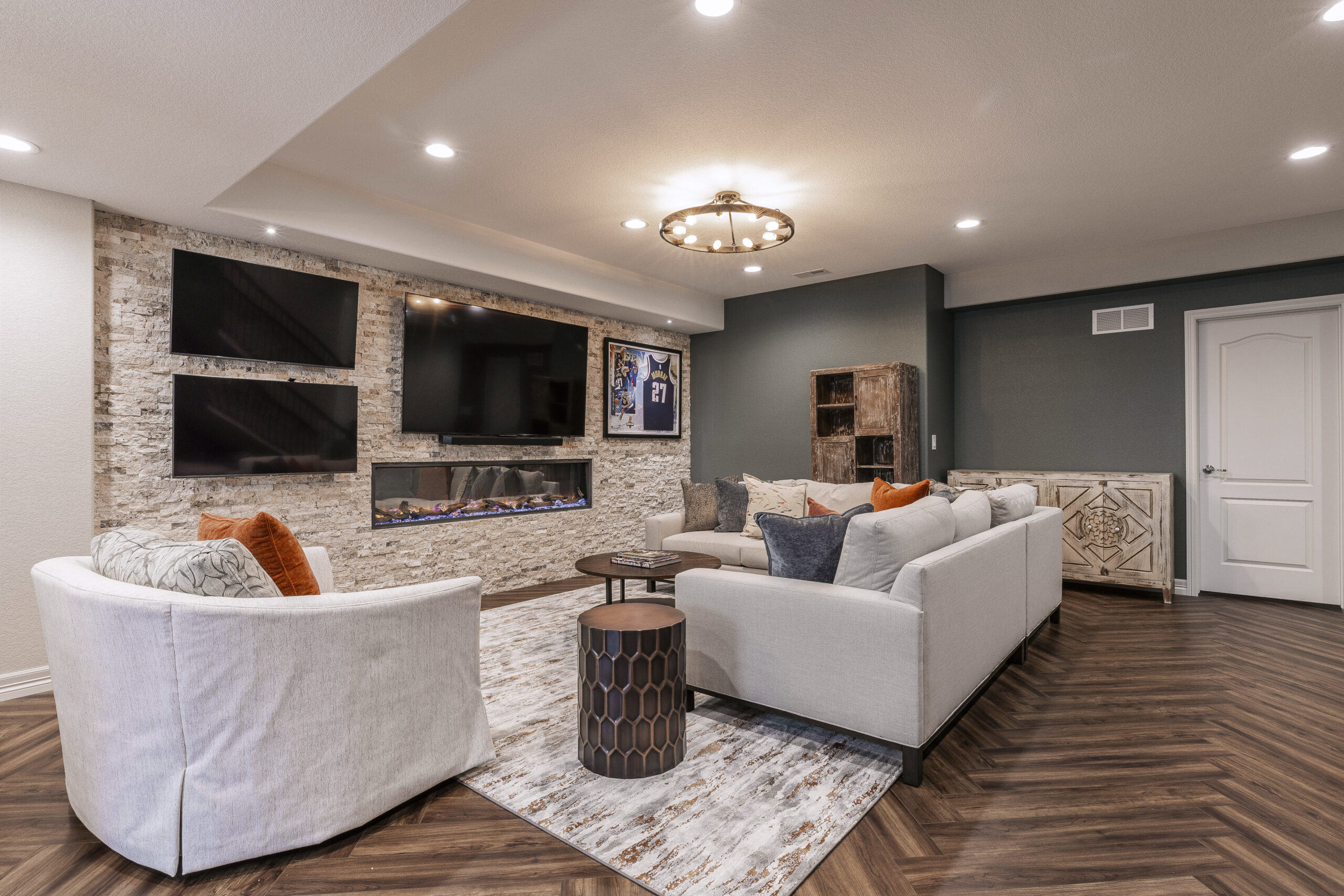
A finished basement can be one of the best upgrades a Colorado homeowner makes—but only if the floor system is designed for below-grade reality: moisture vapor, temperature swings, and (in many areas) radon risk. A basement subfloor vapor barrier is a foundational decision that affects comfort, durability, odors, flooring warranties, and how “finished” the space feels year-round. This guide breaks down what to use, where it goes, and how to choose a system you won’t regret once walls and flooring are installed.
Why vapor control matters under a basement subfloor
Even when a basement “looks dry,” concrete is porous. Moisture in the soil can move through a slab as water vapor, and that vapor can accumulate under finished flooring—especially under impermeable surfaces like luxury vinyl plank (LVP), sheet vinyl, rubber gym flooring, or certain adhesives. Over time, trapped moisture can contribute to:
- Musty odors and persistent damp-feeling air
- Flooring failure (cupping, debonding, soft spots, joint separation)
- Mold risk where organic materials meet moisture (wood sleepers, OSB, carpet pad)
- Comfort issues (cold floors, clammy rooms, condensation at edges)
A well-detailed vapor barrier strategy supports a basement that feels like a true living level—family room, theater, gym, wet bar—without “basement compromise.”
Vapor barrier vs. subfloor: what each component actually does
Homeowners often use “vapor barrier” to mean any plastic layer. In a finished basement, it helps to separate the roles:
- Vapor barrier / vapor retarder: A membrane that slows vapor diffusion (and, when sealed well, can also reduce air movement of soil gases).
- Subfloor system: The build-up above the slab that improves flatness, comfort, warmth, and provides an attachment base (depending on the system).
- Drainage / capillary break: A layer (often dimpled) that creates an air gap or drainage plane so minor moisture doesn’t stay trapped against materials.
In many remodels, the “best” floor is not a single product—it’s a system that matches your slab condition, target flooring, ceiling height, and how you’ll use the room.
What “good” looks like: performance targets (not just product names)
For a regret-proof basement floor system, aim for these outcomes:
- Controlled vapor so finished flooring isn’t acting as the vapor trap
- Durable membrane that won’t tear during install or degrade under load (not all “poly” is equal)
- Comfort (warmer surface temperature, less “cold concrete” feel)
- Future flexibility (easy flooring replacement later, fewer hidden organic materials against concrete)
Building codes and industry standards increasingly point toward tougher below-slab vapor retarders (often referencing ASTM E1745 performance) and careful seam detailing, rather than thin plastic that punctures easily. (If you’re curious, the IRC has specific language around vapor retarders under slabs, and many experts note the shift from older 6-mil approaches toward more robust membranes.)
Step-by-step: choosing the right basement subfloor + vapor barrier approach
Step 1: Identify your “basement risk level”
Quick indicators you should design for higher moisture control:
- Efflorescence (white powder) on slab or foundation walls
- History of musty smells, seasonal dampness, or previous carpet issues
- Sump pit present (not automatically “bad,” but it signals groundwater management)
You want LVP, rubber flooring, or adhesive-set floors (less forgiving)
Step 2: Decide whether you need an air gap (dimple mat) under the subfloor
An air-gap or dimpled membrane can be a strong choice when you want a “buffer zone” between concrete and finished layers. It can also help manage minor moisture that shows up seasonally. If you’re finishing a high-use space (rec room, gym, theater), this is often worth considering because it protects the investment.
Step 3: Don’t trap moisture with the wrong layer order
One common regret is stacking materials so vapor can enter but not leave—creating a “moisture sandwich.” For example, putting an impermeable layer above a moisture-prone wood panel can be risky if the assembly can’t dry. The right order depends on the system, but the goal is consistent: keep organic materials (wood/OSB/carpet pad) out of the dampest zone, and make sure seams and transitions are detailed.
Step 4: Detail edges, seams, and penetrations like they matter (because they do)
A vapor barrier is only as effective as the continuity. Best practices commonly include lapping seams (often 6 inches minimum) and taping/sealing them, plus careful work around posts, cleanouts, and mechanical penetrations. Manufacturer instructions for higher-performance membranes often spell out overlap and taping requirements. Comparison table: common basement subfloor + vapor control options
| Approach | Best for | Pros | Watch-outs |
| Sealed membrane + floating engineered subfloor panels | Basements where height is limited and you want a fast, clean build-up under LVP/carpet | Thin profile; faster install; improves underfoot feel | Detail seams carefully; avoid creating a moisture sandwich with incompatible top flooring/underlayments |
| Dimple mat (air gap) + subfloor | Higher-moisture basements, or homeowners prioritizing durability and long-term flexibility | Adds a buffer/drainage plane; reduces risk of trapped moisture against organic materials | Costs more; adds height; needs good perimeter detailing |
| Sleeper/plywood system over poly | Basements needing major leveling or where you need fastening for built-ins (case-by-case) | Easy to run wiring/low-voltage; solid feel | Puts a lot of wood close to concrete—higher moisture sensitivity; requires careful design and moisture strategy |
| No subfloor (direct to slab) with appropriate underlayment | Lowest-height constraints, small rooms, or limited-scope updates | Cheapest; preserves headroom | Cold/hard feel; higher flooring constraints; slab moisture conditions become even more critical |
Note: Specific product suitability depends on slab moisture readings, flooring manufacturer requirements, and local code expectations.
Colorado-specific angle: moisture is only half the story—think radon-ready
Along Colorado’s Front Range, radon is a real planning factor for basement living spaces. Colorado health guidance emphasizes testing and mitigation when levels are elevated, and it also notes that sealing alone isn’t a complete solution—radon systems typically rely on sub-slab depressurization to reduce levels effectively.
If you’re finishing a basement, it’s smart to plan for:
- Testing on the lowest livable level before and after finishing
- Radon rough-in considerations if you’re opening slabs or working near sumps
- Air sealing strategy at slab penetrations and perimeter transitions
If a mitigation system is needed, Colorado guidance provides ballpark costs and recommends using qualified professionals.
Want a basement floor plan that won’t limit your layout later?
ElkStone Basements specializes exclusively in basement finishing—so floor systems, headroom decisions, and moisture/radon planning are part of the build strategy, not an afterthought.
Get a Free Basement Consultation
View Basement Ideas & Portfolio
Helpful next steps: compare Express Basement Finishing versus Custom Basement Finishing, depending on how much structural flexibility you want to build in.
FAQ: basement subfloor vapor barriers (Colorado homeowners ask these a lot)
Possibly. A basement can be leak-free and still have meaningful vapor movement through the slab. Finishes like LVP, rubber flooring, and some adhesives are less forgiving, so vapor control is often a “performance insurance policy,” not only a leak response.
Thin poly can work in some situations, but it’s easier to puncture and may not meet higher-performance expectations referenced in modern guidance. Many pros prefer tougher membranes that meet recognized performance standards (often referencing ASTM E1745) and that can be taped/sealed reliably.
Sealed membranes and good air sealing can help reduce pathways for soil gases, but they’re not a substitute for a radon mitigation system if levels are elevated. Colorado health guidance emphasizes mitigation systems as the most effective fix for high readings.
Choosing materials based only on price or headroom and ignoring system compatibility—especially seam/edge detailing and whether the assembly can dry. The second most common mistake is installing organic materials directly against concrete without a robust moisture strategy.
It’s better to plan them together. A gym may push you toward a warmer, more resilient underlayment; a theater room may prioritize flatness and sound isolation; a wet bar area may benefit from water-tolerant finishes and careful perimeter detailing. If you’re exploring options, ElkStone’s basement designs pages can help you visualize how usage impacts construction decisions.
Glossary (quick definitions)
Vapor retarder (vapor barrier): A membrane that reduces moisture vapor diffusion through building assemblies.
ASTM E1745: A performance standard commonly referenced for below-slab vapor retarders, addressing strength and durability characteristics.
Dimple mat: A textured underlayment that creates an air gap/drainage plane above concrete.
Efflorescence: White, powdery mineral deposits that can appear on concrete when moisture moves through it and evaporates.
Sub-slab depressurization: A common radon mitigation approach that draws soil gases from beneath a slab and vents them outside.
Recent Comments