
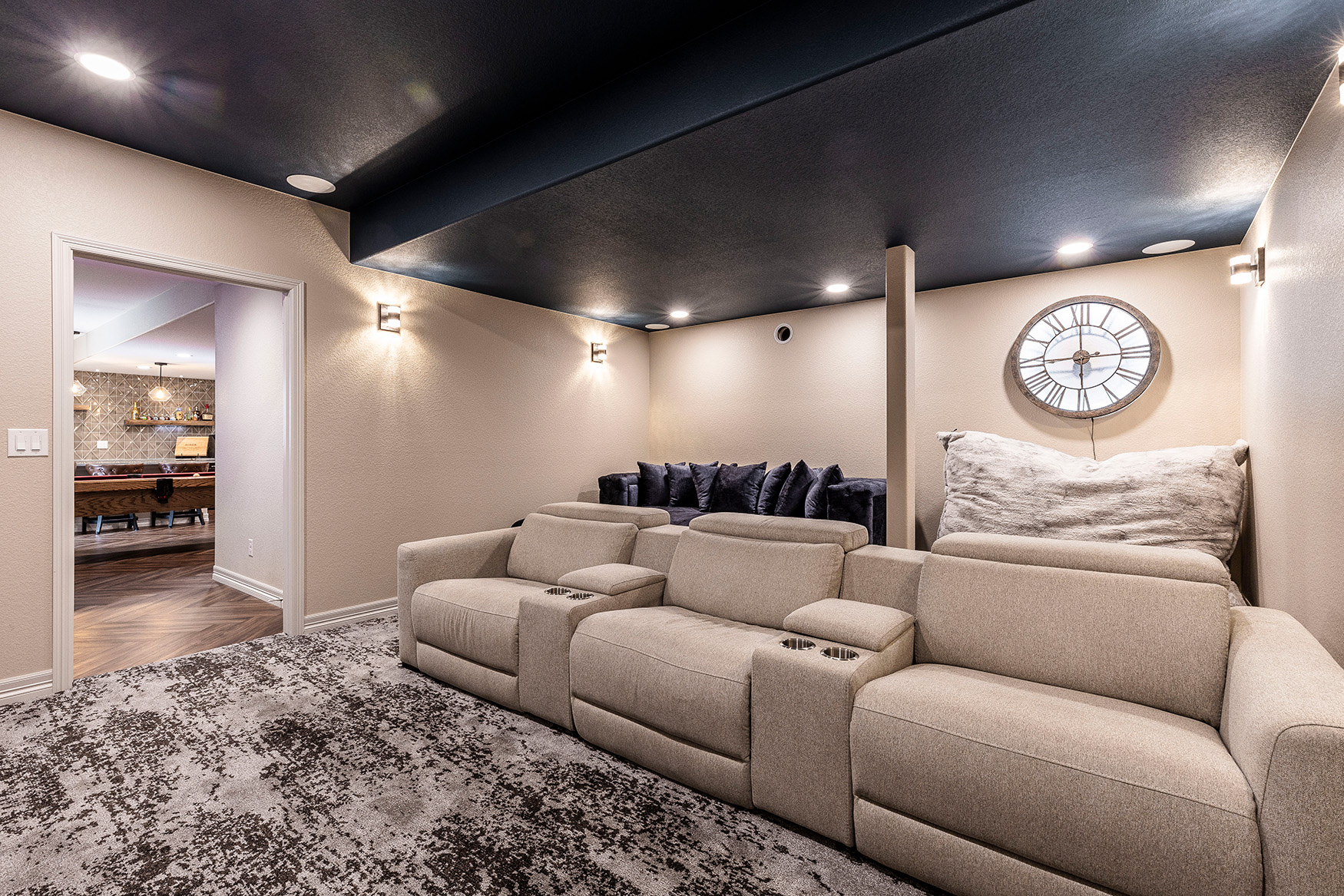
Low ceilings don’t have to mean a “storage-only” basement. With the right plan, you can make a Utah basement feel taller, brighter, and more usable—without triggering expensive rework during inspection. This guide breaks down realistic options homeowners use when headroom is tight, including design choices that preserve clearance, mechanical layout tips, and when it’s worth considering more invasive construction.
Local code reality check: Utah has adopted the 2021 International Residential Code (IRC) statewide (with amendments) for many jurisdictions. Minimum finished ceiling height is commonly 7′ for habitable spaces, while 6’8″ may apply to certain non-habitable areas, and obstructions (beams/ducts) can sometimes project lower in limited locations (often to about 6’4″) depending on the specific condition and local interpretation. Always confirm with your local building department for your exact address and scope.
Part 1: Identify what’s actually “stealing” your headroom
A low-ceiling basement usually isn’t one single problem. It’s a combination of slab height, joist structure, mechanical runs, and finishing layers. Before you pick finishes, get clear on these four measurements (from the future finished floor, not raw concrete):
1) Baseline height (joist bay to slab): Your “best-case” ceiling height—typically measured to the underside of joists, before ducts and soffits.
2) Lowest obstruction (beam, trunk duct, drain line): A single low HVAC trunk line can dictate the entire plan—unless you reroute it or confine it to a compact soffit.
3) Floor build-up (leveling + underlayment + flooring): Self-leveling and subfloor systems can improve comfort, but they also reduce finished height. If headroom is tight, choose materials with a thinner profile.
4) Ceiling build-down (drywall, furring, sound channels): Sound isolation is great—until it costs you 1–2 inches everywhere. In low-ceiling basements, every inch matters.
Part 2: The “feel taller” strategies that work even when inches are limited
If you can’t magically add height, the goal shifts to protecting clear paths and improving perceived volume. These are high-impact approaches that tend to be budget-friendly compared to structural changes.
Keep soffits small—and put them where they belong
Instead of boxing the entire perimeter, aim for a single “service corridor” soffit (or two) that carries ducting/plumbing in a straight run. This keeps the main living zone full height and makes the basement feel more open.
Use lighting that doesn’t hang down
Recessed LEDs, wafer lights, and low-profile fixtures help maintain clearance. Combine that with layered lighting (task + ambient) so you don’t need a big, central fixture that visually lowers the room.
Choose a ceiling finish that protects headroom
In many basements, a standard drywall ceiling is still the cleanest look—but details matter: minimizing extra furring, selecting slimmer sound assemblies, and planning around mechanicals can protect valuable inches.
Work with the slab, not against it
If your slab is uneven, it’s tempting to add thicker build-up everywhere. A better approach is often targeted leveling where needed, then selecting flooring systems that stay thin while still being warm underfoot.
Quick “Did you know?” facts
Radon is a basement-first issue in Utah. The Utah DEQ Indoor Radon Program focuses on reducing indoor radon below the EPA action level of 4 pCi/L, and testing is a smart step before (and after) finishing.
Obstructions can be treated differently from full-room height. Code language commonly distinguishes between a room’s minimum ceiling height and allowed projections under beams/ducts—helpful when planning soffits.
Planning beats patching. The cheapest time to “gain” headroom is during design, before framing and mechanical rough-ins lock your options.
Helpful internal resources
If you’re weighing timelines and complexity, see ElkStone’s Utah service page: Basement Remodeling & Finishing Utah.
For design inspiration that still works in compact-height spaces, browse: Basement Designs.
Want a fast start on planning? Use the contact page to request a consult: Get a Free Quote.
Part 3: Step-by-step plan for a low ceiling basement finish (Utah-friendly)
Step 1: Confirm your “finished” headroom targets before design
Measure slab-to-joist, then subtract your real floor and ceiling assemblies. If you’re near a threshold, don’t guess—bring in a pro and confirm what your local jurisdiction will approve for habitable areas, hallways, and locations under obstructions.
Step 2: Map mechanicals and decide what to reroute (and what to box in)
A realistic strategy is to reroute only the worst offender (often a low duct trunk) and design compact soffits for everything else. This keeps costs contained while improving clearance where you actually walk and gather.
Step 3: Choose rooms that “fit” lower heights
Function-first planning matters. Some uses feel fine with slightly lower ceilings, especially if your layout avoids tall furniture and keeps traffic lanes clear:
Great fits: rec room zones, media lounges, kids’ hangouts, compact kitchenettes, and a tight wet bar area.
Needs extra planning: home gyms (overhead presses), theater risers, and any area where you’ll add a dropped bulkhead for AV or speakers. For theater concepts, see Theater Rooms.
Code-sensitive: bedrooms and bathrooms (egress, ventilation, fixture clearances). If a bathroom is in your plan, view Basement Bathrooms.
Step 4: Address radon and moisture early (before finishes)
For Utah homeowners, radon testing is a smart “before you close the walls” step. Utah DEQ notes an EPA action level of 4 pCi/L, and the Utah Geological Survey also discusses mitigation thresholds and testing approaches. If results are elevated, incorporate mitigation into the finish plan rather than retrofitting later.
Comparison table: Common low-ceiling approaches (what you gain, what you trade)
| Approach | Best For | Pros | Tradeoffs / Watch-outs |
| Compact Soffit “Corridor” | Most finished basements | Preserves full-height zones; contains ducts/plumbing. | Requires careful mechanical planning; still impacts some areas. |
| Thin-profile Flooring Plan | Uneven slabs, comfort upgrades | Improves comfort without giving away much headroom. | Some thin options transmit cold; moisture strategy matters. |
| Selective Rerouting | Basements with one major low trunk line | Big improvement in walking paths; often more cost-effective than full redesign. | Must maintain HVAC performance; requires a qualified mechanical plan. |
| Structural Changes | Severely limited headroom | Provides true, significant height gains. | High cost/complexity; requires engineering, drainage, and permits. |
Part 4: Layout ideas that maximize usable square footage (without breaking code intent)
When ceilings are low, the “win” is often in planning: put your tallest needs where the ceiling is highest, and reserve low zones for storage, built-ins, and seating areas.
A proven zoning concept: High Zone + Low Zone
High Zone (best headroom): main walking paths, family room seating area, game table area, doorways into rooms. Consider a cozy family room layout where you’ll spend most of your time.
Low Zone (under soffits/obstructions): wet bar back wall, low cabinets, built-in benches, AV closet, storage rooms, or a hallway where projections may be allowed, depending on conditions and approval.
Local angle: What Utah homeowners should prioritize in March
In March, many Utah homeowners are thinking about spring projects and how to use the home more efficiently. For low-ceiling basements, the best “spring prep” is less about paint colors and more about making sure the core constraints are handled:
Permitting clarity: Utah follows statewide code adoption patterns, but enforcement details can vary by city/county. Confirm ceiling height expectations early so your layout (and soffits) aren’t redesigned mid-project.
Radon planning: If you’re finishing a new living space, budget time for radon testing/mitigation decisions before you close in ceilings and walls. Utah DEQ maintains active radon guidance and outreach.
Space efficiency: Choose features that deliver function per square foot—like a compact kitchenette, a rec room with built-in storage, or a small gym designed around low ceilings (machines and mats instead of overhead lifts).
Want a low-ceiling basement plan that feels open and passes inspection?
ElkStone Basements specializes in basement finishing—helpful when headroom is tight, and the details (soffits, lighting, floor build-up, and room zoning) have to be coordinated from day one.
Prefer Utah-specific service details? Visit Basement Finishing Utah.
FAQ: Low-ceiling basement finishing in Utah
Many Utah jurisdictions use the IRC baseline, where habitable spaces commonly target 7 feet finished height, with specific allowances for beams/ducts in limited areas and different thresholds for non-habitable portions. Because Utah has adopted 2021 I-Codes statewide (with amendments), confirm your local requirements with your city/county building department before finalizing plans.
Sometimes, but it depends on your fireblocking, insulation plan, sound goals, and how mechanicals are run. Exposed ceilings can also make lighting and ductwork look busier. Many homeowners get better results with a planned drywall ceiling plus compact soffits in the right locations.
Protect full-height pathways, minimize soffits, use low-profile lighting, and avoid thick floor build-ups unless they’re truly needed for leveling or comfort. Paint and décor help, but the “tall feel” mostly comes from layout and keeping obstructions out of the main sightlines.
Yes. Utah agencies emphasize radon awareness, and the EPA action level commonly referenced is 4 pCi/L. Testing before finishing helps you decide whether mitigation should be incorporated into the project (which is typically easier than retrofitting later).
Prioritize how you’ll use the space weekly. Rec rooms and lounge areas typically adapt best to lower ceilings. Gyms and theaters can work too, but they require smarter planning (equipment selection, risers, and AV/lighting placement). ElkStone’s design pages are a good starting point for realistic layouts: Rec Rooms, Theater Rooms, Wet Bars, and Gyms.
Glossary (helpful terms for low-ceiling basement planning)
Habitable space: Areas intended for living, sleeping, eating, or cooking. Ceiling height rules are typically stricter here than in storage/utility zones.
Soffit: A boxed-out area that covers ducts, pipes, or beams. Done well, it concentrates on obstructions so the rest of the ceiling can stay higher.
Finished floor elevation (FFE): Your final floor height after leveling, underlayment, and flooring. Ceiling height compliance should be evaluated from the finished floor, not raw concrete.
Radon (pCi/L): A naturally occurring radioactive gas that can enter through foundations. Results are often reported in picoCuries per liter (pCi/L). Utah DEQ references the EPA action level of 4 pCi/L.

Recent Comments