
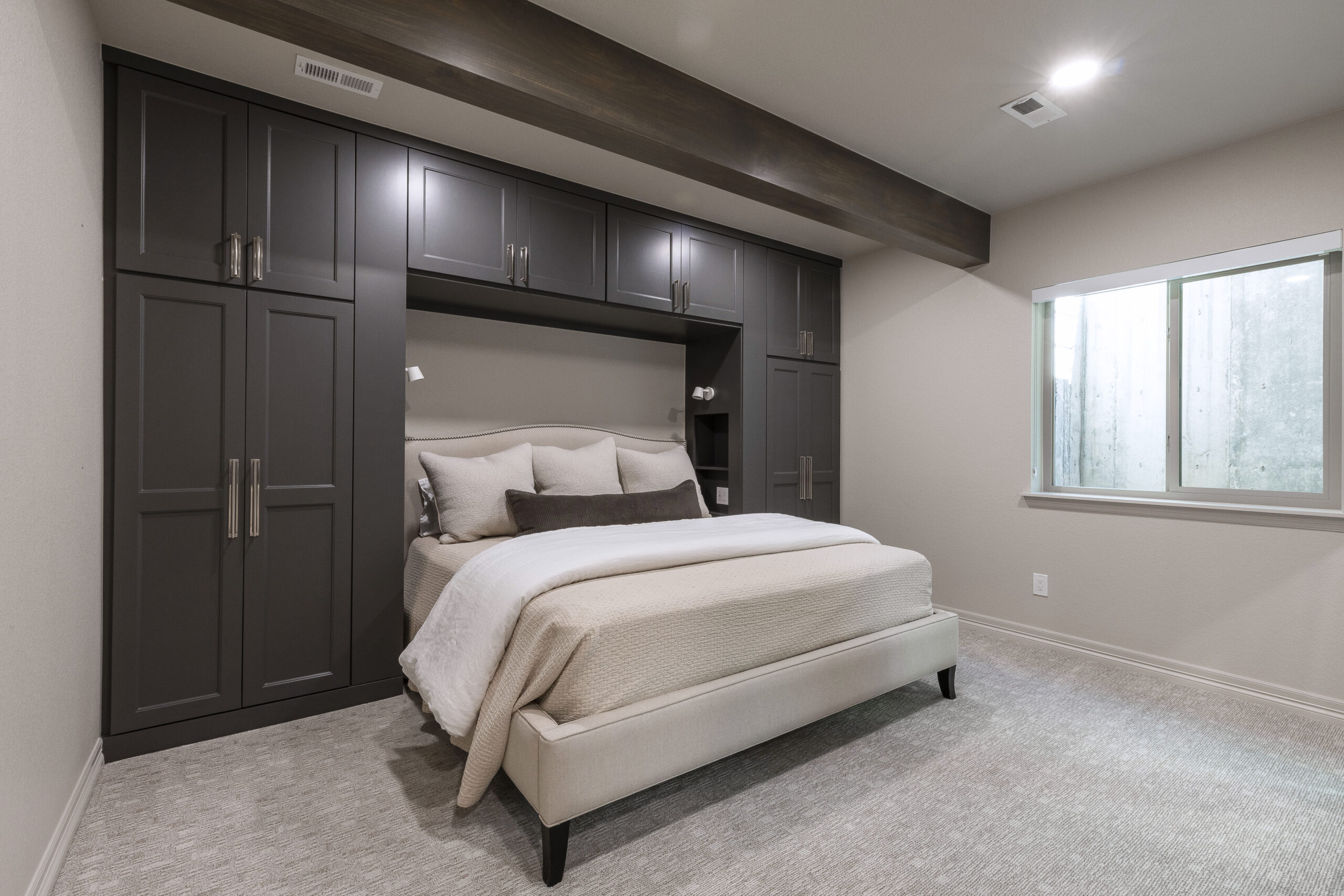
Add a bedroom downstairs without guessing your way through permits, egress, and safety.
A basement bedroom addition in Colorado can add real, usable square footage and boost resale appeal—but only if it’s planned around the details inspectors (and future buyers, appraisers, and insurers) care about: egress, ceiling height, alarms, ventilation, and the “bedroom vs. bonus room” line. Below is a practical roadmap Colorado homeowners can use to plan a bedroom that feels comfortable, photographs well, and stands up to code review across the Front Range.
First, define what you’re building: “bedroom” has specific triggers
Colorado jurisdictions commonly base residential requirements on versions of the IRC (International Residential Code), then add local amendments. The moment you call a space a sleeping room, requirements tighten—especially for emergency escape and rescue openings (egress), smoke/CO alarms, and sometimes mechanical/combustion-air rules around nearby equipment closets.If you’re ROI-driven and thinking “future rental flexibility,” the smartest approach is to design the bedroom to be code-compliant as a sleeping room now, even if it’s used as a guest room or office first. Retrofitting egress later is typically the expensive, messy part.
The #1 make-or-break item: egress window sizing (and the window well details)
For a legal basement bedroom, you’re typically planning around IRC R310-style criteria for an emergency escape and rescue opening. Common baseline targets used by many inspectors and guidance documents include:
Typical egress window minimums (verify locally):
• Net clear opening: 5.7 sq. ft. (often 5.0 sq. ft. at grade-level conditions)
• Minimum clear opening height: 24 inches
• Minimum clear opening width: 20 inches
• Maximum sill height (to bottom of clear opening): 44 inches above finished floor
• Must be operable from inside without keys/tools/special knowledge
• Net clear opening: 5.7 sq. ft. (often 5.0 sq. ft. at grade-level conditions)
• Minimum clear opening height: 24 inches
• Minimum clear opening width: 20 inches
• Maximum sill height (to bottom of clear opening): 44 inches above finished floor
• Must be operable from inside without keys/tools/special knowledge
Window wells matter, too. If the egress sill is below outside grade, you’ll typically need a window well that provides enough clearance for escape and (if deep enough) a permanently affixed ladder/steps that don’t reduce the required clear opening. Window well covers aren’t always “required,” but if you choose a cover it must open easily for emergency use.
Practical tip: Don’t shop windows by rough opening size alone. Confirm the manufacturer’s net clear opening specs for the exact model, operation type, and installed configuration.
A quick comparison table: “Bedroom-ready” vs. “Future bedroom” layouts
| Item | Bedroom-ready plan (best for ROI + legality) | “Finish now, upgrade later” plan (riskier) |
|---|---|---|
| Egress | Sized and placed correctly from day one | Often skipped; later retrofit can be the biggest cost |
| Electrical/alarms | Designed as sleeping room (smoke/CO placement + power requirements) | May need rework if inspectors require changes for sleeping use |
| HVAC + comfort | Supply/return strategy designed to prevent stuffy, cold rooms | Comfort complaints are common; fixes can be invasive |
| Resale/appraisal language | Clear “bedroom” positioning when permitted + compliant | Often labeled “non-conforming” or “bonus room” |
Note: final classification and listing language can vary by jurisdiction and professional interpretation. When in doubt, design to the stricter standard.
Did you know? Quick facts Colorado homeowners should plan around
Ceiling height often sets the design ceiling (literally): many jurisdictions require 7-foot minimum ceiling height for habitable space, including basement habitable areas.
Radon is common in Colorado: roughly half of Colorado homes test above the EPA action level. Finishing a basement is a great time to test and plan mitigation if needed.
Permits may be required even when “just finishing”: adding walls/rooms, electrical, plumbing, or a new egress window typically triggers permits and inspections.
Step-by-step: planning a code-smart basement bedroom addition
Use this sequence to avoid the common trap: finishing walls and ceilings first, then learning the bedroom can’t pass as a sleeping room because the egress or ceiling height doesn’t work.
1) Confirm ceiling height and obstructions
Measure from slab to the lowest obstruction (beams, duct trunks, soffits). If you’re close to the minimum, plan HVAC routes early. A bedroom that feels tall, bright, and open is easier to use (and easier to sell).
2) Design egress placement before you design the room
Decide whether the bedroom will use an existing window that can be upgraded or if you’ll add a new opening. Consider outside grade, landscaping, and drainage so the window well doesn’t become a snow-and-water collector.
3) Build a moisture plan (Colorado basements still get wet)
Even along the Front Range, basement moisture can come from grading issues, window wells, sump failures, or plumbing events. Choose finishes that recover well and design “serviceability” into the space (access panels, shutoffs, cleanouts where applicable).
4) Plan smoke + carbon monoxide alarms as part of the layout
Colorado law and local codes commonly require operational CO alarms near sleeping areas (often within a short distance of bedroom entries) and smoke alarms on levels and in/near bedrooms depending on the configuration. When you add a new sleeping room, you may also trigger upgrades to existing alarms.
5) Address ventilation and comfort (so it doesn’t feel like a cave)
A great basement bedroom is quiet, evenly conditioned, and not humid. Supply air without a return strategy can cause stagnant rooms. Sound-control choices (insulation, door selection, theater-style details if nearby) also matter for privacy.
6) Pull permits when required—and treat inspections as a checklist, not a surprise
Many cities (including Denver) require permits for basement finishes and for new egress window installations. If you’re changing the use to habitable space and adding walls/rooms and electrical, expect plan review and inspections.
If you’re planning for a future rental: it’s very rare that zoning will approve a true ADU conversion from a standard basement finish, and rules vary sharply by city. A basement bedroom addition can still be a strong value add—just avoid assuming it automatically becomes a legal separate unit.
Local angle: what changes across Colorado (Front Range reality)
Along Colorado’s Front Range, the “big rocks” (egress, ceiling height, alarms, permits) are consistent—but enforcement details can differ by jurisdiction and by the code edition adopted locally. Examples of local considerations that can affect your bedroom design:
Common Colorado bedroom-addition tripwires:
• Egress window selected but the net clear opening doesn’t actually meet spec after installation details
• Sill height ends up too high after new flooring thickness is added
• Window well drainage not addressed (water and ice issues around wells are common)
• Mechanical room/combustion-air restrictions when a new sleeping room is adjacent to fuel-burning appliances
• “Non-conforming bedroom” confusion during resale due to missing permits or missing egress
• Egress window selected but the net clear opening doesn’t actually meet spec after installation details
• Sill height ends up too high after new flooring thickness is added
• Window well drainage not addressed (water and ice issues around wells are common)
• Mechanical room/combustion-air restrictions when a new sleeping room is adjacent to fuel-burning appliances
• “Non-conforming bedroom” confusion during resale due to missing permits or missing egress
If your goal is a bedroom that appraises cleanly and avoids listing headaches, treat “local rules” as a design input early—not as a permit-office conversation after drywall.
Where ElkStone Basements fits (without the sales pressure)
ElkStone Basements specializes exclusively in basement renovations across Colorado’s Front Range (and in Utah). If you’re considering a basement bedroom addition, a pro can help you evaluate feasibility early—especially egress location, window well drainage, comfort planning, and permit scope—so you’re not spending money twice.
Want a code-aware plan and a realistic scope?
Request a consultation and share your current window sizes, ceiling height, and goals (guest room, teen suite, resale, future flexibility).
Helpful note: always confirm final requirements with your local building department and your specific property conditions.
FAQ: basement bedroom addition in Colorado
Do I always need an egress window for a basement bedroom?
In most Colorado jurisdictions, yes—inspectors typically expect a code-sized emergency escape and rescue opening for sleeping rooms. Exact criteria and allowed alternatives can vary, so confirm locally before framing.
Can I call it a “bedroom” if the window is too small?
If it doesn’t meet egress requirements, it’s commonly treated as a non-conforming bedroom (or listed as an office/bonus room). That can affect appraisal, resale marketing, and safety expectations.
Do I need a permit to add a bedroom in my basement?
Often, yes. Adding walls/rooms, changing unfinished to habitable space, adding electrical/plumbing, and installing a new egress window typically require permits. Denver, for example, provides explicit guidance that interior remodels and new egress window installations require permits.
What ceiling height do I need for a basement bedroom?
Many jurisdictions use a 7-foot minimum for habitable spaces (with specific exceptions for beams/ducts depending on code edition and amendments). Measure early—flooring and ceiling systems can reduce available height.
If I add a basement bedroom, does that make my basement a legal rental unit?
Not automatically. A bedroom addition can help functionality and resale, but separate-unit legality depends on zoning, address/separation rules, fire/life-safety requirements, and local policy. Plan a compliant bedroom first; evaluate rental pathways separately with city-specific guidance.
Glossary (helpful terms for permits and design)
Egress (Emergency Escape and Rescue Opening)
A code-sized operable window, door, or similar opening intended for emergency exit and firefighter access—commonly required for basement bedrooms.
Net Clear Opening
The actual open area available when the window is fully open (not the glass size). This is what inspectors care about for egress compliance.
Sill Height
The height from the finished floor to the bottom of the clear opening. Egress windows typically have a maximum sill height requirement.
Non-Conforming Bedroom
A room used as a bedroom that doesn’t meet one or more requirements (commonly egress). It may still be usable, but can be a resale/appraisal complication.
Habitable Space
Living areas intended for occupancy (bedrooms, living rooms, etc.). Habitable spaces often have minimum ceiling height, light/ventilation, and safety requirements.
Next good step: If you share your basement ceiling height, current window sizes, and where you want the bedroom located, ElkStone Basements can help you map the most realistic path to a compliant bedroom layout.


Recent Comments