
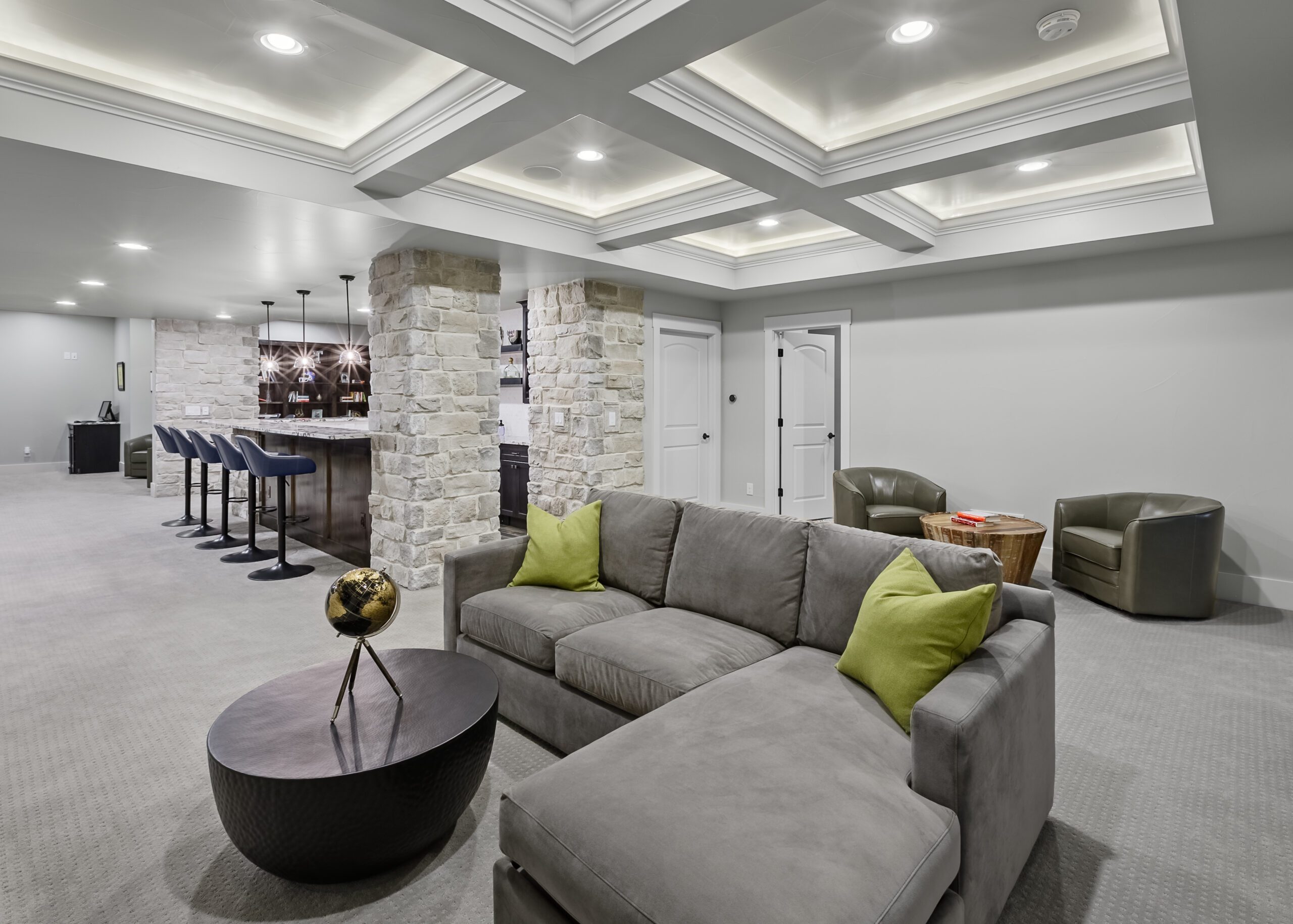
A legality-first guide for homeowners considering a basement apartment in Utah
A basement apartment can be a smart way to support extended family or create long-term rental income—but only if it’s permitted, built to code, and documented correctly. In Utah, the most common “gotchas” aren’t about countertops or paint colors; they’re about zoning definitions (ADU vs. “extra kitchen”), life-safety code items (egress, fire separation), and whether the home is required to be owner-occupied.
Below is a practical, homeowner-friendly breakdown of Utah basement apartment laws and the steps that help keep your project on solid ground for inspections, insurance renewals, appraisals, and resale.
Start with the right definition: “Basement apartment” usually means an Internal ADU
In Utah, many “basement apartments” fall under the umbrella of an Internal Accessory Dwelling Unit (Internal ADU / IADU)—a self-contained living space inside the footprint of an existing single-family home (often a basement) intended for long-term occupancy.
Here’s the key concept: state law requires municipalities to treat an internal ADU as a permitted use when it meets the statutory conditions, and it also allows cities to prohibit renting the internal ADU if the home is not the owner’s primary residence. That owner-occupancy detail is one of the biggest legality and resale concerns for homeowners planning rental income. (If your plan is to move out later and keep both units as rentals, you must verify local rules before spending money.)
Legal vs. “works fine”: what separates permitted rentals from risky ones
A basement setup can be comfortable and still be considered an illegal rental if it lacks approvals or misses minimum safety requirements. From a homeowner standpoint, the risks typically show up at the worst times: a fire claim, a complaint-driven city inspection, a refinance, or a sale where an appraiser or buyer’s inspector flags the unit.
| Item | Typically expected for a legal basement apartment | Common “illegal rental” red flags |
| Zoning / use approval | Meets local ADU rules; permitted as an internal ADU; recorded/registered if required | “We just finished the basement” but it’s functionally a second unit (kitchen + separate tenancy) |
| Permits & inspections | Building permits pulled; final inspections passed; documentation retained | No permit history; “handyman special” electrical/plumbing changes |
| Life safety (egress, alarms, separation) | Sleeping rooms have compliant emergency escape/rescue; smoke/CO alarms; proper fire separation where required | Bedrooms without compliant egress; questionable door/window wells; missing interconnected alarms |
| Owner occupancy rule | Owner lives on-site if required by local adoption of state allowances | Both units rented while owner lives elsewhere (may be prohibited for internal ADUs) |
Code-driven must-haves: egress is usually the #1 dealbreaker
If you’re creating (or marketing) a basement bedroom, emergency escape and rescue opening requirements (commonly called “egress”) are where many projects get stuck. While your city’s adopted code and amendments control, many Utah jurisdictions apply the familiar IRC-style targets, including:
Typical egress window benchmarks (always verify locally):
• Minimum net clear opening area commonly referenced: 5.7 sq. ft.
• Minimum clear opening dimensions commonly referenced: 20 in. wide and 24 in. high
• Sill height commonly referenced: bottom of opening no more than 44 in. above the finished floor
Practical tip: if you’re early in planning, treat egress as a design driver, not a finishing detail. Window wells, excavation, drainage, and structural considerations can influence layout, bedroom placement, and cost.
Step-by-step: how to plan a basement apartment that stays legal
1) Confirm your property’s ADU path (city + zoning district)
Before you draw a kitchenette or add a second laundry, identify your municipality (or county) rules. Utah’s internal ADU framework is statewide, but implementation details are local (parking, entry configuration, registration, inspections, etc.). Also confirm whether your local code will restrict renting the unit unless the home is your primary residence.
2) Decide: “family suite” vs. “rental unit” (design changes fast)
If the space is intended for extended family and not a separate dwelling unit, you may choose a layout that avoids features your city treats as a second unit. If it’s intended for long-term rental income, plan it as a legitimate internal ADU from the start—half-measures often create appraisal and insurance headaches later.
3) Build around life safety: egress, alarms, and separation
Prioritize bedroom egress locations, smoke/CO alarm placement, and any required fire-rated assemblies early—especially if you’re adding bedrooms, a kitchen, or a separate entrance.
4) Pull permits (yes, even if you’re “just finishing the basement”)
Permits create a paper trail that protects you later. When a buyer, insurer, or appraiser asks, “Was this done legally?” your best answer is documentation, not a verbal assurance.
5) Keep a “future sale” binder
Save approved plans, permit cards, inspection sign-offs, and product specs that matter (HVAC, electrical panel changes, window egress cut sheets, etc.). This is one of the simplest ways to reduce friction at resale.
Design choices that help (and choices that accidentally create “a second unit”)
In many Utah cities, the line between a “finished basement” and a regulated internal ADU comes down to how self-contained the space is. Features like a full kitchen (range/oven), separate entrance, independent HVAC zones, and dedicated laundry can all increase the likelihood the space is treated as a dwelling unit.
If your intent is a legal rental, that’s not a problem—just build it the right way and get it approved. If your intent is not to create a separate rental unit, be careful about adding “all the apartment features” without understanding how your city defines an ADU.
ElkStone Basements regularly designs basement layouts that balance privacy, comfort, and code-driven planning—whether you’re building a future-proof family suite, a kitchenette for entertaining, or a space intended for permitted long-term use. For inspiration, explore:
Basement Kitchenettes | Basement Bathrooms | Basement Family Rooms | Basement Design Ideas
Local angle: why “Utah basement apartment laws” vary by city
Even with Utah’s statewide internal ADU framework, your city (or unincorporated county area) controls important specifics: application steps, how ADUs are recorded, whether additional parking is required, and how owner-occupancy is verified or enforced.
For example, Salt Lake City provides public resources about ADUs and treats basement apartments as a common ADU type, but the actual requirements still depend on zoning rules and permitting through the local building department. If you’re in Utah County, Davis County, Weber County, or a smaller municipality, do not assume the process is identical.
If you want the cleanest path to a legal unit, start by collecting:
• Your property address + parcel number
• Your zoning district
• A rough floor plan (existing + proposed)
• Your intended use (family suite vs long-term rental, and whether you’ll remain owner-occupant)
Talk to a basement specialist before you commit to a layout
If you’re evaluating a basement apartment for rental income or extended family, the safest (and often most cost-effective) move is to plan for code and permitting first—especially egress, mechanical, and any fire separation details that can change your design.
ElkStone Basements focuses exclusively on basement remodeling and finishing, with experience helping homeowners create functional spaces that are built with long-term resale and usability in mind.
Request a Free Consultation | Basement Finishing in Utah | View Portfolio
FAQ: Utah basement apartment laws & permitting
It can be legal, but it depends on (1) whether the unit is a permitted internal ADU under Utah law and your city’s ordinance, (2) whether your home meets the statutory and local requirements, and (3) whether your city applies an owner-occupancy rule for rentals. Always confirm with your local planning/zoning and building departments before marketing the unit.
Often, yes. Utah’s internal ADU framework allows local governments to prohibit renting an internal ADU if the dwelling is not occupied as the owner’s primary residence. That means your long-term plan (live there vs. move out later) should be part of the early feasibility check.
In most permitted scenarios, sleeping rooms must have a compliant emergency escape and rescue opening. Many jurisdictions use IRC-style criteria (net clear opening area and size, sill height, and window well rules). Confirm your exact requirements with your local building department.
Possibly, but it’s sensitive. A “kitchenette” can cross the line into a second dwelling unit depending on local definitions (appliances, plumbing, separateness, entrance, and intended occupancy). If you want a wet bar or entertaining space, design it intentionally and get clarity from your municipality if there’s any chance it will be interpreted as an ADU.
It can. Unpermitted or nonconforming units may not be counted as legal living area the same way, and buyers (or their lenders/insurers) may require legalization, removal of certain features, or price adjustments. Keeping permits and final inspections documented helps avoid surprises.
Glossary (helpful terms for basement apartments in Utah)
ADU (Accessory Dwelling Unit): A secondary residential unit on the same lot as a primary dwelling, allowed under local rules.
Internal ADU (IADU): An ADU located within the footprint of an existing, owner-occupied single-family home (commonly a basement apartment).
Owner-occupancy requirement: A rule requiring the property owner to live on-site (as a primary residence) for the ADU to be rented legally.
Egress (emergency escape & rescue opening): A code-required way to exit (often an egress window) from a sleeping room or basement in an emergency.
Permit & final inspection: The formal approvals from your building department that document the work was reviewed and completed to code.
Recent Comments