
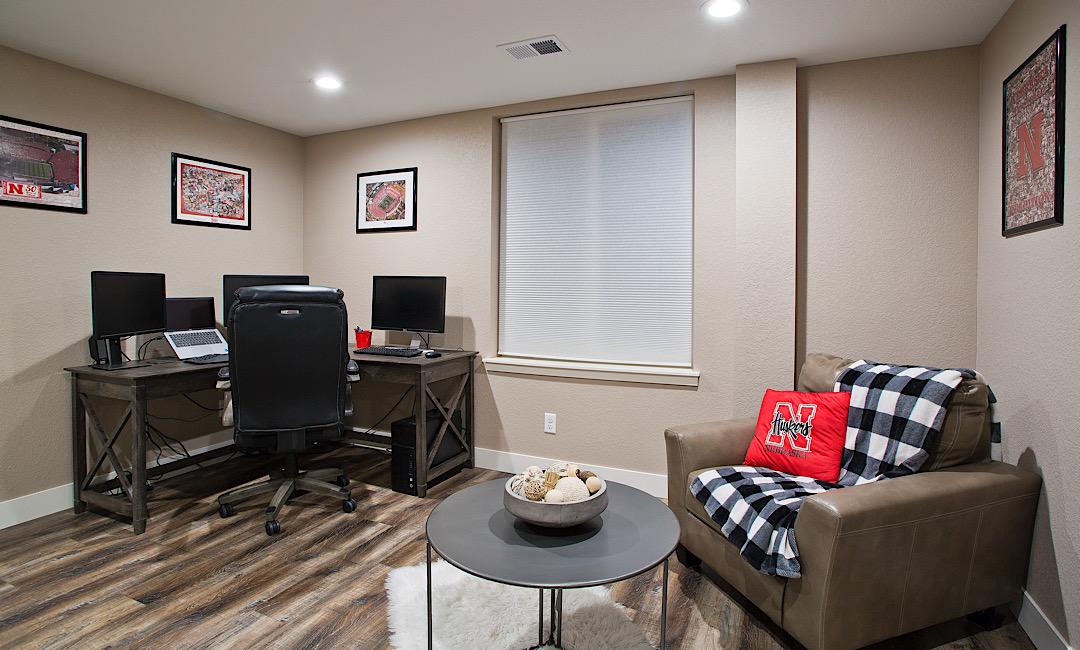
A basement office should feel like a real office—not a spare corner with a desk
Colorado homeowners are turning basements into focused work zones, creative studios, and hybrid “work + wellness” suites. The best results come from pairing inspiration (layout, style, built-ins) with the unglamorous requirements that make the space comfortable every day—power, lighting, ventilation, acoustics, and moisture planning. At ElkStone Basements, basement finishing is all we do, so we design offices that look polished and perform like a professional workspace.
1) Start with the “job description” of your office
Before you choose paint colors or a desk, decide what the room must do well. A basement office can be built for:
Video calls: controlled lighting, clean background wall, low echo, stable Wi‑Fi.
Deep focus: sound isolation, door sealing, “no glare” task lighting.
Creative work: larger work surfaces, specialty storage, better color-accurate lighting.
Two-person setup: wider room planning, dedicated circuits, double workstation acoustics.
When you define the use, the layout and construction details become clearer—and the finished space feels intentional instead of improvised.
2) Layout ideas that make a basement office feel bigger (and calmer)
Basements often have constraints—columns, soffits, mechanical rooms, and limited natural light. These finishing ideas work especially well in Colorado homes:
“Library wall” background: Build a full-height cabinet + shelving wall behind your chair to create a professional video-call scene and hide paper clutter.
Desk facing into the room (not the wall): If space allows, orient the desk so you look into the room. It reduces “boxed in” feeling and gives you better camera angles.
Glass-panel office door (with acoustic plan): Great for borrowed light and visual openness. Pair it with solid seals and/or a heavier door build if sound privacy matters.
“Office + flex nook”: Add a small lounge chair, reading bench, or compact treadmill zone so the office supports breaks and longer workdays without leaving the basement.
3) The “not optional” technical checklist: power, lighting, air, and moisture
A great basement office is comfortable for 8+ hours at a time. That comes down to four systems:
Power & data
Plan for more outlets than you think: monitors, chargers, printer, task lamp, standing desk motor, and a battery backup. Consider a dedicated circuit for a high-draw setup. For connectivity, hardwiring (or at least planning a clean path for it) can prevent “basement Wi‑Fi” headaches.
Lighting (make it feel like daylight without glare)
Basements benefit from layered lighting: recessed or low-profile ambient lighting, a dedicated task light at the desk, and soft accent lighting to reduce harsh shadows. A dimmer is a small upgrade that changes how the room feels all day.
Ventilation & temperature comfort
Colorado basements can run cool and dry, but comfort still depends on balanced airflow. If the office is enclosed, make sure supply/return air planning keeps it from becoming stuffy. If you’re adding a kitchenette or wet bar nearby, proper ventilation planning becomes even more important.
Moisture resilience (because basements are basements)
Choose basement-smart finishes and plan the build so minor moisture events don’t turn into a tear-out. That means thoughtful material selection, clean transitions at exterior walls, and smart flooring choices (ElkStone commonly recommends options like LVP, tile, carpet, or rubber gym flooring depending on how the space will be used).
4) Sound control: the difference between “nice” and “life-changing”
If your office shares walls with a rec room, theater area, or family room, sound planning should be part of the framing stage—not a last-minute fix. Many residential acoustic guidelines suggest aiming for higher isolation targets for home offices to improve speech privacy and focus (often discussed in the STC 45–55 range depending on the goal and build).
| Sound Strategy | Best For | What It Typically Involves |
|---|---|---|
| Seal the gaps | Most office builds | Door sweep, perimeter seals, caulking at penetrations, careful outlet/trim detailing |
| Upgrade the wall assembly | Shared wall with TV/rec area | Insulation choice, better drywall strategy, and/or decoupling options (plan during framing) |
| Ceiling impact-noise plan | Footsteps from above | Ceiling assembly approach + strategic floor covering upstairs |
Practical tip: if you do only one thing, prioritize the door. A beautiful office with a hollow-core door often sounds like an open hallway.
5) Code and safety notes that can affect office plans
Your basement office doesn’t automatically require egress as a bedroom does, but plans change. Many homeowners later convert an office into a guest room—so it’s wise to think ahead.
Planning ahead: If there’s any chance the “office” becomes a sleeping room later, ask about emergency escape and rescue opening requirements (egress) early. Local jurisdictions along the Front Range often follow IRC-based rules, and local handouts frequently reference egress requirements for new sleeping rooms in existing basements.
Another Colorado-specific comfort note: radon is common across the state. Testing is straightforward, and mitigation can be a smart upgrade if levels are elevated—especially when you’re turning the basement into a daily-use living space.
Quick “Did you know?” basement office facts
Did you know? The best time to improve sound privacy is before drywall—after the room is finished, many acoustic upgrades become more expensive and less effective.
Did you know? “More lights” isn’t the same as “better light.” Layered lighting reduces shadows on video calls and makes basements feel brighter without harsh glare.
Did you know? A finished basement office often benefits from planning adjacent spaces—like a basement kitchenette for coffee/water, or a wet bar for entertaining after hours—without mixing “work noise” into the whole basement.
A Colorado angle: build for real basements along the Front Range
Colorado basements vary widely—newer homes may have better ceiling heights and mechanical layouts, while older homes may require more creative soffit planning and moisture strategy. If you’re on the Front Range, it’s also common to want multipurpose spaces: office by day, rec room by night. That’s where thoughtful zoning helps:
Quiet zone: enclosed office + acoustic door strategy.
Active zone: rec room, theater room, or basement gym placed away from the office wall when possible.
Comfort zone: add a family room feel with warm lighting and (when desired) a basement fireplace feature.
If your priority is speed and budget, you may also want to compare a streamlined approach like Express Basement Finishing versus fully bespoke custom basement finishing.
Ready to plan a basement office that’s quiet, bright, and built to last?
Talk with ElkStone Basements about layout options, sound strategy, and the right finishing plan for your home in Colorado (or Utah).
Get a Free Basement Finishing Quote
Want to see what finished spaces can look like? Visit our basement portfolio and explore The ElkStone Experience.
FAQ: Finished basement offices in Colorado
Do I need an egress window for a basement office?
Typically, egress requirements apply to sleeping rooms. If there’s a chance your office becomes a bedroom later, plan egress early so the remodel doesn’t get boxed in by window size/location. Local guidance often references IRC-based egress rules for new sleeping rooms created in existing basements.
What’s the best flooring for a basement office?
It depends on how you work. LVP is popular for durability and easy cleanup; carpet can be excellent for warmth and echo control; tile works well for certain designs; rubber flooring is great if the office shares space with a wellness or gym zone.
How do I make my basement office quieter?
Start with the door (a solid door plus good seals), then address wall/ceiling assemblies during framing if the office is next to a rec room or theater. Good soundproofing is a “system,” not a single product, and many residential acoustic standards discuss higher isolation targets for office privacy.
Should I test for radon before finishing a basement office?
Testing is a smart step when you’re finishing a space intended for daily use. The Colorado Department of Public Health and Environment provides guidance on testing and mitigation options if levels are elevated.
Can an office share space with a rec room or theater?
Yes—zoning and sound planning matter. If the office needs quiet during work hours, consider an enclosed room with a strong door plan and place louder entertainment features farther away (or improve the shared wall assembly).
Glossary (helpful basement office terms)
STC (Sound Transmission Class): A rating used to describe how well a wall/ceiling assembly reduces airborne sound (like voices or TV).
Decoupling: Construction approach that reduces sound vibration transfer by separating framing layers (often planned during framing).
Egress (Emergency Escape and Rescue Opening): A code-required opening (often a window) that allows emergency exit/entry for sleeping rooms in many homes.
Radon mitigation: A system designed to reduce radon levels, often by venting soil gases from beneath the home.
Layered lighting: A lighting plan combining ambient, task, and accent light to improve comfort, reduce shadows, and avoid glare.

Recent Comments