
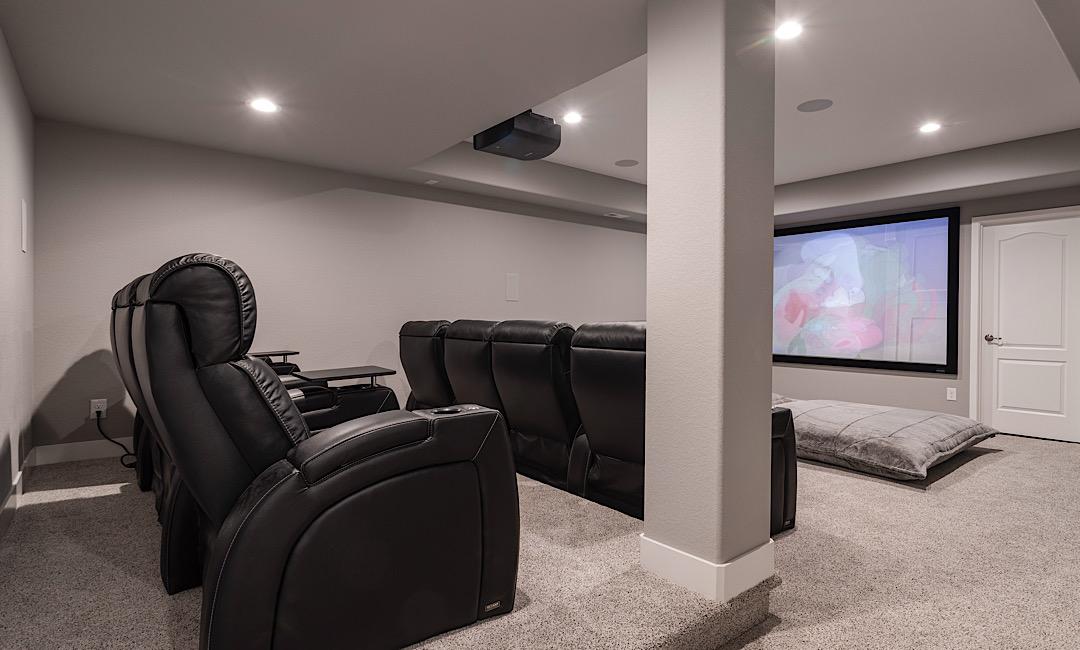
Turn unused square footage into your favorite room—without the “echo chamber” or tangled-cord look
Colorado homeowners are rethinking basements as true lifestyle spaces: a theater for movie nights, a gaming lounge for weekends, or a hybrid “cinema + rec room” that still feels polished. The best basement home theaters aren’t built around a single gadget—they’re built around room shape, speaker positions, sound control, lighting, and the right electrical plan so everything performs the way it should from day one.
1) Start with the “theater triangle”: screen, seating, speakers
Most “basement home theater ideas” online focus on finishes. Finishes matter, but performance comes from geometry. Before you pick paint or a projector, map three anchors:
2) The most overlooked “feature” in a basement theater: acoustics
Basements often have hard surfaces, long rectangular dimensions, and open stairways—perfect conditions for echo, rattles, and muddy dialog. If your goal is crisp voices and immersive surround, plan acoustics as part of the build (not a later patch).
2) Reduce reflections (strategic acoustic panels, thick area rugs, upholstered seating, curtains)
3) Tame bass (sub placement planning, optional bass traps in corners, avoid hollow stage platforms that resonate)
3) Lighting: make it cinematic, but still usable
A basement theater fails fast when lighting is “all bright” or “all off.” The goal is layers so you can snack, clean up, or host guests without washing out the screen.
• Ambient lighting: dimmable recessed or surface fixtures on zones
• Accent lighting: cove lighting, sconces, backlit shelves, toe-kick LEDs
• Screen-safe control: dimmer scenes so you can hit “Movie Mode” instantly
4) Power, wiring, and ventilation: the “hidden” difference between DIY-looking and custom
Colorado homeowners often want theaters that feel sleek—no visible cords, no overheated equipment, no Wi‑Fi dead zones. That takes planning behind the walls.
| System Element | What to Plan During Basement Finishing | Why It Matters |
|---|---|---|
| Dedicated circuits | Separate power for AV rack/projector + general outlets where feasible | Reduces nuisance trips and helps prevent hum/noise |
| Low-voltage pathways | Conduit or dedicated routes for HDMI/ethernet/speaker wire | Easier upgrades later (new HDMI standards, added speakers) |
| Network | Hardwired ethernet to the theater/AV location (plus a strong access point plan) | Reliable streaming, faster updates, fewer dropouts during movie night |
| AV rack ventilation | Ventilated closet or cabinet design; keep equipment accessible | Heat shortens equipment life and causes shutdowns |
| Future-proof speaker wiring | Prewire for at least .4 overhead channels if ceiling allows | Upgrades later are far easier before drywall and paint |
5) Theater + wet bar + rec room: a popular Colorado basement combo (and how to make it feel cohesive)
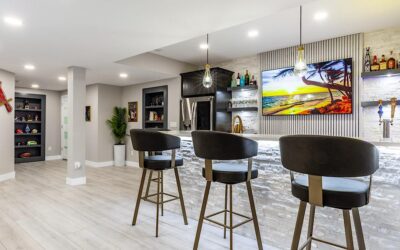
Along the Front Range, many homeowners want a theater experience without dedicating the whole basement to a single-use room. A smart “zone plan” can give you a cinematic viewing area while still supporting a wet bar, gaming, or a hangout space.
• Use lighting scenes (bar brighter, screen area dim)
• Use flooring transitions (carpet in theater zone helps acoustics; durable surfaces elsewhere)
• Keep the screen wall “clean” so the room still photographs and feels premium
6) Local angle: Front Range basements and the “comfort + moisture + permits” checklist
Colorado basements can vary wildly—from newer builds with tall ceilings to older homes with tighter mechanical rooms and more moisture risk. Before you invest in premium audio/video, make sure the foundation is ready for a finished, comfortable space.
• Temperature balance: basements can run cooler; zoning or duct adjustments may be needed
• Door placement: stairway doors can help contain sound and improve comfort
Ready to design a basement theater that looks clean and sounds incredible?
ElkStone Basements specializes exclusively in basement renovations—so your theater plan can be coordinated with framing, electrical, HVAC, acoustics, and finishes (without “oops” moments after drywall).
Recent Comments