
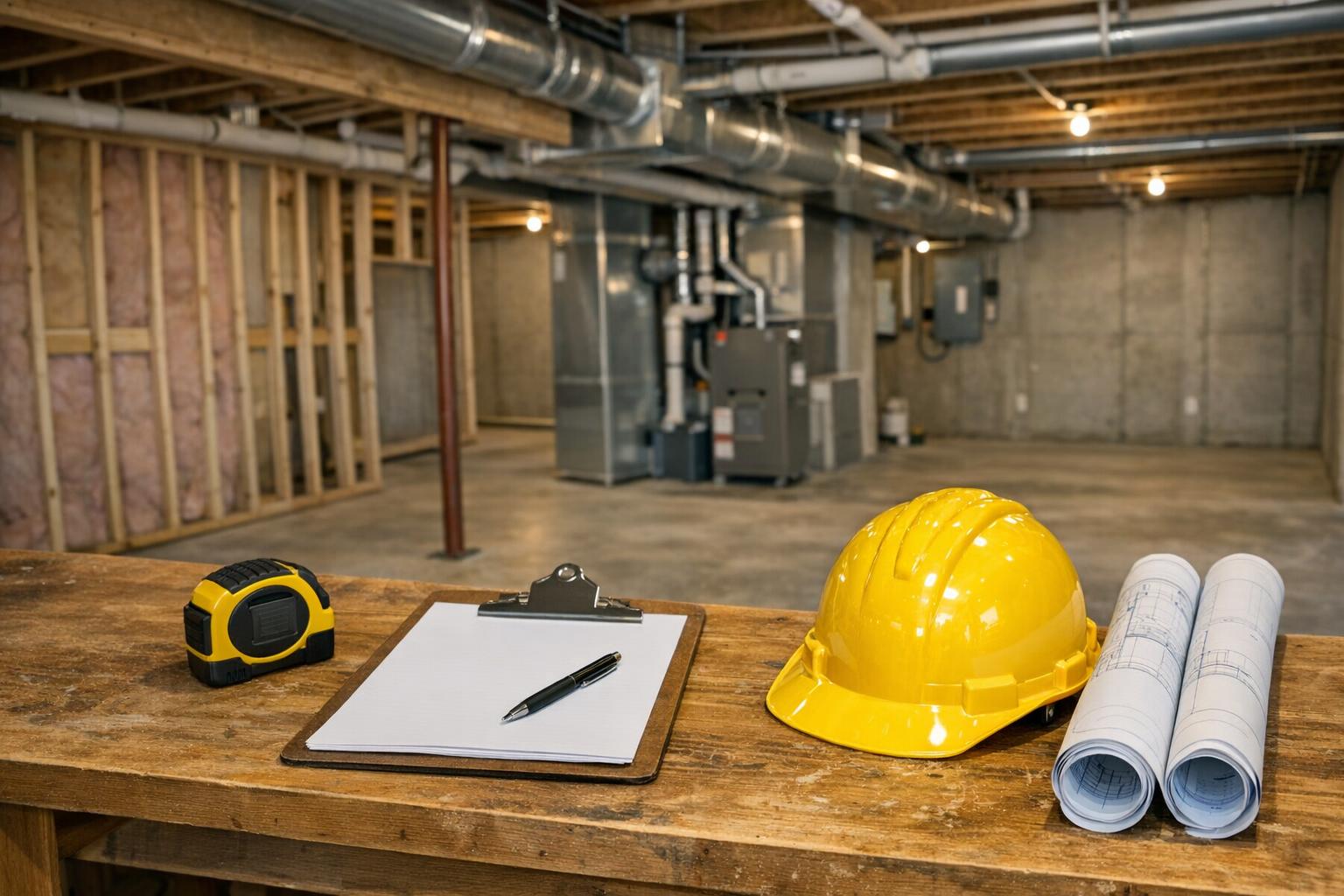
How to compare basement finishing quotes, schedules, and scopes without getting surprised mid-project
Finishing a basement along Colorado’s Front Range is rarely “just add drywall and carpet.” Between moisture management, insulation decisions, code details (especially if you want a bedroom), and coordinating trades on a tight timeline, contractor selection has a bigger impact than most homeowners expect. If you’re execution-ready and want a smooth build that stays on schedule, this guide breaks down what to ask, what to verify, and how to spot red flags early—before demo begins.
Local reality check: Colorado basements often face expansive clay soil movement and moisture swings. A good basement contractor designs around those conditions with smart layout, materials, and detailing—so your finished space feels comfortable and stays durable year after year.
Step 1: Start with the “scope reality” questions (before you talk finishes)
Fast projects don’t happen because someone “works harder.” They happen because the scope is clear, the plan is buildable, and change orders are minimized. When comparing basement contractors in Colorado, begin with questions that expose how they control variables.
1) What exactly is included—and excluded—in the base price?
Ask for a written inclusions list: framing, insulation type, drywall finish level, doors/trim, electrical scope, HVAC plan, plumbing rough-ins, flooring, paint, and permits. If you’re comparing “packages,” confirm whether things like a wet bar, bathroom, or kitchenette are priced as an allowance or as a fixed scope.
2) What’s the plan for inspections and code compliance?
A legitimate basement finish should follow your jurisdiction’s permit process and inspection sequence. If the contractor is vague about permits, “handles it later,” or asks you to pull permits to “save time,” that’s a predictability problem—because the timeline usually breaks when compliance is addressed late.
3) What triggers change orders on your projects?
The most common schedule killers are hidden mechanical conflicts, late design decisions, and “allowance” items that don’t match real-world selections. Look for a contractor who can explain their process for early layout validation, pre-selection timelines, and how they document changes.
Step 2: Verify the basement-specific skill set (not general remodeling claims)
Many contractors can remodel a main floor. Basement finishing is different: it’s more mechanical coordination per square foot, more risk around moisture, and more code nuance (especially around sleeping rooms). You’re not just buying “craftsmanship”—you’re buying a system.
Moisture strategy (ask for specifics)
Ask how they evaluate musty odors, minor seepage history, sump pit presence, downspout drainage, and slab cracks. A solid contractor will talk about material choices (like moisture-tolerant flooring options) and detailing, not just “we’ll paint it with waterproof paint.”
Layout planning around HVAC, plumbing, and headroom
Basements have soffits, beams, cleanouts, and mechanical clearances that don’t show up on Pinterest. Ask: “How do you confirm headroom and duct routes before framing?” The best answers include a measured plan and early coordination—not “we’ll figure it out on site.”
Safety + code items that get missed
Colorado jurisdictions commonly reference IRC-based requirements for smoke alarms, carbon monoxide alarms (as applicable), fireblocking in concealed spaces, and egress rules if a sleeping room is included. A basement-specialist should be comfortable explaining what applies to your design and why.
Step 3: Use a timeline test—“What happens in Week 1, Week 2, Week 3?”
Your persona (June-ready, school’s out, no patience for delays) should push for a contractor who can describe a repeatable workflow. Ask for a milestone schedule with dependencies. Even if dates change, the contractor should be able to map the sequence clearly.
A predictable basement workflow usually includes:
Pre-construction: final layout, selections locked, permit submission, site protection plan.
Rough phase: framing, rough electrical, rough plumbing (if any), HVAC adjustments, inspections.
Close-in: insulation, drywall, tape/texture, prime.
Finish phase: trim, paint, flooring, doors/hardware, final electrical and plumbing trims.
Final: punch list, final inspection, walkthrough + warranty handoff.
Comparison table: how to evaluate competing basement bids (beyond price)
| What to compare | Strong answer looks like | Red flag |
|---|---|---|
| Scope clarity | Line-item inclusions, defined allowances, written exclusions | “Turnkey” promise with vague or missing detail |
| Permits & inspections | Contractor manages permit set + inspection scheduling | Pushes unpermitted work or suggests “skip it to go faster” |
| Schedule predictability | Milestone calendar, trade sequencing, selection deadlines | No timeline, or “we’ll see when we start” |
| Basement expertise | Moisture-aware materials, basement-specific detailing, repeatable process | Treats basement like any other room |
| Warranty & handoff | Clear workmanship warranty + documented walkthrough checklist | Verbal warranty only, unclear service process |
Design choices that protect the schedule (and your basement)
If speed and predictability are priorities, aim for choices that reduce lead times and rework. A contractor who finishes basements frequently will often offer curated options that are both attractive and practical below grade.
Basement flooring: choose moisture-tolerant materials
For Colorado basements, practical, contractor-friendly options tend to be LVP, tile, carpet (in the right areas), and rubber gym flooring for workout zones. These materials can be planned predictably, sourced reliably, and handled well below grade.
Wet bars & kitchenettes: confirm plumbing pathways early
Sinks, ice makers, and dishwashers can be fantastic in a finished basement—if the drain route and venting are feasible. Ask the contractor where the main stack is, how they’ll handle pump needs (if any), and what’s included for electrical circuits and lighting.
Theater rooms: sound and lighting should be planned, not improvised
A theater done right needs a plan for speaker wiring, equipment location, ventilation, and lighting zones. When those decisions are made before drywall, you avoid the classic “open the wall back up” moment that wrecks timelines.
Did you know?
• Along the Front Range, expansive clay soils can contribute to seasonal movement when moisture levels change—one reason drainage details (gutters, downspouts, grading) matter even for an interior remodel.
• If you want a legal basement bedroom, egress requirements are a common decision driver. Planning for egress early is typically cheaper and faster than redesigning after the permit review.
• If you want a legal basement bedroom, egress requirements are a common decision driver. Planning for egress early is typically cheaper and faster than redesigning after the permit review.
Colorado angle: what “local” should mean when choosing a basement contractor
Colorado isn’t one uniform permitting environment. Denver-area municipalities, counties, and Front Range communities can vary in plan review expectations, inspection timing, and local amendments. A Colorado basement contractor worth shortlisting should be able to:
• Speak clearly about egress if you’re adding a bedroom. Ask what’s typical for your area and how they coordinate window well excavation and inspections.
• Anticipate summer scheduling pressure. When school is out, many homeowners want the basement done fast—so subcontractor coordination is everything.
• Understand basement comfort. Insulation, air sealing, and HVAC balancing are the difference between “nice new space” and “the room nobody uses.”
• Build for long-term durability. Materials and detailing should respect that basements can experience higher humidity and occasional water events.
Ready for a basement plan that’s clear, fast, and built for Colorado?
ElkStone Basements specializes exclusively in basement finishing and remodeling across Colorado’s Front Range (and in Utah), with streamlined options for homeowners who want defined scopes, reliable timelines, and a finished space that feels intentional.
Get a Free Basement Finishing Quote
Prefer a faster starting point? Explore Express Basement Finishing or compare Custom Basement Finishing.
FAQ: Choosing a basement contractor in Colorado
How do I compare basement finishing bids that aren’t apples-to-apples?
Ask each contractor for a written inclusions/exclusions list and a selection/allowance schedule. If one bid is cheaper, identify whether it’s missing HVAC work, electrical scope, permits, bathroom plumbing, or finish-level details (doors, trim, paint quality, flooring transitions).
Do I need a permit to finish my basement in Colorado?
In many Colorado jurisdictions, finishing a basement and adding/altering electrical, plumbing, or walls commonly requires permits and inspections. Your contractor should confirm requirements for your city/county and manage the process as part of a predictable timeline.
What’s the biggest reason basement projects run late?
Late decisions and unclear allowances are major causes, followed closely by unexpected mechanical conflicts and inspection timing. A strong process—finalized layout, early trade coordination, and clear selection deadlines—protects the schedule.
If I add a basement bedroom, what should I plan for?
Plan early for egress (window or door requirements), smoke/CO alarm locations (as applicable), and layout impacts around mechanicals and headroom. The details can vary by jurisdiction, so your contractor should confirm local requirements before the plan is finalized.
What basement flooring is a safe choice for Colorado homes?
Many homeowners choose LVP, tile, carpet (in the right areas), or rubber gym flooring because they perform well below grade and are straightforward to install and service. Your contractor should also address moisture history before finalizing materials.
Glossary (quick definitions)
Allowance
A budget placeholder for an item you haven’t selected yet (like tile or fixtures). If your selection costs more than the allowance, you pay the difference.
Egress
A code-required emergency exit method for sleeping rooms (often an egress window in basements). Requirements depend on code adoption and local amendments.
Fireblocking
Materials installed in concealed wall/ceiling spaces to slow the spread of fire and smoke. Often checked during framing/rough inspections.
Front Range expansive soils
Soils (often clay-rich) that expand and contract with moisture changes. They can contribute to seasonal movement and are a reason drainage control matters around basements.
Punch list
A final checklist of small fixes and adjustments (paint touch-ups, door alignment, trim gaps) completed before the project is considered finished.
Want inspiration for what your finished basement could include? Browse basement design options like wet bars, theater rooms, and rec rooms.


Recent Comments