
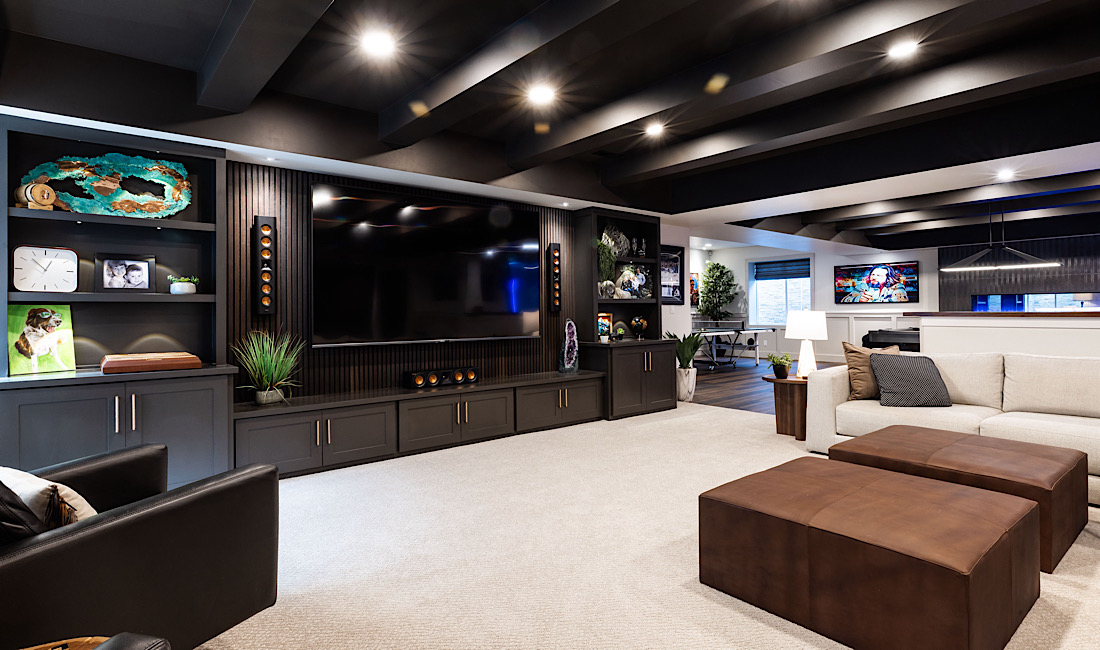
A straightforward, Utah-focused permit roadmap for adding bedrooms—without rework
Finishing a basement in Utah often feels like two projects in one: building a great space for your family, and proving to your city (and inspector) that the space is safe and code-compliant. If your plan for 2026 includes adding a basement bedroom (or two), this checklist will help you walk into plan review prepared—especially around egress, smoke/CO alarms, mechanical details, and the inspection sequence that can stall projects.
Quick note: Utah uses a statewide construction code built on the International Residential Code (IRC) with statewide amendments, and local jurisdictions enforce permits and inspections. Requirements can vary by city/county, so treat this as a strong starting point and confirm details with your local building department.
What typically triggers a permit for basement finishing in Utah
In most Utah jurisdictions, you should expect to pull a permit when you’re doing any combination of: adding or modifying walls, electrical circuits, plumbing fixtures (like a basement bathroom or wet bar), HVAC supply/returns, or converting an unfinished basement into habitable space (especially bedrooms). Bedrooms are the biggest “code multiplier,” because they trigger life-safety requirements like emergency escape and rescue openings (egress), and often additional smoke/CO alarm rules.
Utah-specific egress relief to know: Utah law includes language that can limit when a municipality can force physical changes to enlarge an existing bedroom egress window that was compliant when it was built/finished—especially if changing it would compromise structural integrity or can’t be completed due to current constraints. This is not a “free pass” for new bedrooms, but it matters for remodels of already-finished spaces.
The Utah basement permit checklist (print-friendly)
Use this as your “permit readiness” list before you submit plans or start demo.
1) Define the scope (the permit office will ask)
Confirm your project type: finishing an unfinished basement, remodeling an already-finished basement, adding bedrooms, adding a bathroom, adding a kitchenette/wet bar, or reconfiguring mechanical.
Sketch a simple floor plan: show room labels (Bedroom 1, Storage, Mechanical, Bath), doors, windows, and stairs.
Note utilities: existing panel capacity, existing HVAC equipment location, and any plumbing rough-ins.
2) Bedroom egress: confirm window + well compliance early
A basement bedroom almost always needs an emergency escape and rescue opening that meets minimum net clear opening and sill height limits. Common IRC benchmarks used by inspectors include:
Minimum net clear opening area: 5.7 sq ft (grade-floor exceptions may allow 5.0 sq ft depending on conditions).
Minimum net clear opening: 20″ width and 24″ height (net clear, not rough frame).
Maximum sill height: bottom of clear opening ≤ 44″ above finished floor.
Window well (when below grade): often 9 sq ft minimum area, with at least 36″ projection and 36″ width; deeper wells may require a permanently affixed ladder/steps.
Field tip: Many egress “fails” happen because the purchased window size is fine, but the net clear opening (after the sash opens) is too small. Confirm the manufacturer’s net clear specs before ordering.
3) Life safety: smoke alarms + carbon monoxide alarms
If you’re finishing new bedrooms or opening up walls/ceilings, your inspector may require updates to smoke and CO alarm placement and/or interconnection. Utah has statewide amendments that address carbon monoxide alarm interconnection, including allowances for wireless systems and exceptions in certain existing conditions.
Checklist: Confirm alarm locations on your plan, and decide early whether you’re using hardwired interconnection or listed wireless interconnection (often simpler in remodels where fishing wires is impractical).
4) HVAC and ventilation: plan supplies/returns and clearances
A common plan review note is “show HVAC.” Bedrooms and family rooms need appropriate conditioned air (and typically returns or transfer paths). Mechanical rooms also need working clearances and safe access. If you’re adding a basement bathroom, confirm whether local rules require an exhaust fan ducted to the exterior and how it will be routed.
5) Plumbing scope: bathrooms, wet bars, and future-proofing
If you’re adding a bathroom or wet bar, your permit set should show fixture locations, drain/waste/vent approach, and whether you’ll need a sewage ejector (common when gravity drainage isn’t possible). Even if you’re not building a wet bar now, many homeowners choose to “future-proof” with capped plumbing rough-ins while walls are open.
If you’re adding a basement bathroom…
Confirm venting plan, fan duct route, and any slab cuts needed for drains.
If you’re adding a wet bar or kitchenette…
Show sink location, GFCI outlets, and plan cabinetry clearances so inspections don’t flag accessibility or safety issues.
Basement bathroom design & build options
Basement wet bars (layout and build considerations)
6) Electrical: circuits, AFCI/GFCI, and lighting layout
Basements often add load fast: bedrooms, a family room, a bathroom fan/heater, a bar fridge, or a home gym. Your electrician should confirm panel capacity and plan circuiting. From a permit perspective, it helps when your drawings show receptacle layout, lighting, smoke/CO power, and any dedicated circuits (fridge, sump, bathroom, theater equipment).
7) Moisture and radon: protect the new living space
Utah’s soil conditions and seasonal moisture changes make it smart to plan for moisture control (proper insulation strategy, vapor management, and drainage considerations) before finishing walls. If you plan radon mitigation, make sure it’s handled by appropriately licensed professionals—Utah’s DEQ notes that radon mitigation installation requires contractor licensure, and certification programs (NRPP/NRSB) are the recognized pathways for radon professionals.
Did you know? Quick facts Utah homeowners miss
“Egress size” is about the net clear opening, not the advertised window size. The sash and frame reduce usable clearance, which is why manufacturers’ net-clear specs matter.
Utah has statewide code amendments. Utah’s state construction code adopts the 2021 I-Codes with statewide amendments, so don’t assume another state’s basement checklist matches what your inspector expects.
There’s legal language around existing bedroom egress windows. For certain existing bedrooms, Utah law limits when a city can require physical changes to install a larger egress window if it was code-compliant when finished, and changing it isn’t feasible without structural issues.
Common permit/inspection checkpoints (typical sequence)
Every jurisdiction is different, but most basement projects follow a similar inspection rhythm. Planning around this sequence reduces “open up the drywall” nightmares.
Milestone
What inspectors often want to see
Common fail points
Framing (rough)
Room layout, bedroom dimensions/doors, soffits, fireblocking/draftstopping as required, egress access
Bedroom called “storage” on plan; missing fireblocking; egress path blocked
Electrical (rough)
Box locations, circuiting, smoke/CO plan, GFCI/AFCI where required
Missing smoke/CO interconnection plan; overcrowded boxes; unprotected wiring
Plumbing (rough)
Venting approach, drain slopes, test requirements
Vents not shown/installed as expected; missing access panels
Insulation
Correct R-values/coverage, proper installation, no voids
Compressed batts; missing rim joist plan; gaps behind tubs/showers
Final
Trim, alarms, outlets, doors, handrails/guards where applicable, and mechanical operation
Egress not fully operable; missing CO/smoke; blocked shutoffs; punch items unresolved
Table is generalized to help you plan; your city/county may break inspections into more (or fewer) steps.
Step-by-step: a permit-friendly approach that avoids rework
Step 1: Confirm “realistic design for bedroom” before design gets pretty
If the space will be used as a bedroom, design it as a bedroom from the beginning: egress, door sizes, alarm placement, and HVAC. Trying to “convert later” is where costs spike (especially if egress needs excavation).
Step 2: Lock the egress window/well plan and budget
Decide whether you’re using an existing compliant opening, upgrading an existing window, or cutting a new opening. Then, verify net clear opening dimensions and window well requirements before you submit for a permit.
Step 3: Submit clean drawings (simple beats fancy)
Many plan reviews move faster with a clear floor plan, a basic electrical plan (lights/outlets/smoke/CO), and a mechanical note showing supplies/returns. Clean documentation reduces back-and-forth.
Step 4: Schedule inspections based on trade readiness (not calendar pressure)
Don’t call for rough inspections until all rough work is complete, strapped/protected, and accessible. Inspections that fail for “not ready” can add days (or weeks), depending on booking backlogs.
Local angle: finishing basements across Utah
Along the Wasatch Front and throughout Utah County, permit processes often move smoothly when homeowners treat the project like a small “addition”: clear scope, egress verified, and an inspection plan. In mountain and high-snow areas, exterior excavation for egress wells can also be affected by seasonal conditions—another reason to confirm the bedroom/egress plan early and schedule exterior work strategically.
Utah basement finishing & remodeling services
Want a permit-ready basement plan from a team that specializes in basements?
ElkStone Basements focuses exclusively on basement finishing in Utah and Colorado’s Front Range. If you’re adding bedrooms for 2026, we can help you design for compliance, plan inspections, and avoid the costly “redo” moments that show up late in the project.
Request a Free Consultation View Basement Portfolio Ideas
FAQ: Utah basement permits and bedroom compliance
If you’re converting unfinished space into habitable rooms and adding/modifying framing, electrical, plumbing, or HVAC, you should expect to need permits and inspections. Exact rules vary by municipality, so confirm with your local building department.
Egress. Your bedroom typically needs an emergency escape and rescue opening that meets net clear opening, minimum dimensions, and sill-height rules—plus window well requirements when below grade.
For certain existing bedrooms that were compliant when finished, Utah law includes protections that can limit when a municipality may require physical changes—especially if changing the opening would compromise structural integrity or cannot be done within other code constraints. This doesn’t automatically apply to creating a brand-new bedroom, but it can matter in remodels.
Often, yes—especially when you’re altering areas and adding sleeping rooms. Utah’s statewide amendments address CO alarm interconnection and allow listed wireless alarms in some cases. Your inspector can confirm what’s required for your specific scope.
Yes—and doing it before the finishes go in can be simpler. Utah DEQ notes radon mitigation installation requires contractor licensure, and radon professionals typically follow NRPP or NRSB certification standards.
Ready to transform your space with a beautiful, functional basement? ElkStone Basements serves homeowners throughout Colorado and Utah with expert design and build services tailored to your needs. Don’t wait to unlock the potential in your home — get started today! Visit to schedule your consultation and take the first step toward your dream basement.
Glossary (helpful permit and inspection terms)
Net clear opening
The usable opening size after the window is fully opened (what a person can actually pass through), not the rough framing size.
Emergency escape and rescue opening (egress)
A code-required opening—typically a window in a bedroom—that allows occupants to escape and responders to enter during an emergency.
Window well
An excavated area outside a below-grade egress window that provides space to fully open the window and climb out; deeper wells may require a ladder/steps.
Interconnected alarms
A system where triggering one smoke/CO alarm causes the other alarms in the home to sound (can be hardwired or listed wireless, depending on jurisdiction and conditions).
Recent Comments