
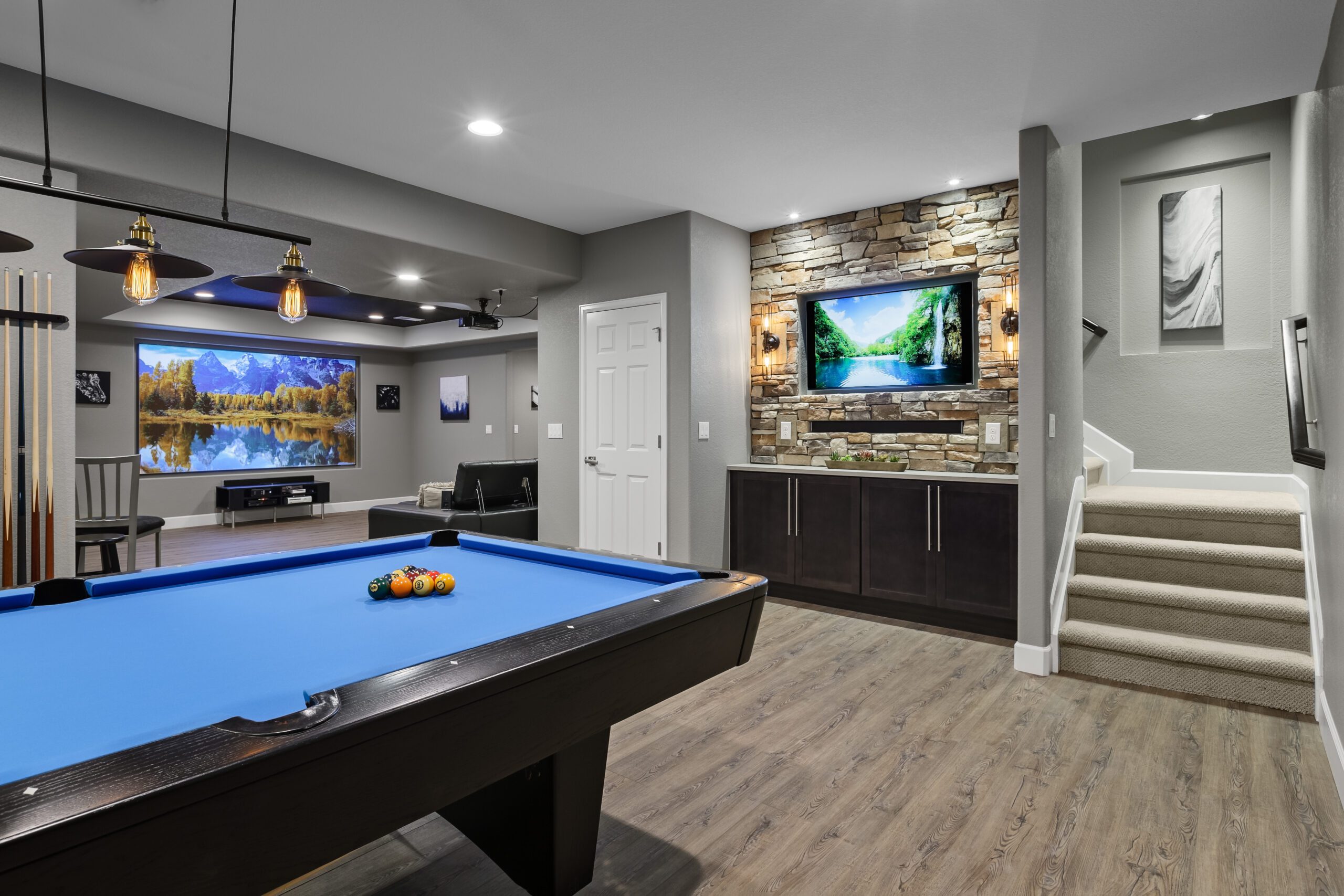
For many Colorado homeowners, built-ins are the difference between a basement that looks “done” and one that still feels like a big open box. The right built-ins add storage, reduce clutter, and make rooms like rec spaces, theaters, bars, and family rooms feel intentional—without locking you into a layout you’ll hate later. This guide focuses on practical, performance-first basement built-ins ideas that protect headroom, plan around code realities (like egress), and stay durable in a below-grade environment.
If you’re already exploring basement layouts or want a faster path to a finished space, see ElkStone’s Express Basement Finishing options—or browse inspiration in the project portfolio.
Start with the “no-regrets” constraints: headroom, moisture, and access
1) Protect headroom before you design anything permanent
Basements often have ductwork, beams, soffits, and plumbing that steal inches. A built-in that’s too tall or too deep can make a low-ceiling area feel cramped overnight. A better approach is to “step” your built-ins: keep tall cabinetry where the ceiling is highest, then transition to lower drawers/benches under soffits so the room feels level and open.
2) Use basement-appropriate materials (durability > trend)
Below-grade spaces can be more humid and temperature-variable than main floors. For built-ins, prioritize durable finishes, moisture-tolerant backers, and details that keep wood products away from direct slab contact. If you’re building a wet bar or kitchenette, water-resistant surfaces and easy-to-clean toe-kicks matter more than ornate profiles.
3) Plan around access panels and future service
Shutoffs, cleanouts, sump pits, radon fans, and electrical panels shouldn’t end up trapped behind a gorgeous wall of cabinetry. The best built-ins look seamless and provide discreet access—hinged doors, removable panels, or “false backs” inside cabinets.
High-performing basement built-ins ideas (by room)
Family room built-ins: low media walls + hidden storage
A basement family room often needs to be many things: movie night, kids’ hangout, and overflow guest space. A “low-profile” media wall keeps the room from feeling top-heavy and helps sightlines under soffits. Pair it with deep base drawers (toys, blankets, board games) and a floating shelf or two (easy décor swap = future flexibility).
Explore layout ideas for cozy gathering spaces on ElkStone’s Family Rooms page.
Rec room built-ins: benches that do triple duty
Built-in benches are one of the most useful basement upgrades because they create seating without consuming floor space like bulky furniture. Do them right and they become: (1) extra seating, (2) storage, and (3) a visual “zone divider” that separates a game area from a TV/lounge area.
Performance tip: add lift-up lids only where you’ll actually use them. For daily convenience, drawers win.
Need inspiration for game and hangout layouts? See Rec Rooms.
Wet bar & kitchenette built-ins: storage that stays tidy
Basements become a social hub fast—especially along the Front Range where entertaining often means “everyone ends up downstairs.” Smart bar/kitchenette built-ins include:
- A dedicated trash/recycle pull-out (keeps counters clear)
- A beverage fridge bay with ventilation space
- A shallow “glass” cabinet (reduces clutter and prevents lost stemware)
- Durable backsplash + easy-wipe end panels near traffic paths
See custom entertaining ideas: Wet Bars
Prefer a lighter footprint? Explore Kitchenettes
Theater built-ins: acoustic-friendly, cable-friendly, future-friendly
A basement theater is where people most often overbuild—and regret it later when technology changes. A better plan: built-ins that manage cables and components cleanly, but keep equipment access simple.
Practical details to specify: oversized conduit paths, vented component cubbies, and a replaceable center panel where mounting patterns change over time.
Browse theater layouts and wall concepts: Theater Rooms
Specialty built-ins: hobby rooms that still sell well
If resale impact matters, avoid one-use-only built-ins that can’t be repurposed. Instead of fixed “niche” shapes, use adaptable modules: tall utility cabinets, adjustable shelving, and a durable work surface that can become crafts, homework, or a home office.
See ideas for flexible hobby-forward spaces: Specialty Designs
Step-by-step: how to choose built-ins that won’t box you in
Step 1: Define what must be permanent
Plumbing walls, bathrooms, and structural constraints come first. Built-ins should support the plan—not force it.
Step 2: Treat storage like a “system,” not random cabinets
List what you’ll store (seasonal décor, sports gear, board games, barware, cleaning supplies). Assign it to zones. Then choose built-ins: drawers for small items, adjustable shelves for changing bins, tall brooms/utility storage away from the main hangout.
Step 3: Keep key code/safety elements unobstructed
If your basement includes sleeping space or habitable rooms, egress requirements can affect where tall built-ins belong. Common IRC baseline dimensions for emergency escape openings include a minimum net clear opening area of 5.7 sq. ft., minimum 20 in. clear width, minimum 24 in. clear height, and a maximum sill height of 44 in. above the finished floor (with window well rules for below-grade conditions). Always confirm local amendments and your specific plan with your contractor and inspector.
Step 4: Build for future swaps
Specify replaceable parts: removable toe-kicks, serviceable access panels, and “sacrificial” trim pieces where bumps happen. This is especially helpful in busy rec rooms and kid-friendly basements.
Quick comparison table: built-in types vs. what they’re best for
| Built-in idea | Best use | Why it reduces regret | Design watch-outs |
| Low media wall + base drawers | Family room / rec room | Keeps ceiling feeling higher; storage stays usable | Cable management and ventilation for components |
| Built-in bench with drawers | Rec room seating + storage | Flexible seating without clutter | Don’t block pathways or egress access |
| Wet bar / kitchenette cabinetry | Entertaining + convenience | Organized, easy-clean, high daily use | Water protection, appliance clearances, GFCI needs |
| Tall utility storage wall | Sports gear, seasonal bins | Prevents “stuff creep” into living areas | Leave service access to mechanicals and shutoffs |
| Tech-friendly theater component built-ins | Theater / TV wall | Looks custom, stays upgradable | Ventilation, access doors, conduit for future wiring |
Did you know? Colorado-specific basement realities that affect built-ins
Radon is common—plan for testing and mitigation access
Colorado health officials frequently remind homeowners that many homes test above the EPA action level of 4.0 pCi/L. If your basement will be a primary living zone, make sure your finish plan includes radon testing and does not bury mitigation components behind inaccessible walls or cabinets.
Egress planning can shape your entire built-in wall
If you’re adding a bedroom or creating habitable space, egress windows/window wells can dictate where tall cabinetry can (and can’t) go. The safest approach is to design your built-ins after the egress plan is confirmed, not before.
A practical “built-ins blueprint” for flexible basements
When homeowners say they want flexibility, they usually mean: “I don’t want to redo this in five years.” Here’s a layout approach that holds up:
- Put tall storage on the “least scenic” wall (near stairs, hallway, or mechanical zone).
- Place low built-ins (media, benches, drawers) on the main hangout wall to preserve openness.
- Use movable furniture for the pieces you’re most likely to change (sectional, bar stools, game table).
- Keep at least one wall “clean” for future uses: office nook, guest space, hobby zone, or additional storage.
If you’re considering a more customized plan, see Custom Basement Finishing for options that can be tailored around headroom, storage goals, and long-term flexibility.
Local angle: what works well along Colorado’s Front Range
Across the Front Range, homeowners commonly want basements that can shift roles: kids now, guests later; entertaining now, home gym later. Built-ins that support that reality are typically:
- Storage-forward (fewer exposed shelves, more closed cabinets and drawers)
- Easy to clean (especially around snack zones and wet bar areas)
- Planned around safety/code (egress access stays clear; no “furniture maze” near exits)
- Resale-friendly (rooms can be described simply: family room, rec room, flex space)
If you’re outside Colorado and need an experienced basement-only team in Utah, ElkStone also provides basement finishing in Utah.
Want built-ins that look custom and function like a system?
ElkStone Basements specializes exclusively in basement renovations—so the details that matter downstairs (headroom, durability, future access, and clean layouts) are built into the process.
Get a Free Basement Consultation
FAQ: Basement built-ins (Colorado homeowners)
The best value is usually “invisible value”: storage that makes the basement easier to live in. Low media built-ins with drawers, a tidy wet bar/kitchenette, and well-planned utility storage tend to age well and support resale because the space stays flexible.
Go lower and longer instead of tall and deep. Use stepped heights under soffits, choose more drawers than doors for everyday storage, and avoid thick crown/trim profiles where ceilings are lower.
Sometimes, but you should design with egress access in mind—no tall obstructions, no tight paths, and nothing that interferes with window operation. Because local requirements and room use matter, confirm the final placement with your contractor and inspector.
If you entertain or want the basement to function independently (kids, guests, game days), yes. The “worth it” comes from daily convenience—especially when you plan storage, cleanup, and appliance clearances correctly.
Over-customizing around one use (a giant fixed entertainment wall or niche cabinetry) and then realizing the room needs to change. The fix is modular planning: permanent storage + swappable furniture + accessible service points.
Glossary (helpful basement terms)
Built-in: Fixed cabinetry, benches, shelving, or wall systems constructed as part of the room rather than standalone furniture.
Soffit: A boxed-out area (often along the ceiling) used to conceal ductwork, beams, plumbing, or wiring—common in basements and important for built-in height planning.
Egress (emergency escape and rescue opening): A code-compliant window or door opening intended for emergency exit and rescue access—especially important when finishing basements with sleeping or habitable spaces.
Radon mitigation system: A system (often a vent pipe and fan) designed to reduce radon gas levels inside the home. When finishing a basement, plan finishes and built-ins so the system remains accessible for service.

Recent Comments