
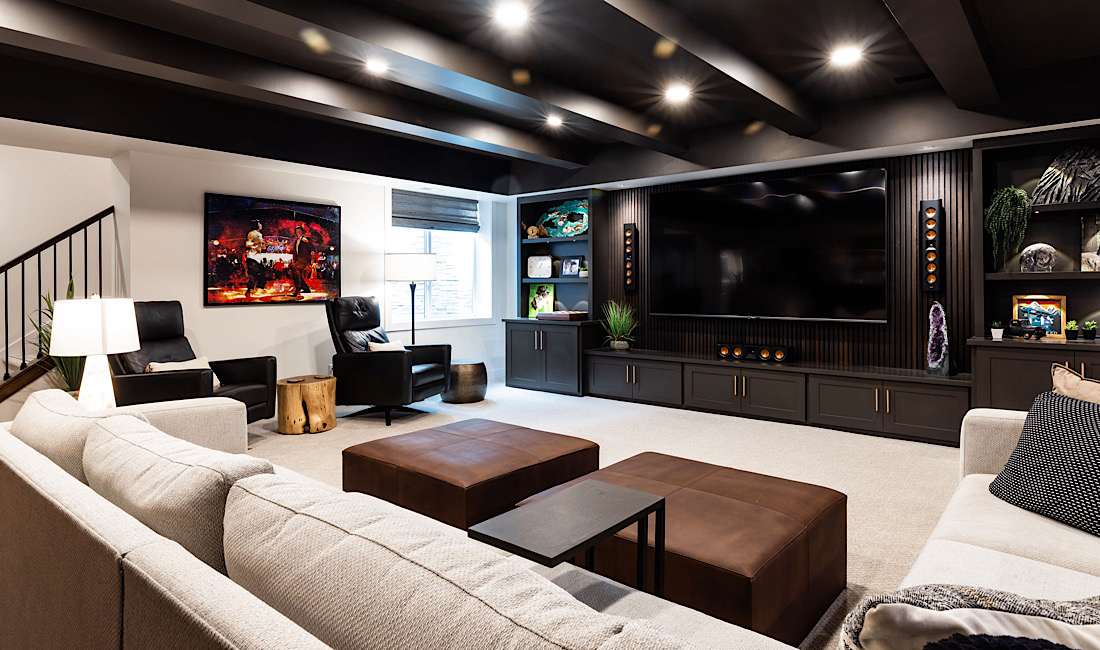
If you’re eyeing rental income, a multigenerational suite, or a legal “second unit,” your basement is often the smartest starting point.
Colorado homeowners are increasingly ROI-driven—and more regulation-aware than ever. The catch: “ADU,” “basement apartment,” and “finished basement” are not interchangeable terms. Your goals (rental, family suite, resale value, future flexibility) should drive the design choices you make now—especially around life-safety, egress, utilities, and permitting.ElkStone Basements specializes exclusively in basement finishing and remodeling across Colorado’s Front Range (and in Utah), helping homeowners build spaces that feel great today and stay compliant and marketable tomorrow.
Step 1: Define the end goal (because it changes the code path)
Before you pick flooring, a wet bar layout, or a theater wall, clarify which category you’re actually building toward:
Project Type
Typical Features
Common “Gotchas”
Finished Basement (non-dwelling)
Rec room, theater, gym, wet bar, guest space
Egress for bedrooms, smoke/CO placement, headroom/clearances, electrical loads
“In-law” Suite / Multi-gen Space
Bedroom + bath, kitchenette, privacy upgrades
Kitchenette vs. full kitchen triggers, separate entrances, fire separation expectations
Legal ADU / Secondary Dwelling Unit
Independent living: cooking, sleeping, bathing, sometimes separate metering
Zoning eligibility, permits, utility requirements, inspections, insurance and lease legality
Why this matters: A “great finished basement” can be a fantastic ROI upgrade without becoming a regulated second dwelling unit. If you design for a future ADU, you may want to “future-proof” now—without accidentally building something that triggers ADU-level requirements before you’re ready.
What’s “new” in Colorado ADU conversations (and why homeowners are paying attention)
Over the last couple of years, ADU policy has been evolving quickly across Colorado—especially in larger Front Range jurisdictions. The practical outcome is that more homeowners are exploring options like:
• Converting a basement into a compliant living space for family now, rental later
• Adding a kitchenette and planning for a separate entrance where feasible
• Building a layout that can be marketed as “flex space” without overpromising rental legality
Important clarity: The old blanket statement that “Colorado Springs doesn’t allow ADUs” is no longer accurate. Colorado Springs City Council approved an ADU ordinance update on April 8, 2025 and the city provides an ADU info hub, including notes about areas where ADUs are not allowed (such as the WUI Overlay). Your exact zoning and overlays still matter.
Basement updates that most often make or break “rental-ready” plans
If your basement is being planned with rental legality in mind, treat these as “non-negotiable design conversations” early—before framing starts.
1) Egress (especially for bedrooms)
Bedroom egress is one of the most common compliance issues in basement remodels. Many jurisdictions reference IRC-based standards requiring an emergency escape and rescue opening for sleeping rooms. In practice, that often means upgrading window size, window well dimensions, ladder steps, or changing the layout so bedrooms land where proper egress is achievable.Planning tip: If egress upgrades are costly, it can be smarter to design a high-value rec room + office + bath layout first, and keep “future bedroom” space flexible until the egress path is budgeted.
2) Fire/life-safety separation & detection
A basement used as a dwelling unit (ADU) can bring added requirements around fire separation, smoke/CO alarms, and protected paths of egress. Even without a full ADU conversion, updated smoke/CO placement is frequently required as part of permitted basement finishing.Planning tip: Ask up front how your local building department interprets separation requirements for internal ADUs vs. finished basements, and design the mechanical room and access points accordingly.
3) Kitchens vs. kitchenettes (a big regulatory threshold)
A wet bar or kitchenette can be an awesome lifestyle upgrade and a strong resale feature. But depending on your jurisdiction, adding certain cooking elements can shift how the space is classified. If your goal is “future rental,” you may want a design that supports the lifestyle now while staying aligned with how your city defines a dwelling unit.Design approach: Consider a phased plan—start with a wet bar or kitchenette rough-ins that are easy to expand later if and when zoning and permits support a full ADU.
4) Utilities: electrical load, HVAC, and (sometimes) water service
Basements often need electrical planning for added circuits (theater, gym equipment, electric fireplaces, kitchenette appliances), plus ventilation and fresh air strategies. If you’re pursuing a legal ADU in some cities, utility requirements can include separate considerations for water service or permitting steps tied to the municipality.Planning tip: Build a “load list” early (HVAC, lighting, appliances, AV, pumps, dehumidification) so your design doesn’t outgrow your panel or mechanical capacity halfway through the job.
5) Basement moisture strategy (protecting ROI)
Colorado basements can still see water events—whether it’s grading, snowmelt, sump issues, or an unexpected plumbing failure. For ROI-driven homeowners, a moisture plan isn’t optional: it protects your finishes, indoor air quality, and the long-term value of the space.Flooring note (aligned with ElkStone’s current offerings): Common basement-ready picks include LVP, tile, carpet (in the right areas), and rubber gym flooring. If you’re planning a gym zone, rubber can be a smart “damage-tolerant” surface. For wet-prone zones (bath/kitchenette), tile or waterproof-rated LVP is often favored.
Did you know? Quick facts homeowners miss
• A “bedroom” is often defined by code and local interpretation—egress and other safety requirements commonly apply.
• Adding cooking capability can change how the space is classified for permitting, insurance, and rental legality.
• City rules vary widely: Denver, Boulder, and Colorado Springs each publish ADU guidance, but your exact property constraints (zoning, overlays, utilities, access) are what matter.
• If you want ROI, the best baseline investment is usually: dry basement + safe egress + strong layout + permit-ready documentation.
Local angle: Front Range realities (Denver, Boulder, Colorado Springs, and beyond)
If you’re in Colorado’s Front Range, your ADU/basement plan should start with two checks:
1) Zoning + overlays: Even when ADUs are broadly permitted, overlays and site constraints can still limit what’s allowed on your lot.
2) Building permit path: Many jurisdictions require permits for basement finishing, and ADUs commonly require additional review steps.
For example, Colorado Springs provides an ADU resource page and notes that ADUs can be authorized through a building permit administered by the Pikes Peak Regional Building Department, while also flagging that certain overlay areas (like WUI Overlay) have restrictions. If your project is in Denver or Boulder, the cities also publish ADU guidance and permitting pathways, which can include utility and change-of-use considerations depending on the scope.
Practical takeaway for Colorado homeowners: Treat “ADU viability” as a property-specific feasibility study, not a general internet rule. A quick review of your address zoning + the intended scope (kitchen, entrance, bedrooms) can save months of redesign.
Want a basement plan that’s ROI-smart and permit-ready?
ElkStone Basements specializes in basement-only renovations—so your layout, safety details, and finish selections are coordinated from day one. If you’re considering an ADU-style basement (or simply want to future-proof your finished space), a focused consult can help you avoid expensive mid-project changes.
FAQ: Colorado basement ADU law & basement conversion planning
Can I just finish my basement and rent it out legally?
Sometimes, but not automatically. A finished basement is not always a legal dwelling unit. Rental legality depends on local zoning, how the space is configured (kitchen/cooking, sleeping rooms, entrances), and whether it passes required inspections and permitting.
Is it true that ADUs are “rarely approved” in Colorado?
Approval varies by city and property conditions. Many homeowners still run into constraints (zoning, overlays, parking rules, utilities, lot layout), but multiple Front Range jurisdictions have expanded or clarified ADU pathways in recent years. The most reliable next step is checking your address zoning and intended scope.
Does Colorado Springs allow ADUs?
Colorado Springs approved an ADU ordinance update on April 8, 2025, and the city publishes ADU guidance. Restrictions can still apply in specific overlay areas, so your exact location and property details matter.
What’s the biggest design mistake homeowners make when planning a “future rental” basement?
Designing the layout before confirming feasibility for egress and safe exit paths—then discovering later that a bedroom placement (or window size/well) forces a major redesign. A close second is adding cooking features without understanding how the city defines a dwelling unit.
Which basement flooring options make sense if I’m worried about water?
Many homeowners choose LVP for living areas, tile for bathrooms and kitchenette zones, carpet where warmth matters (and risk is lower), and rubber flooring for gym zones. No floor is flood-proof, so pairing the right flooring with a moisture strategy is key.
Glossary (helpful terms for ADU-style basement planning)
ADU (Accessory Dwelling Unit): A smaller, secondary dwelling unit on the same lot as a primary home, typically with its own cooking, sleeping, and bathing facilities.
Egress: A code-compliant way to exit in an emergency (often requiring specific window/door sizing and accessibility for basement bedrooms).
Overlay District: A mapped area with extra rules layered over base zoning (can restrict ADUs or add construction requirements).
Change of Use: A permit concept where converting space to a different regulated use (like a dwelling unit) triggers extra review for life safety and code compliance.
Kitchenette: A smaller food-prep area; depending on local definitions, it may be treated differently than a full kitchen for dwelling-unit classification.
Recent Comments